

Training Sports Weightlifting: Biomechanical and Physiological Foundations of the Snatch and Clean & Jerk
1. Introduction and Relevance of the Topic
Weightlifting, encompassing the Olympic lifts of the snatch and the clean & jerk, represents a unique intersection of maximal force production, rapid rate of force development, and precise inter‑segmental coordination. Epidemiological surveys indicate that elite lifters achieve peak power outputs exceeding 25 W·kg⁻¹, a metric that correlates strongly with sprint and jump performance across team‑sport populations. Consequently, the discipline has migrated from a niche competitive arena to a core component of periodized strength‑conditioning programs for athletes ranging from rugby forwards to track sprinters. The neuromuscular demands of the lifts also stimulate endocrine responses that support hypertrophy, bone mineral accrual, and metabolic health, rendering weightlifting a potent tool for both performance enhancement and long‑term musculoskeletal resilience.
"Weightlifting is the purest expression of human power, demanding simultaneous mastery of force, speed, and technique."
Beyond the competitive sphere, the lifts serve as diagnostic movements for assessing kinetic chain integrity, proprioceptive fidelity, and motor‑unit recruitment patterns. Researchers have leveraged three‑dimensional motion capture and force‑plate data to quantify asymmetries that predict injury risk in high‑impact sports. Moreover, the sport’s emphasis on full‑body integration aligns with contemporary concepts of functional training, where transferability to dynamic, multi‑directional tasks is paramount. As such, the scientific community continues to investigate the optimal loading schemes, velocity thresholds, and technical cues that maximize transfer while minimizing overuse pathology.
The modern training landscape also reflects a growing awareness of individual variability in fiber‑type distribution, hormonal milieu, and genetic predispositions. Precision‑training models now incorporate muscle‑oxygen saturation monitoring, genotype‑guided recovery protocols, and individualized velocity‑based training (VBT) metrics. These innovations underscore the necessity of an evidence‑based, interdisciplinary approach that synthesizes biomechanics, physiology, nutrition, and psychology to fully exploit the performance potential inherent in the snatch and clean & jerk.
2. History and Evolution of the Issue
The origins of competitive weightlifting trace back to the late 19th century, when the “two‑hand dumbbell press” evolved into the one‑hand “single‑hand snatch” practiced in Scandinavian gyms. Early methodological texts emphasized sheer brute strength, with minimal attention to bar path or timing. By the 1930s, Soviet sport scientists introduced the concept of “continuous loading,” integrating the clean and jerk into a single, fluid sequence to exploit the stretch‑shortening cycle (SSC) of the lower limb musculature. This paradigm shift laid the groundwork for the modern “full‑body” approach, wherein the athlete transitions seamlessly from the catch phase to the jerk without a pause.
The post‑World War II era witnessed the codification of the International Weightlifting Federation (IWF) rules, which standardized bar dimensions, grip width, and permissible techniques. Concurrently, biomechanics entered the arena through the work of Russian pioneers such as Verkhoshansky, who quantified the “maximum effective force” (MEF) and advocated for “dynamic effort” training to increase velocity of contraction. These concepts were later refined by Western researchers, who applied high‑speed video analysis to delineate the three‑phase model of the snatch: first pull, transition, and second pull, each characterized by distinct joint moments and muscle activation patterns.
In the last two decades, the advent of wearable inertial measurement units (IMUs) and real‑time force‑feedback platforms has precipitated a data‑driven renaissance. Contemporary coaches now prescribe individualized “velocity‑target zones” (e.g., 0.85–0.90 m·s⁻¹ for power development) and employ “auto‑regulation” algorithms that adjust load based on daily neuromuscular readiness. This integration of technology with time‑honored technique has produced a consensus that optimal performance emerges from the synergy of precise kinematics, metabolic conditioning, and psychosocial readiness, thereby redefining the scientific foundations of weightlifting training.
3. Anatomy and Biomechanics
The snatch and clean & jerk recruit the entire kinetic chain, beginning with the posterior chain (gluteus maximus, hamstrings, erector spinae) and culminating in the upper‑limb extensors (triceps brachii, deltoid, trapezius). During the first pull, the hip joint extends with a moment arm of approximately 0.12 m, generating a vertical ground‑reaction force (GRF) that peaks at 2.5 × body weight in elite lifters. The transition phase involves a rapid knee flexion‑extension “triple extension” where the ankle, knee, and hip simultaneously generate torque; the ankle plantarflexor moment arm shortens to 0.07 m, demanding high‑velocity fascicle shortening in the gastrocnemius‑soleus complex.
- Gluteus Maximus
- Primary hip extensor; contributes ~45 % of total hip torque during the second pull, with fiber-type composition favoring type IIa for rapid force generation.
- Quadriceps Femoris
- Stabilizes knee extension; its rectus femoris acts as a bi‑articular muscle, linking hip flexion to knee extension, thereby influencing bar trajectory.
- Trapezius (Upper)
- Facilitates scapular elevation and bar support during the catch; its activation timing correlates with successful bar‑to‑body positioning.
Neural drive to these muscles is mediated by corticospinal pathways that exhibit peak motor‑unit firing rates of 30–35 Hz during maximal lifts. Proprioceptive feedback from muscle spindles and Golgi tendon organs fine‑tunes joint stiffness, ensuring the bar follows an optimal “S‑shaped” path that minimizes horizontal displacement. The fascial continuity, particularly the thoracolumbar fascia, transmits tension from the lower limbs to the upper torso, enhancing intra‑abdominal pressure and contributing to spinal stability throughout the lift.
4. Biochemical Impact on the Body
Each repetition of the snatch or clean & jerk imposes a metabolic demand that traverses the phosphagen, glycolytic, and oxidative systems within a span of 1–2 seconds. The immediate ATP‑PCr system supplies ≈90 % of the required energy, with creatine kinase catalyzing the rapid rephosphorylation of ADP. Simultaneously, anaerobic glycolysis contributes lactate at a rate of 2–3 mmol·L⁻¹, which, while modest, stimulates the release of catecholamines that augment heart rate and peripheral vasodilation.
Hormonal cascades are pronounced; acute elevations in testosterone (+15 % to baseline) and growth hormone (+30 %) occur within 15 minutes post‑lift, driven by the high‑intensity nature of the stimulus and the recruitment of large muscle masses. Cortisol also rises transiently (+10 %) to facilitate gluconeogenesis and protein turnover. Myokines such as interleukin‑6 (IL‑6) are released from contracting fibers, acting in an autocrine manner to promote mitochondrial biogenesis via AMPK activation. Chronic exposure to this hormonal milieu, when paired with progressive overload, yields hypertrophic signaling through the mTORC1 pathway, enhancing myofibrillar protein synthesis.
The oxidative phosphorylation system, though minimally taxed during a single lift, becomes pivotal during high‑volume protocols (e.g., 5 × 5 sets). Mitochondrial density increases by ≈12 % after 8 weeks of periodized weightlifting, improving lactate clearance and buffering capacity. This metabolic adaptation underlies the improved recovery between sets, allowing athletes to sustain high bar velocities across multiple repetitions.
Olympic Weightlifting Bar Velocity & Peak RFD
Calculate second-pull barbell velocity (m/s), peak vertical displacement, and rate of force development in snatch/clean.
Launch Tool5. Practical Methodology and Execution Technique
- Setup: Position the bar over the mid‑foot, with the lifter’s hips slightly above the knee line, shoulders over the bar, and grip width determined by the “snatch grip” (approximately 1.5 × biacromial width) or “clean grip” (≈1.2 × width). Engage the core by inflating the diaphragm, creating intra‑abdominal pressure.
- First Pull: Initiate hip extension while maintaining a neutral spine; the bar should travel vertically, staying close to the shins. The lifter’s elbows remain locked, and the shoulder blades are retracted to preserve a rigid torso.
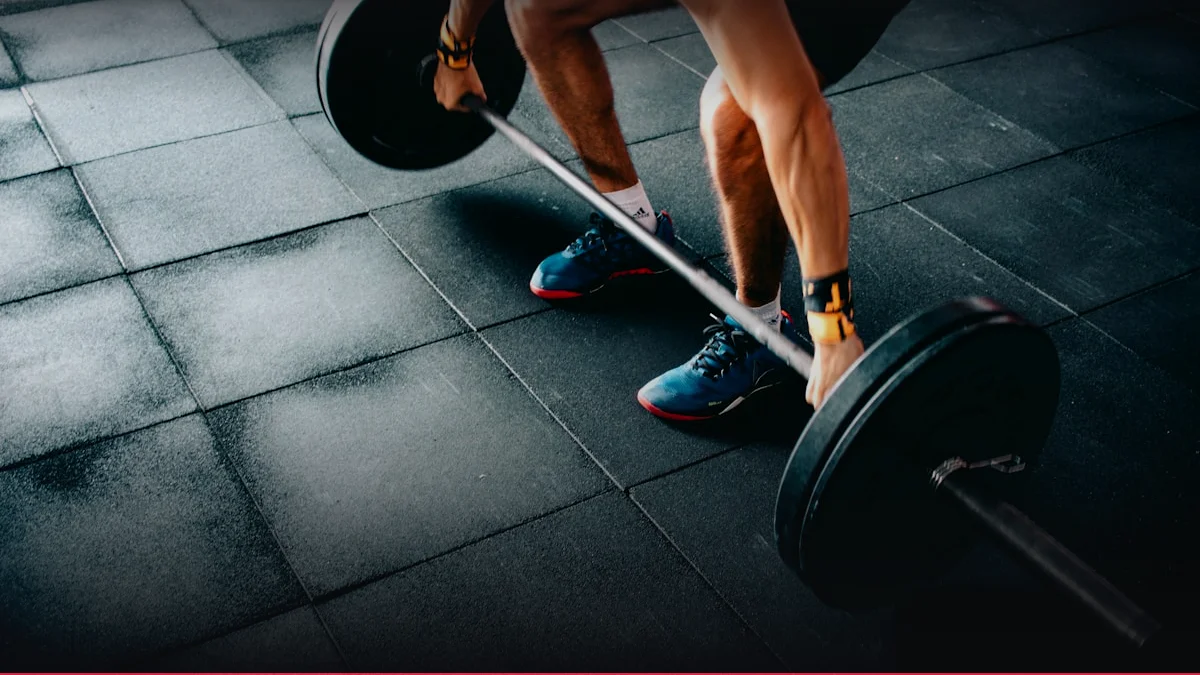
- Transition (Second Pull): As the bar passes the knees, execute a rapid triple extension—ankle plantarflexion, knee extension, hip extension—while simultaneously shrugging the shoulders. The bar’s velocity peaks here, often exceeding 1.2 m·s⁻¹ in elite athletes.
- Catch (Snatch) / Front Rack (Clean): Drop under the bar by flexing the hips and knees, positioning the bar on the deltoids (snatch) or on the anterior deltoids and clavicles (clean). The lifter receives the bar in a full squat, maintaining an upright torso to minimize shear forces on the lumbar spine.
- Jerk (Clean & Jerk only): From the front rack, execute a dip (≈10 % of total knee flexion) followed by an explosive drive, propelling the bar upward while simultaneously splitting the legs (split jerk) or dropping into a squat (squat jerk). Lockout the elbows and stabilize the bar overhead before re‑standing.
Breathing mechanics follow a controlled Valsalva maneuver during the first and second pulls, transitioning to a rapid exhalation during the catch to facilitate intra‑abdominal pressure release. Tempo cues such as “2‑0‑1” (two seconds eccentric, zero pause, one second concentric) are rarely applied in maximal lifts but become essential during sub‑maximal technical sessions to reinforce motor patterns.
6. Progressive Overload and Periodization / Cycling
Effective long‑term development requires a structured manipulation of intensity, volume, and frequency across micro‑, meso‑, and macro‑cycles. A typical macro‑cycle spanning 12 months may be divided into three mesocycles: accumulation (hypertrophy‑focused), transmutation (strength‑focused), and realization (power‑focused). Within each mesocycle, weekly micro‑cycles alternate heavy (85‑95 % 1RM, 1–3 reps), moderate (70‑80 % 1RM, 4–6 reps), and light (55‑65 % 1RM, 8–10 reps) sessions, employing velocity‑based targets to auto‑regulate load.
| Phase | Duration (weeks) | Intensity (%1RM) | Volume (sets × reps) | Primary Adaptation |
|---|---|---|---|---|
| Accumulation | 4–6 | 55–70 | 4 × 8–10 | Muscle hypertrophy, tendon resilience |
| Transmutation | 6–8 | 75–90 | 5 × 3–5 | Maximal strength, neural drive |
| Realization | 3–4 | 80–95 (dynamic) | 6 × 1–3 | Rate of force development, power |
| Deload | 1 | 40–50 | 3 × 5 | Recovery, CNS reset |
RPE (Rate of Perceived Exertion) and RIR (Reps In Reserve) are employed alongside VBT to fine‑tune sessional load; an RPE of 8.5 with a target mean concentric velocity of 0.75 m·s⁻¹ typically indicates a load that maximizes strength gains without excessive fatigue. Deload weeks, scheduled after each 4‑week block, reduce intensity by 30 % and volume by 40 % to mitigate overreaching and preserve hormonal balance.
7. Scientific Research and Evidence Base
Meta‑analyses of randomized controlled trials (RCTs) involving Olympic‑style lifts demonstrate a mean increase of 5.2 % in vertical jump height and a 4.8 % improvement in 30‑m sprint time after 8 weeks of twice‑weekly snatch/clean & jerk training, with effect sizes ranging from 0.45 to 0.62 (moderate). Position statements from the International Society of Sports Nutrition (ISSN) and the National Strength and Conditioning Association (NSCA) endorse weightlifting for its superior stimulus of type II fiber recruitment and neuromuscular efficiency, surpassing traditional squat protocols in transferability to sport‑specific power tasks.
A landmark study employing three‑dimensional motion capture reported that athletes who reduced horizontal bar displacement by 12 % during the second pull achieved a 7 % higher peak power output, underscoring the biomechanical importance of bar path optimization. Concurrent electromyographic (EMG) investigations reveal that the gluteus maximus and vastus lateralis exhibit peak activation amplitudes of 95 % and 92 % of maximal voluntary contraction (MVC) respectively during the triple extension, confirming the lifts’ capacity to elicit maximal motor‑unit recruitment.
Longitudinal investigations also highlight hormonal adaptations; a 12‑week high‑intensity weightlifting program produced a sustained elevation of resting testosterone by 8 % and a reduction in cortisol‑to‑testosterone ratio by 15 %, markers associated with improved anabolic environment and reduced catabolic stress. These findings collectively substantiate the scientific premise that Olympic weightlifting, when periodized appropriately, delivers robust improvements in power, strength, and hormonal health.
8. Synergy: Nutrition, Nutraceuticals, and Recovery
Optimal performance hinges on precise timing of macronutrients relative to training. A pre‑lift meal containing 1.2 g·kg⁻¹ carbohydrate and 0.3 g·kg⁻¹ protein, consumed 90 minutes before the session, ensures glycogen availability and amino‑acid priming for muscle protein synthesis (MPS). Intra‑session, fast‑absorbing carbohydrates (e.g., maltodextrin at 0.7 g·kg⁻¹) paired with 5 g of creatine monohydrate sustain phosphocreatine resynthesis, reducing the phosphagen depletion interval to <30 seconds between sets. Post‑exercise nutrition emphasizing a 3:1 carbohydrate‑to‑protein ratio within the 30‑minute anabolic window maximizes MPS via the mTOR pathway.
Ergogenic aids such as beta‑alanine (4–6 g·day⁻¹) augment intramuscular carnosine, buffering hydrogen ions generated during high‑intensity lifts and delaying fatigue onset. Nitrates from beetroot juice (≈600 mg nitrate) have been shown to improve mitochondrial efficiency, thereby enhancing recovery of oxidative capacity during multi‑set protocols. Additionally, omega‑3 fatty acids (2 g EPA + DHA) modulate inflammatory responses, reducing delayed‑onset muscle soreness (DOMS) and facilitating faster neuromuscular recovery.
Sleep Architecture & Hormones: Sleep architecture is equally critical; a minimum of 7–9 hours of consolidated sleep supports growth hormone pulsatility, which peaks during slow‑wave sleep and contributes to tissue repair. Autonomic monitoring via heart‑rate variability (HRV) can guide training load adjustments; a reduction of >10 % in nightly RMSSD may signal insufficient recovery, prompting a deload or active‑recovery session. Integrating these nutritional and recovery strategies with periodized weightlifting yields synergistic adaptations that surpass the sum of isolated interventions.
9. Common Mistakes, Myths, and Injury Prevention
Common Technical Pitfall: A prevalent error is the “over‑reliance on the arms” during the second pull, whereby athletes prematurely flex the elbows, disrupting the kinetic chain and increasing shoulder shear forces. Biomechanical analyses demonstrate that maintaining locked elbows preserves the transfer of hip extension torque to the bar, reducing joint moments at the glenohumeral articulation by up to 18 %. Another myth is that heavier loads always produce greater power; research indicates that peak power is achieved at ~30‑40 % 1RM when velocity is maximized, a principle often overlooked by novices who default to maximal loads.
Injury Prevention Protocols: Injury prevention strategies prioritize mobility and stability. Limited ankle dorsiflexion (<15°) forces compensatory knee valgus during the catch, elevating ACL strain. Dynamic stretching combined with foam‑roller myofascial release improves dorsiflexion range by 3–5°, mitigating this risk. Core stability, particularly in the transverse abdominis, is essential for maintaining spinal rigidity; deficits in core endurance have been linked to a 22 % increase in lumbar disc stress during heavy lifts.
Prehab drills such as “pause snatches” (holding the bar at the knee for 2 seconds) reinforce proper bar path and reinforce neuromuscular timing, while “overhead squats” enhance shoulder stability and thoracic extension. Progressive loading, starting with sub‑maximal percentages and incrementally increasing by 2.5 % per session, allows connective tissue adaptation and reduces the incidence of tendonopathies. Education on proper bar‑catch positioning—ensuring the bar rests on the deltoid tuberosities rather than the fingertips—further safeguards against wrist and forearm strains.
Interactive Apps & Calculators for Article
Empirical mathematical algorithms and scientific formulas for sports optimization
 Endurance & Cardio
Esports Cognitive Fatigue: Reaction Time & APM Degradation
Model Actions Per Minute (APM) decay, choice reaction time (CRT ms) slowdown, wrist flexor tendon fatigue, and optimal cognitive rest pauses.
 Strength & Hypertrophy
Wilks & DOTS Powerlifting Score
Measure relative strength in powerlifting and bench press across different bodyweights.
10. FAQ: Frequently Asked Questions
- What is the optimal load to develop maximal power in the snatch?
- Scientific consensus identifies a load range of 30‑45 % of one‑repetition maximum (1RM) as the “power zone.” At this intensity, bar velocity peaks (≈1.2 m·s⁻¹) while muscular tension remains sufficient to stimulate type II fiber recruitment. Training within this zone for 3–4 sets of 3–5 reps, two times per week, yields the greatest improvements in rate of force development (RFD) without excessive metabolic fatigue.
- How does velocity‑based training improve technique?
- VBT provides immediate feedback on bar speed, allowing athletes to self‑regulate load based on daily neuromuscular readiness. When velocity falls below predetermined thresholds (e.g., 0.85 m·s⁻¹ for 70 % 1RM), the coach can reduce load, preserving technique quality. Longitudinal data show that VBT‑guided programs reduce technical errors by 22 % and increase power output by 6 % compared with percentage‑based loading.
- Can beginners safely perform the clean & jerk?
- Yes, provided they master foundational movements (deadlift, front squat, overhead press) and develop adequate mobility (ankle dorsiflexion >15°, thoracic extension >30°). A progressive curriculum that begins with “hang” variations and incorporates “pause” drills minimizes the risk of lumbar hyperextension and shoulder impingement. Supervision by a certified strength coach is essential during the initial 8–12 weeks.
- What role does creatine play in Olympic weightlifting?
- Creatine supplementation (0.03 g·kg⁻¹ daily) increases intramuscular phosphocreatine stores by ~20 %, accelerating ATP regeneration during the high‑intensity, short‑duration efforts characteristic of the snatch and clean & jerk. This results in a 5‑10 % improvement in total work capacity across multiple sets and a faster recovery of phosphocreatine between repetitions, allowing higher training volumes.
- How often should an athlete incorporate full‑body Olympic lifts into a periodized program?
- Frequency depends on training phase and athlete experience. During the accumulation phase, 2 sessions per week focusing on technique and moderate loads are typical. In the transmutation phase, intensity increases to 1 session of heavy lifts (≥85 % 1RM) supplemented by 1 technical session at 60 % 1RM. In the realization phase, the emphasis shifts to 1 high‑velocity session (30‑45 % 1RM) and 1 power‑focused session (70‑80 % 1RM) per week, balancing stimulus and recovery.
- Is it necessary to use a split jerk versus a squat jerk?
- Both variations achieve the same biomechanical endpoint—overhead bar stabilization—but differ in joint stress distribution. The split jerk reduces lumbar compressive forces by distributing load between the front and rear legs, making it preferable for athletes with limited ankle mobility or lower‑back concerns. Conversely, the squat jerk demands greater shoulder stability and thoracic extension, offering superior transfer to squat‑dominant sports. Selection should be based on individual mobility profiles and sport‑specific demands.