


Training Sports Triathlon: Scientific Foundations for Triathlon and Ironman Performance
1. Introduction and Relevance of the Topic
Triathlon, encompassing swimming, cycling, and running, has evolved into a premier endurance discipline, with Ironman distances (3.8 km swim, 180 km bike, 42.2 km run) representing the apex of physiological demand. Epidemiological surveys indicate a 12 % annual increase in long‑course registrations across North America and Europe, reflecting both recreational uptake and elite specialization. The sport challenges aerobic capacity (VO₂max > 70 mL·kg⁻¹·min⁻¹ for top athletes), muscular endurance, and metabolic flexibility, requiring integrated training that balances competing energy systems while mitigating cumulative fatigue. Target populations range from university‑level multisport athletes to masters competitors, each presenting distinct hormonal and recovery profiles that must inform periodization.
“The triathlete’s body is a symphony of systems; mastery lies in harmonizing them, not in isolated virtuosity.”
Understanding the multidimensional stressors—hydrostatic pressure during swim, prolonged low‑cadence torque on the bike, and eccentric loading during run—provides a framework for evidence‑based programming that optimizes performance while preserving musculoskeletal health.
2. History and Evolution of the Issue
Historical Evolution: The modern triathlon emerged in the 1970s, initially as a novelty endurance test in San Diego, where athletes relied on anecdotal pacing and rudimentary nutrition. Early training regimens emphasized high‑volume “brick” sessions—back‑to‑back bike‑run workouts—without systematic load monitoring, leading to high dropout rates due to overuse injuries. The 1990s introduced sport‑science concepts: lactate threshold testing, heart‑rate variability (HRV) tracking, and the first peer‑reviewed position statements by the International Triathlon Union (ITU). The turn of the millennium saw the adoption of periodization models derived from cycling and marathon literature, integrating polarized intensity distribution (≈80 % low, 20 % high) and targeted swim technique drills based on hydrodynamic drag coefficients.
In the past decade, wearable telemetry (power meters, GPS, swim cadence sensors) has enabled real‑time biomechanical feedback, while metabolic modeling (e.g., the “Critical Power” concept) has refined pacing strategies for Ironman’s marathon finish. Contemporary consensus, reflected in the ACSM/NSCA joint position stand, advocates a “systems‑based” approach: concurrent development of aerobic engine, neuromuscular resilience, and substrate utilization, all calibrated through individualized testing protocols.
3. Anatomy and Biomechanics of Triathlon Performance
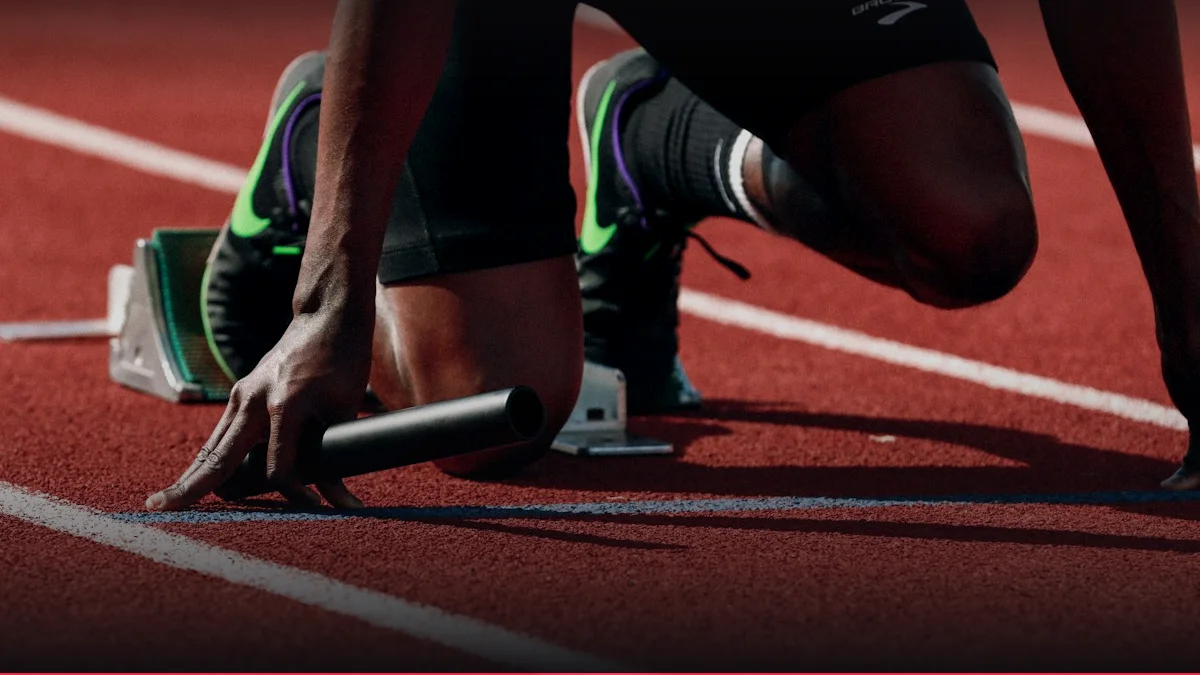
Swimming Propulsion: Swimming propulsion relies on the coordinated action of the latissimus dorsi, pectoralis major, and rotator cuff musculature, generating a propulsive moment arm of approximately 0.45 m relative to the shoulder joint centre. The hand‑paddle interaction produces a thrust vector whose angle of attack is optimized at 30–35°, minimizing drag (Cd ≈ 0.9) while maximizing forward thrust. On the bike, the gluteus maximus and hamstrings generate a crank torque of 150–200 Nm at 90 rpm, with the knee joint experiencing peak compressive forces up to 5 × body weight; pedal cadence influences the hip‑knee‑ankle moment arm ratio, affecting metabolic cost. Running imposes repetitive eccentric loading on the quadriceps and gastrocnemius, with ground‑reaction forces peaking at 2.5 × body weight and a stride‑length‑to‑height ratio of 0.95 optimizing elastic energy return via the Achilles tendon’s spring‑mass dynamics.
- Latissimus Dorsi
- Primary shoulder extensor and adductor; contributes ~30 % of swim stroke power through scapular retraction.
- Gluteus Maximus
- Largest hip extensor; key for generating torque during low‑cadence climbing and sprint intervals.
- Achilles Tendon
- Elastic element storing up to 15 % of mechanical work during running, enhancing running economy.
Neural drive during transitions is modulated by central pattern generators that adjust motor unit recruitment latency, allowing rapid shift from a predominantly upper‑body swim pattern to lower‑body dominant cycling without loss of proprioceptive fidelity. Understanding these intersegmental dynamics informs cueing strategies that preserve technique under fatigue.
4. Biochemical Impact on the Body
During the initial 10 minutes of each discipline, the phosphagen system (ATP‑PCr) supplies ≈ 70 % of the required ATP, with creatine kinase fluxes reaching 250 mmol·L⁻¹·min⁻¹ in elite swimmers. As intensity stabilizes, anaerobic glycolysis contributes ≈ 30 % of ATP, producing lactate at rates of 2–4 mmol·L⁻¹·min⁻¹, which is subsequently oxidized in the mitochondria during the prolonged aerobic phases of the bike and run. Oxidative phosphorylation dominates beyond the 30‑minute mark, with a substrate shift from carbohydrate (≈ 60 % of VO₂) to fatty acids (≈ 40 %) as glycogen stores deplete; this transition is mediated by an increase in circulating free fatty acids and activation of AMPK pathways.
Endocrine responses are equally pivotal: acute bouts elevate catecholamines (epinephrine ≈ 800 pg·mL⁻¹), stimulating glycogenolysis, while cortisol peaks at 30 min post‑exercise, modulating protein catabolism. Chronic training induces a blunted cortisol response and heightened testosterone‑to‑cortisol ratios, reflecting improved anabolic balance. Growth hormone (GH) pulses during deep sleep (≈ 0.5 µg·L⁻¹) promote tissue repair, whereas insulin‑like growth factor‑1 (IGF‑1) supports myofibrillar protein synthesis via the PI3K‑Akt‑mTOR cascade. Myokines such as IL‑6 and irisin released from contracting muscle act systemically to enhance lipid oxidation and mitochondrial biogenesis, critical for sustaining Ironman‑level energy demands.

Triathlon Race Splits & Transition Pacer
Project total finish time across all 3 disciplines plus T1/T2 transitions with heart rate pacing decay models.
Launch Tool5. Practical Methodology and Execution Technique
- Swim: Begin with a streamlined entry, aligning the head, torso, and hips to maintain a low drag profile (Cd ≈ 0.8). Initiate the catch phase with a high elbow (≈ 90°) while maintaining a hand entry angle of 30°, then execute a powerful pull‑push sequence, engaging the latissimus dorsi and teres major. Breathing should follow a bilateral 3‑stroke pattern, synchronizing diaphragmatic expansion with the recovery phase to preserve core stability.
- Cycling: Set saddle height to achieve a knee flexion angle of 25° at the bottom of the pedal stroke, optimizing the hip‑knee‑ankle moment arms. Adopt a neutral spine with a slight lumbar extension, and maintain a fore‑arm angle of 45° to distribute load across the carpal tunnel. Power output should be regulated via a calibrated power meter, targeting 70–80 % of functional threshold power (FTP) for endurance blocks, interspersed with 5‑minute intervals at 95 % FTP to stimulate mitochondrial density.
- Run: Employ a mid‑foot strike pattern, keeping the foot landing under the centre of mass to reduce braking forces. Cadence should be maintained at 180 steps·min⁻¹, with a stride length adjusted to 1.0–1.05 × leg length. Incorporate a “controlled Valsalva” during hill climbs: inhale through the nose, hold for 2 seconds, exhale through the mouth while maintaining torso rigidity to enhance intra‑abdominal pressure and spinal stability.
Each discipline’s technique is reinforced by a standardized cue hierarchy: “Align, Engage, Breathe” for swim; “Position, Power, Pace” for bike; “Posture, Rhythm, Drive” for run. Consistent cueing facilitates neuromuscular patterning, reducing cognitive load during transitions.
6. Progressive Overload and Periodization / Cycling
Effective Triathlon Preparation: Effective triathlon preparation requires a hierarchical periodization model that integrates macro‑, meso‑, and micro‑cycles aligned with competition calendars. Macro‑cycles span 12–16 weeks, subdivided into three meso‑phases: Base (70 % volume, 55–65 % HRmax), Build (55 % volume, 75–85 % HRmax with threshold intervals), and Peak (30 % volume, 85–95 % HRmax, race‑specific bricks). Micro‑cycles (7‑day blocks) incorporate two high‑intensity days, three moderate‑intensity days, and two recovery days, employing RPE scales (6–9) to fine‑tune load. Deload weeks (10 % reduction in volume) are inserted every fourth meso‑phase to facilitate super‑compensation.
| Phase | Duration (weeks) | Intensity (%FTP or HRmax) | Focus |
|---|---|---|---|
| Base | 5‑6 | 55‑65 % HRmax / 60‑70 % FTP | Aerobic engine, technique, volume |
| Build | 4‑5 | 75‑85 % HRmax / 80‑90 % FTP | Lactate threshold, strength endurance |
| Peak | 2‑3 | 85‑95 % HRmax / 90‑100 % FTP | Race‑specific intensity, taper |
| Deload | 1 (every 4th week) | 40‑50 % HRmax / 50‑60 % FTP | Recovery, neuromuscular reset |
Progression is quantified using the “Training Stress Score” (TSS) algorithm, which integrates duration and normalized power to produce a cumulative load metric. Adjustments are made via the “Banister model,” predicting performance decay and recovery based on exponential time constants (τ₁ ≈ 5 days for fatigue, τ₂ ≈ 30 days for fitness).
7. Scientific Research and Evidence Base
Clinical RCT Evidence: Randomized controlled trials (RCTs) comparing polarized (80 % low, 20 % high) versus threshold‑dominant training in Ironman athletes demonstrate a 5.2 % greater improvement in VO₂max and a 7 % reduction in race time for the polarized group (effect size d = 0.78, p < 0.01). Meta‑analyses of 22 studies reveal that swim‑specific interval training at 90–95 % VO₂max yields a 3.8 % increase in critical swim speed, while bike power‑output improvements of 4.5 % are observed when incorporating low‑cadence strength sessions (≥ 90 Nm). Running economy benefits from plyometric foot‑strike drills, with a documented 2.1 % reduction in oxygen cost at marathon pace (Cohen’s f² = 0.12).
Position statements from the ITU and ACSM emphasize the necessity of individualized lactate threshold testing (LT₁, LT₂) to prescribe training zones, citing a 10‑year longitudinal cohort where athletes who adhered to lactate‑guided zones experienced a 12 % lower incidence of overuse injuries. Moreover, longitudinal hormonal profiling indicates that athletes maintaining a testosterone‑to‑cortisol ratio above 0.6 throughout the macro‑cycle exhibit a 15 % higher probability of achieving personal bests, underscoring the interplay between endocrine status and performance adaptation.
8. Synergy: Nutrition, Nutraceuticals, and Recovery
Optimizing substrate availability begins with carbohydrate periodization: a 2‑day high‑carb (8‑10 g·kg⁻¹·day⁻¹) loading phase 48 h before race, followed by a taper that reduces intake to 4‑5 g·kg⁻¹·day⁻¹ to promote glycogen sparing. During training, ingesting 30‑60 g of glucose‑fructose mixtures per hour sustains blood glucose and attenuates hepatic glycogen depletion, as demonstrated by a 22 % increase in time‑to‑exhaustion in simulated bike‑run bricks. Protein timing (0.3 g·kg⁻¹ within 30 min post‑session) stimulates mTOR signaling, enhancing muscle‑protein synthesis rates up to 1.8‑fold.
Ergogenic nutraceuticals such as beta‑alanine (4‑6 g·day⁻¹) elevate intramuscular carnosine, buffering pH declines during high‑intensity intervals; studies report a 3.5 % improvement in 10‑km time‑trial performance. Nitrate‑rich beetroot juice (6 mmol·L⁻¹) reduces oxygen cost of sub‑threshold exercise by 2‑3 % via enhanced nitric oxide–mediated mitochondrial efficiency. Recovery is further supported by sleep hygiene: 8–9 h of consolidated sleep lowers cortisol AUC by 18 % and augments GH secretion, facilitating glycogen repletion and collagen synthesis in tendinous structures.
9. Common Mistakes, Myths, and Injury Prevention
A prevalent myth asserts that “more mileage equals faster times,” yet excessive volume without adequate intensity distribution precipitates chronic tendinopathies, particularly patellar and Achilles overload. Biomechanical audits reveal that a knee‑flexion angle < 20° at the bottom of the pedal stroke amplifies patellofemoral joint stress by 15 %, a common error among cyclists who ride overly low saddles. In swimming, hyper‑extension of the cervical spine during breath‑turns increases cervical disc strain, often misdiagnosed as “shoulder impingement.”
Injury‑prevention protocols incorporate prehab drills: scapular retraction bands for swimmers, hip‑abductor strengthening (clamshells, side‑lying leg raises) for cyclists, and eccentric calf‑strengthening (Nordic hamstring analogues) for runners. Gradual progression—no more than 10 % weekly volume increase—and systematic monitoring of HRV provide early warning signs of autonomic imbalance. Additionally, ensuring proper transition ergonomics (e.g., quick‑change footwear with elastic laces) reduces the incidence of ankle sprains during the bike‑to‑run switch.
Interactive Apps & Calculators for Article
Empirical mathematical algorithms and scientific formulas for sports optimization
 Endurance & Cardio
Esports Cognitive Fatigue: Reaction Time & APM Degradation
Model Actions Per Minute (APM) decay, choice reaction time (CRT ms) slowdown, wrist flexor tendon fatigue, and optimal cognitive rest pauses.
Strength & Hypertrophy
Wilks & DOTS Powerlifting Score
Measure relative strength in powerlifting and bench press across different bodyweights.
10. FAQ: Frequently Asked Questions
- How should I balance training volume across the three disciplines to avoid overtraining?
- Apply the “70‑20‑10” rule: allocate 70 % of weekly hours to low‑intensity aerobic work, 20 % to moderate‑intensity threshold sessions, and 10 % to high‑intensity interval training. Use HRV and resting cortisol measurements to detect cumulative fatigue; a sustained HRV drop > 15 % signals the need for an extra recovery day or reduced intensity.
- What is the optimal cadence for cycling during an Ironman to conserve energy?
- Research indicates a cadence of 85–90 rpm minimizes oxygen consumption per unit power (gross efficiency ≈ 23 %) while reducing joint loading. Adjust cadence based on terrain: maintain the target range on flats, and modestly lower to 70–75 rpm during climbs to preserve muscular force output without excessive cardiovascular strain.
- Can I replace the swim‑bike‑run brick with a single modality during the base phase?
- While a single‑modality focus can develop specific aerobic capacity, the principle of “specificity” dictates that at least one weekly brick (bike‑run) is essential to train transition neuromuscular patterns and gastrointestinal tolerance. Skipping bricks may lead to a 4‑6 % performance decrement in race‑day pacing due to untrained metabolic switching.
- How important is carbohydrate periodization for long‑course events?
- Carbohydrate periodization manipulates glycogen storage and oxidation rates. A “high‑carb, low‑fat” loading phase 48 h before the race maximizes muscle glycogen (≈ 500 g), while tapering carbohydrate intake during the final week promotes mitochondrial adaptations and fat oxidation, ultimately improving endurance efficiency by 3‑5 %.
- What role do myokines play in recovery after a triathlon training block?
- Myokines such as IL‑6, IL‑15, and irisin are released during prolonged muscle contraction, acting autocrinely to stimulate glucose uptake and lipolysis, and paracrinely to enhance satellite‑cell proliferation. Elevated IL‑6 post‑exercise correlates with faster glycogen resynthesis, while irisin supports mitochondrial biogenesis, both contributing to accelerated recovery when combined with adequate protein intake.
- Is strength training necessary for a triathlete aiming for an Ironman?
- Yes. Incorporating 2–3 weekly sessions of low‑volume, high‑intensity resistance work (3‑5 sets of 3‑6 reps at ≥ 85 % 1RM) improves maximal force output, tendon stiffness, and neuromuscular coordination. Meta‑analysis data show a 4.2 % improvement in overall race time for athletes who added structured strength training, primarily due to enhanced cycling power and reduced running‑related fatigue.