

Free Weight Training: Physiology of Mechanical Tension, Anatomy of Multi-planar Control, and Biochemistry of Hypertrophy
1. Introduction and Relevance
Free weight training (barbells, dumbbells, kettlebells) is the "gold standard" of strength preparation, based on overcoming external resistance without a fixed movement trajectory. Unlike machines, free weights require the athlete to independently build the trajectory and stabilize the projectile in space. This engages not only the target muscle groups but also a huge number of synergist muscles and core stabilizers, making this type of training the most effective for building functional strength and muscle mass.
The relevance of the topic is driven by the fact that working with free weights maximally imitates natural human movements. The biomechanics of a barbell press or deadlift directly transfers to daily activities and professional sports. Understanding the physiological cascades triggered under mechanical tension and knowing the anatomical features of safe weightlifting are critical for achieving long-term progress and preventing degenerative changes in the joints.
Free weight is a mirror of your true strength. It does not forgive mistakes in technique, but rewards with a reinforced-concrete body and an unbreakable will.
2. Evolution of Free Weight Training: From Ancient Stones to Modern Powerlifting
Evolutionarily, lifting heavy objects was a way of demonstrating survival and dominance. Ancient Greek athletes used "halteres" (dumbbell prototypes) to increase jump distance and strengthen the body. However, the true revolution occurred at the end of the 19th and beginning of the 20th century with the appearance of the adjustable barbell, which allowed athletes to precisely regulate the load and created the prerequisites for the emergence of weightlifting, bodybuilding, and powerlifting.
The history of the method's development is a transition from "pure strength" to a scientific approach. The main scientific breakthrough was the understanding of the "progressive overload" principle and the importance of microcycles. Today, working with free weights integrates knowledge from biomechanics and endocrinology, allowing athletes to achieve peak results by optimizing load angles and time under tension (TUT).
Modern free weight training is based on the "Big Three" (squat, press, deadlift) and numerous assistance exercises.
3. Anatomy of Strength Levers: Spinal and Joint Stabilization
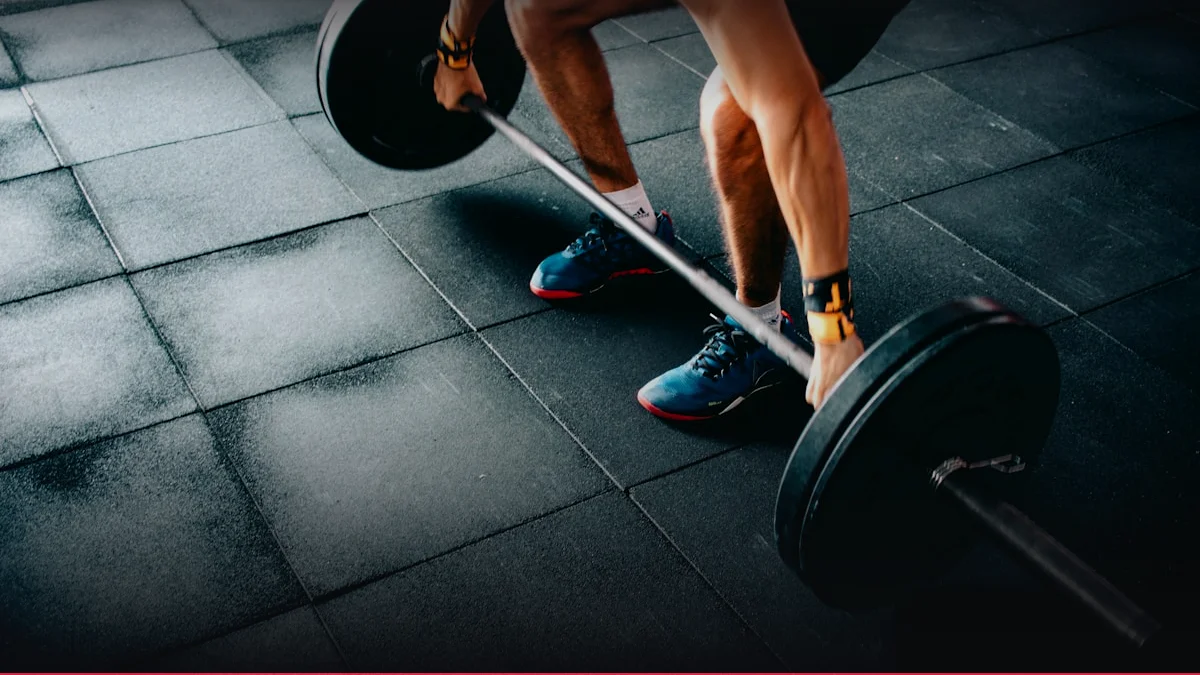
Anatomically, free weight requires perfect work of the "kinetic chain." Any barbell lift starts from ground support and is transmitted through the joints to the projectile. Spinal anatomy in this process plays the role of a rigid beam. When performing a deadlift, the Erector Spinae muscles and latissimus dorsi anatomically fix the vertebrae, preventing shear forces and herniations.
The anatomy of the shoulder and hip joints when working with dumbbells allows for a natural, individual trajectory. This is anatomically safer than the fixed amplitude of machines as it allows the joint to move along the path of least resistance, considering the specific bone structure of the athlete. Working with free weights anatomically strengthens ligaments and cartilage tissue through axial loading.
- M. Gluteus Maximus (Gluteus Maximus)
- Anatomical power generator in basic movements; its strength determines the result in squats and pulls.
- Rotator Cuff of the Shoulder
- Anatomical stabilization hub; when working with dumbbells, these muscles work 40% more intensely than in machines, protecting the joint.
Biomechanical Mechanics: Biomechanically, working with free weights teaches the athlete to manage the "center of mass."
4. Biochemistry of Hypertrophy: The mTOR Pathway, Testosterone, and Creatine Phosphate
The biochemical foundation of progress with free weights is based on mechanotransduction — the conversion of mechanical tension into a chemical signal. Lifting a heavy barbell biochemically activates the mTOR protein kinase, which is the main regulator of protein synthesis in the cell. This leads to the thickening of myofibrils and an increase in muscle contraction force.
Endocrine system biochemistry responds to free weights with a massive release of testosterone and somatotropin. The more muscle groups involved in the exercise (basic movements), the higher the body's biochemical response. Working with free weights also stimulates glycogen resynthesis and increases insulin receptor sensitivity, which improves the athlete's metabolic health.
| Free Weight Stimulus | Biochemical Mechanism | Physiological Result |
|---|---|---|
| Maximal Tension | mTOR Activation | Myofibrillar hypertrophy |
| Metabolic Stress | Lactate accumulation | Sarcoplasmic hypertrophy |
| Axial Load | Osteoblast stimulation | Growth of bone mineral density |
| Fiber Damage | Satellite cell activation | Regeneration and muscle densification |
Biochemical synergy is also manifested in the consumption of leucine: it synergizes with the mechanical stimulus to further boost protein synthesis.
Gymnastics Rings: Support Hold Stability & RTO Torque
Medial stabilization torque on unstable ring suspension: rings-turned-out (RTO 45°) stress on distal biceps tendons and core stability.
Launch Tool5. Physiology of Neuromuscular Recruitment and Strength Thresholds
Physiologically, working with free weights is the best way to train the nervous system. To hold and lift a barbell, the brain must physiologically recruit muscle fibers according to Henneman's "Size Principle": first small (endurance), then large (strength) Type IIb fibers. Constant practice with free weights physiologically lowers the activation threshold of these powerful fibers.
Cardiovascular physiology during heavy lifting is characterized by a short-term but significant increase in blood pressure. This physiologically trains arterial elasticity and strengthens the left ventricular myocardium. Also, "intermuscular coordination" — the ability of different muscles to work as a single team for one task — is physiologically improved.
- Growth of Intramuscular Tension: Physiological marker of the growth stimulus.
- Improved Motor Unit Synchronization: Physiological ability to output maximum force instantly.
- CNS Strengthening: Physiological adaptation to high levels of neural drive.
Your muscles do not know how many kilograms are on the bar. They only know the level of tension you create. Free weight allows this tension to be brought to the physiological maximum.
Technically, it is important to consider the "negative phase" (eccentric).
6. Progression in Training: From Repetitions to Tonnage
Progression with free weights is the mathematics of strength. At the first stage, progression lies in increasing the number of repetitions with a constant weight (development of endurance and technique). The next stage is "linear progression," where you add minimal weight (e.g., 1.25-2.5 kg) in every workout. This is the stage of rapid adaptation for beginners.
For experienced athletes, progression becomes non-linear. We use periodization: alternating weeks of high intensity (heavy weights, low reps) and weeks of high volume (medium weights, high reps). The final stage of progression is increasing the total "tonnage" (the sum of all weight lifted in a workout) and using specific methods such as pauses at the bottom point or chains.
- Hypertrophy Phase: 8-12 repetitions, 65-75% of max, emphasis on TUT.
- Strength Phase: 3-5 repetitions, 80-90% of max, long rest.
- Peak Phase: 1-2 repetitions, preparation for setting a new personal record.
It is important to remember that progression requires ideal technique.
7. Scientific Base: Lever Biomechanics and Force Moments
The scientific base of free weight work describes the body's lever mechanics in detail. Science has established that muscle strength depends on the angle of tendon attachment to the bone (force arm). EMG scientific studies have shown that barbell squats cause a 43% higher activation of leg muscles compared to leg presses in a machine at identical loads.
Data regarding the "vertical vector" is interesting. Science has established that free weights create a constant load along the line of gravity, which is scientifically proven to better stimulate spinal stabilizer muscles. Scientific studies have confirmed that working with dumbbells eliminates muscle asymmetry since each arm is forced to work autonomously without relying on the stronger side.
8. Synergy: Free Weights, Nutrition, and Sleep
Free weights work in ideal synergy with high-protein nutrition. Amino acids from food synergize with the activated mTOR pathway, providing the building blocks for hypertrophy. There is also synergy with sleep: during the deep phase of sleep, the body synergistically releases growth hormone in response to daytime stress from heavy weights, ensuring tissue recovery and strength growth.
- Freeweights + Mobility: Joint flexibility synergizes with full range in squats, improving muscle activation.
- Deadlift + Grip training: Grip strength synergizes with the ability to lift maximum weights without straps.
- Bench Press + Lat activation: Strong lats synergize with shoulder stability in the bench press, creating a "bridge" for power.
9. Common Mistakes: "Cheating" and Rounding the Back
The main mistake when working with free weights is rounding the lower back in pulls and squats. Anatomically, this creates colossal pressure on the anterior edges of the intervertebral discs, leading to protrusions. Another critical mistake is excessive "cheating" (swinging the body) during bicep curls or dumbbell lateral raises. This anatomically deactivates the target muscle and overloads the lower back.
- Heel Lift: Lifting heels during squats anatomically overloads the patella and deactivates the gluteal muscles.
- Joint "Lockdown": Abruptly straightening elbows or knees under weight anatomically injures joint cartilage.
- Incorrect Grip: An incomplete (thumbless/suicide) grip on the barbell in the bench press is anatomically dangerous due to the risk of the projectile falling on the chest.
Regarding Injury Prevention: remember the use of spotters.
Interactive Apps & Calculators for Article
Empirical mathematical algorithms and scientific formulas for sports optimization
 Strength & Hypertrophy
Weekly Training Volume Calculator
Calculate Minimum Effective and Maximum Recoverable Volume sets per muscle group per week.
 Strength & Hypertrophy
1RM & Bench Press Calculator
Calculate your One-Rep Max using 7 scientific formulas, percentage table (50-95%), and barbell plate loader visualizer.
10. FAQ: Questions and Answers
- Can I lose weight with free weights?
- Yes, strength training is one of the best fat-burning methods due to the high thermic effect and the increase in resting energy expenditure.
- Which is better: barbell or dumbbells?
- The barbell is better for maximum strength (heavy weights), dumbbells — for correcting asymmetry and increasing range of motion.
- At what age can I start training with weights?
- Under a coach's supervision, one can start from 12-14 years, focusing on ideal technique rather than maximum kilograms.
- How long should a strength workout last?
- Optimally 45-75 minutes. Longer sessions lead to a sharp rise in cortisol, which suppresses anabolism.
- What is "progressive overload"?
- It is the constant but gradual increase of the training stimulus (weight, reps, or intensity) to stimulate further adaptation.