


Kettlebell Sport: Physiology of Cyclic Endurance, Pendulum Biomechanics, and Neuroendocrine Resilience
1. Introduction and Relevance
Kettlebell sport is a unique cyclic discipline that requires extreme strength endurance, perfect breathing technique, and psychological resilience from the athlete. The core essence of competitive kettlebell sport lies in performing the maximum number of kettlebell lifts (24 or 32 kg) within a 10-minute time frame without stopping. This is not just strength work; it is the art of energy conservation, where every unnecessary movement or millimeter of amplitude can lead to premature exhaustion.
The relevance of the topic is due to kettlebell sport's phenomenal impact on the body's functional state. Due to prolonged loading with submaximal weight, kettlebell lifters demonstrate exceptional cardiac stroke volume, mitochondrial density, and grip strength. Understanding biomechanical levers and the physiology of energy supply in this sport allows any athlete to significantly improve their work capacity and resistance to systemic fatigue.
A kettlebell is not just iron; it is the pendulum of your energy. Learn to move with it, not against it, and you will discover an inexhaustible source of power.
2. Evolution of Kettlebell Sport: From Market Weights to World Arenas
Evolutionarily, kettlebells emerged as a means of weighing agricultural goods. However, already in the 18th-19th centuries, strongmen began using them to demonstrate physical prowess. The history of kettlebell sport as an official discipline began in the USSR, where the first all-union competitions were held in 1948. Since then, the training methodology has evolved from simple weightlifting to a complex system of cyclic preparation, similar to rowing or running.
The main scientific breakthrough was the understanding that in kettlebell sport, the primary limiting factor is not muscle strength, but the ability of the CNS to maintain rhythm and the ability of the cardiovascular system to utilize lactate. The emergence of new techniques, such as "ballistic breathing" and "active relaxation" at the top point, allowed athletes to lift kettlebells hundreds of times without rest.
Today, kettlebell sport is actively developing worldwide as a means of functional preparation for fighters, firefighters, and CrossFitters.
3. Anatomy of the "Lock" and Support Structures: Arms and Core
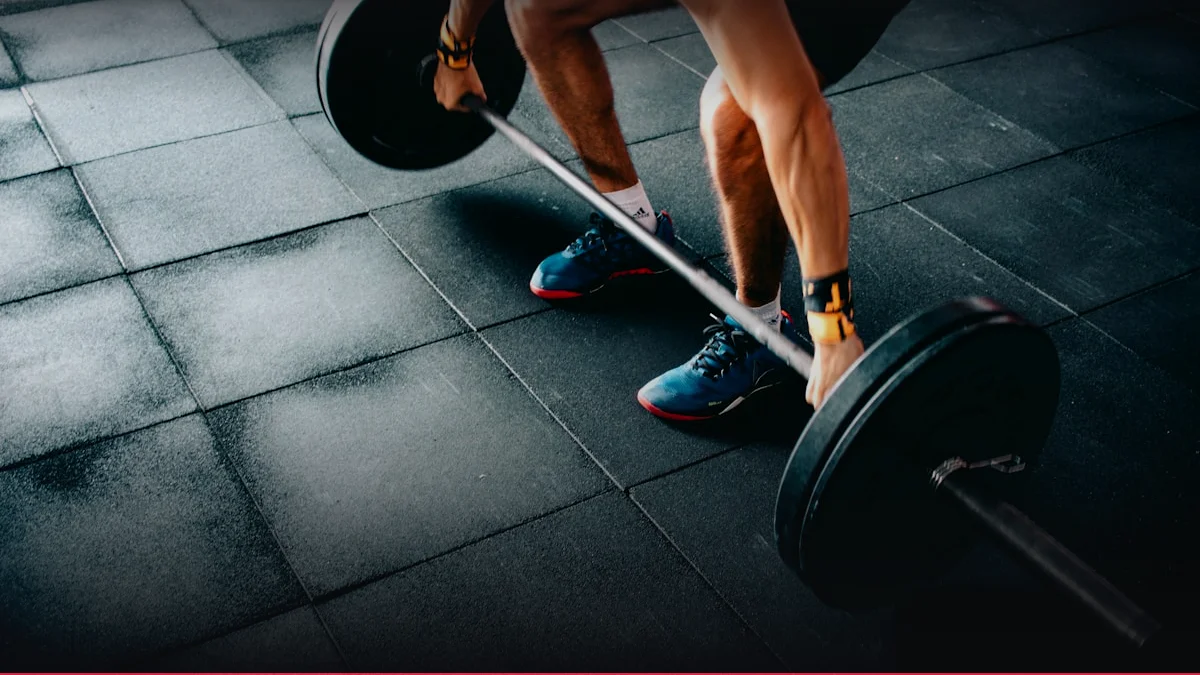
Anatomically, kettlebell sport is based on the ability to transfer impulse from the legs to the projectile through a rigid core. The key position is the "Rack position," where the athlete's elbows rest on the iliac crests of the pelvis. This anatomically allows the weight of the kettlebells to be transferred directly to the skeleton, unloading the shoulder girdle muscles for a short rest between repetitions.
The anatomy of the grip in kettlebell sport faces extreme loads. The constant rotation of the kettlebell handle in the palm requires not only the strength of the finger flexor muscles but also incredible endurance of the brachioradialis muscle and wrist ligaments. The anatomical adaptation of the hand is one of the longest processes in a kettlebell lifter's preparation, requiring specific work on skin elasticity and tendon strength.
- M. Quadriceps Femoris (Quadriceps)
- The anatomical engine in kettlebell sport; it is the sharp extension of the legs ("drive") that generates the main energy for lifting the kettlebells.
- M. Latissimus Dorsi (Latissimus Dorsi)
- Anatomically provide shoulder stability and control of the projectile's trajectory when lowering into a swing or onto the chest.
Biomechanical Mechanics: Biomechanically, the kettlebell lifter works like a pendulum.
4. Biochemistry of Cyclic Work: Glycolysis and Buffer Systems
The biochemical foundation of kettlebell sport is characterized by prolonged stay in a zone of mixed energy supply. The first 2-3 minutes of work are based on aerobic oxidation, but as fatigue and tempo increase, the biochemistry shifts toward anaerobic glycolysis. This leads to massive lactate accumulation in the forearm and back muscles.
The biochemistry of success in kettlebell sport is the efficiency of blood buffer systems. The body's ability to biochemically neutralize hydrogen ions using bicarbonates allows the athlete to continue working even with intense "burning" in the muscles. Also, kettlebell sport stimulates the growth of enzymes responsible for ATP resynthesis directly during the short relaxation phases in each cycle.
| 10-Minute Phase | Biochemical Process | Athlete's State |
|---|---|---|
| 1-3 min (Warm-up/Lead-in) | Oxidative phosphorylation | Stable pulse, high control |
| 4-7 min (Crisis) | Intense Anaerobic glycolysis | Rising lactate levels, shortness of breath |
| 8-10 min (Finish) | Limit acidification, ADP growth | Work on willpower, peak heart rate |
| Recovery | Metabolite flushing | Blood pH restoration, CP resynthesis |
Biochemical synergy is also manifested in the use of citrulline and sodium bicarbonate before the start: they synergize with the high-lactate work of the lifter.
Kettlebell Swing Power & Kinetic Energy
Calculate explosive hip hinge power output, kettlebell kinetic energy, and ground reaction forces in Joules and Watts.
Launch Tool5. Physiology of Myocardial Hypertrophy and Strength Endurance
Physiologically, kettlebell sport creates a unique type of heart — a combination of a "rower's heart" and a "strength athlete's heart." Due to prolonged isometric tension against a high breathing frequency, the myocardium physiologically adapts, increasing the wall thickness of the left ventricle (concentric hypertrophy) and its volume (eccentric hypertrophy). This ensures powerful blood ejection even with high peripheral vascular resistance.
Breathing physiology in kettlebell sport is the key to survival. Athletes use "cyclic breathing": two inhales and two exhales per one lift cycle. This physiologically maintains intra-abdominal pressure stability and ensures continuous oxygen delivery to the brain, preventing hypoxic states and loss of concentration.
- Increased Stroke Volume: Physiological improvement of cardio-efficiency.
- Growth of Capillary Bed in Muscles: Improved oxygen delivery and lactate removal.
- CNS Strengthening: Physiological adaptation to prolonged monotonous stress.
Breathing in kettlebell sport is your metronome. As long as it works rhythmically, your heart and muscles will obey your will.
Technically, it is important to consider "fatigue thresholds."
6. Progression in Kettlebell Sport: From Tempo to Volume
Progression in kettlebell sport differs from classic powerlifting. Instead of constantly adding weight to the projectile (which is limited by 16-24-32 kg standards), progression occurs by increasing work time and lift tempo. In the first stage, progression lies in the ability to stand 10 minutes with a lighter kettlebell (16 kg) at a stable pulse. This is the stage of forming an "endurance base."
The next stage of progression is increasing the tempo (e.g., from 10 to 14 lifts per minute). This progressively loads the cardiovascular system. The final stage of progression is transitioning to a heavier kettlebell (32 kg) and competitive preparation, where every second and every movement is honed to automatism.
- Technique Stage (On-Ramp): Establishing breathing, the "lock," and the projectile's trajectory.
- Interval Work Stage: Short segments (1-2 min) with high tempo and full recovery.
- Control Start Stage: 7-10 minute test runs to check willpower and functional capacity.
It is important to remember that progression requires ideal joint health.
7. Scientific Base: Biomechanics of Pendulum Movement
The scientific base of kettlebell sport describes pendulum mechanics in detail. Science has established that a kettlebell in motion has a variable force vector, forcing core stabilizers to work in a dynamic mode. EMG scientific studies have shown that during kettlebell swings and snatches, back muscles are not activated continuously but in short explosive bursts, which is scientifically proven to allow them to recover directly during the exercise.
Data regarding "grip strength" is interesting. Science has established that kettlebell sport is the best means for developing the endurance of forearm tendons. Scientific studies have confirmed that kettlebell lifters have higher bone density in the wrists and forearms, protecting them from fractures during falls and extreme loads.
8. Synergy: Kettlebells, Weightlifting, and Running
Kettlebell sport works in ideal synergy with weightlifting. The explosive leg power developed with kettlebells synergizes with the technique of the barbell pull. There is also synergy with long-distance running: the aerobic base from running synergizes with cardiac endurance in kettlebell sport, allowing for a high tempo of lifts without "acidification" of the heart muscle.
- Kettlebell + Pull-ups: Grip strength from kettlebells synergizes with pull-up endurance, allowing for large sets without slipping off the bar.
- Kettlebell + Swimming: Swimming synergizes with kettlebells, relaxing back muscles and improving shoulder mobility after heavy cyclic sessions.
- Deadlift + Kettlebell Snatch: Absolute deadlift strength synergizes with snatch explosiveness, creating a "concrete" spine.
9. Common Mistakes: "Banging Forearms" and Shoulder Stiffness
The main mistake for beginners in kettlebell sport is the kettlebell slamming against the forearm at the top point. Anatomically, this leads to hematomas and micro-fractures of the bones. One must learn to "thread" the hand into the kettlebell handle so the projectile lands softly on the muscles. Another critical mistake is gripping the kettlebell handle too tightly. This anatomically "shuts off" capillary blood flow in the forearm, leading to instant grip acidification.
- Working Only with the Back: Attempting to lift the kettlebell with lower back strength instead of leg drive anatomically destroys intervertebral discs.
- Incorrect Breathing (Straining): Holding the breath anatomically raises blood pressure to dangerous levels and leads to premature heart stoppage due to fatigue.
- Shoulder Stiffness: Attempting to hold the kettlebell through deltoid tension instead of resting on the skeleton ("lock") anatomically exhausts the athlete by the 3rd minute.
Regarding Injury Prevention: remember to care for the skin of your palms. In kettlebell sport, calluses are not a badge of honor but a technical failure.
Interactive Apps & Calculators for Article
Empirical mathematical algorithms and scientific formulas for sports optimization
 Strength & Hypertrophy
Weighted Pull-Up & Dip 1RM Calculator
Calculate total 1RM in weighted pull-ups and dips factoring bodyweight and added chain/belt resistance.
Endurance & Cardio
Reactive Strength Index (RSI) & Plyometrics
Calculate Reactive Strength Index (RSI = Jump Height / Ground Contact Time) and fast stretch-shortening cycle speed.
10. FAQ: Questions and Answers
- Can you build muscle with kettlebell sport?
- Kettlebell sport builds very dense and resilient muscles, but it is not intended for extreme mass. It is a sport for "functional leaning" and strength.
- What weight should a woman or man start with?
- A classic start for women is 8-12 kg, for men — 16 kg. The main thing is not the weight, but the ability to maintain tempo and technique.
- Why does my lower back hurt after kettlebells?
- Usually, this is a consequence of incorrect technique (lifting with the back) or weakness of the abdominal muscles, which fail to stabilize the spine.
- Does kettlebell sport help in wrestling?
- Yes, grip strength and the ability to work under acidification make kettlebell lifters incredibly dangerous opponents on the mat.
- Which exercise in kettlebell sport is the most important?
- The Kettlebell Snatch is considered the king of kettlebell exercises as it engages almost all body muscles and maximally develops endurance.