


Stress Management in Sports: Psychophysiology of Resilience, Hormonal Balance, and the Neurobiology of Control
1. Introduction and Relevance of the Topic
Stress is a non-specific reaction of the body to any demand placed upon it. In sports, stress is an inevitable companion of both the training process (physical stress) and competitive activity (psychological stress). Stress management is an athlete's ability to maintain an optimal state of nervous system arousal, avoiding the transition into the zone of distress where tissue destruction and cognitive decline begin. It is the art of transforming destructive anxiety into constructive energy to achieve results.
The relevance of the topic is driven by the phenomenon of overtraining, which is a consequence of accumulated, uncompensated stress. The modern athlete lives in conditions of "information noise" and high social expectations, adding mental stress to an already high physical load. Understanding the mechanisms of the HPA axis (hypothalamic-pituitary-adrenal) allows for conscious regulation of cortisol and adrenaline levels, ensuring stability of form and psychological resilience at critical moments.
Stress is a wind that can either break your sails or fill them with energy to move forward. Your task is to learn how to manage these sails, not to try and stop the wind.
2. History and Evolutionary Significance of the Stress Response
Evolutionarily, the "fight or flight" stress response was the key to species survival. It instantaneously mobilized all body resources: raised blood glucose levels, accelerated the heart rate, and suppressed secondary functions (digestion, immunity) to address an immediate threat. In modern sports, we use this same ancient mechanism for mobilization before a start, but the problem lies in the fact that the brain does not distinguish between a predator and an important competition.
The history of studying stress is associated with the name of Hans Selye, who in the 1930s described the General Adaptation Syndrome (GAS). He proved that the body goes through three stages: alarm, resistance, and exhaustion. Sports science adapted this knowledge to create cyclical training programs where stress alternates with recovery to achieve the supercompensation phase without entering the exhaustion stage.
Today, we view stress through the prism of allostasis—achieving stability through change.
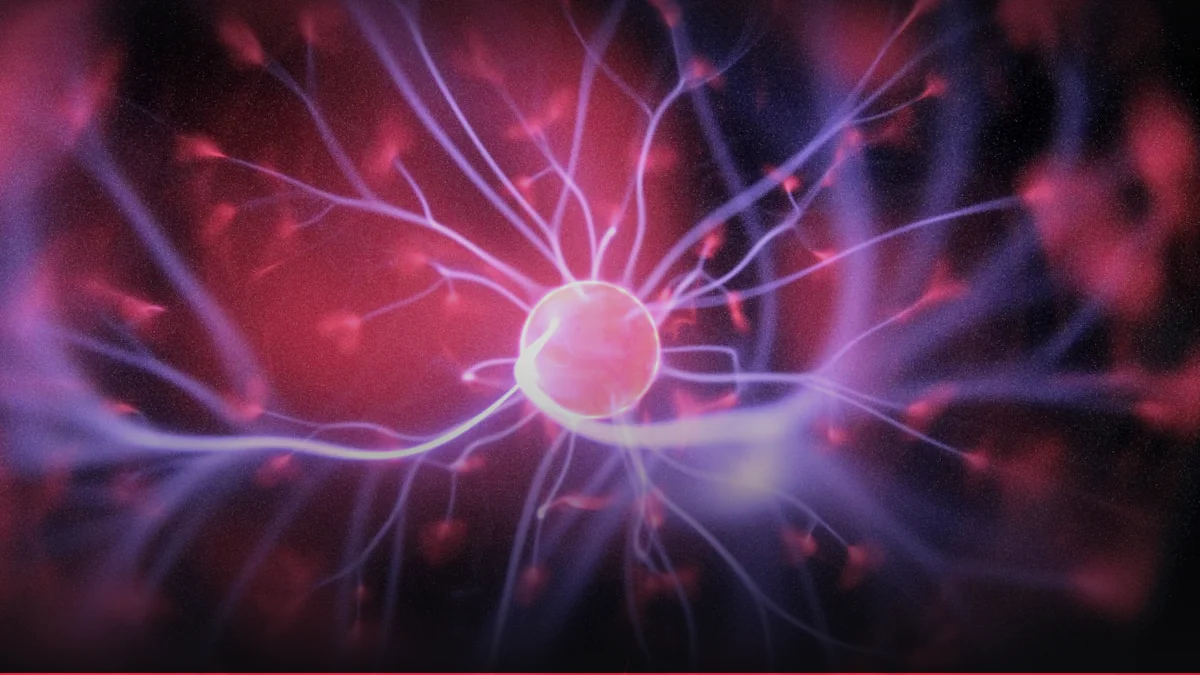
3. Anatomy of Stress: Amygdala, Hypothalamus, and Adrenal Glands
Anatomically, the stress response begins in the amygdala—the brain's center for emotional analysis. It anatomically evaluates a stimulus as threatening and sends a signal to the hypothalamus. The hypothalamus acts as an anatomical command center, activating the sympathetic nervous system and the adrenal glands. The adrenal glands are the anatomical site for the synthesis of adrenaline (medulla) and cortisol (cortex).
The prefrontal cortex (PFC) anatomically acts as a brake: it is capable of rationally evaluating a situation and suppressing amygdala activity, thereby reducing the stress response. An athlete's mental preparation is aimed specifically at strengthening the anatomical connections between the PFC and the limbic system. The hippocampus is also involved in this process, as it anatomically provides feedback to shut down the stress response after the threat has passed.
- Hypothalamic-Pituitary-Adrenal (HPA) Axis
- The anatomical highway of stress regulation that, through a chain of hormones, manages adrenal function and metabolism.
- Sympathetic Nervous System
- An anatomical network of nerves that initiates rapid changes in the body (heart rate, blood pressure) in response to an acute stressful stimulus.
Biomechanical Mechanics: Biomechanically, stress manifests in increased muscle tone, especially in the neck, shoulders, and pelvic areas.
4. Biochemistry of Anxiety and Mobilization: Cortisol and Adrenaline
The biochemical foundation of acute stress consists of adrenaline and noradrenaline (epinephrine and norepinephrine). They instantly increase energy availability: stimulating the breakdown of glycogen and fats. Biochemically, this gives the athlete explosive power and focus. However, high adrenaline levels impair fine motor skills, which can be critical in sports requiring high precision (shooting, tennis).
Cortisol is the biochemical agent of long-term stress. Its primary role is to maintain blood glucose levels during prolonged exertion. However, chronically high cortisol biochemically suppresses protein synthesis, stimulates muscle breakdown (catabolism), and impairs immune system function. Therefore, stress management is primarily the management of cortisol dynamics in the athlete's body.
| Hormone / Mediator | Biochemical Role in Stress | Effect during Training |
|---|---|---|
| Adrenaline | Instant energy mobilization | Explosive power and focus |
| Cortisol | Resource provision | Endurance support / Catabolism |
| Endocannabinoids | Reduction of pain and fear | State of flow and calm under pressure |
| GABA | Inhibition of the nervous system | Relaxation and recovery |
The biochemical adaptation of an athlete to stress includes increasing receptor sensitivity.
Energy Drinks: Cardiovascular Stress & Hemodynamic Load
Cumulative synergy of caffeine, taurine, and sugar: assess QTc interval prolongation risk, peripheral vasoconstriction, and arterial pressure spike.
Launch Tool5. Physiology of Stress Adaptation: Hormesis and Overload
Physiologically, stress can be either beneficial (eustress) or destructive (distress). Beneficial stress works on the principle of hormesis: dosed loading stimulates the body to become stronger. Physiologically, this manifests in the strengthening of the cardiovascular system, growth in mitochondrial density, and improved neural conductivity.
The problem arises when total stress (training + work + psychology) exceeds the body's adaptive capabilities. Physiologically, this leads to the suppression of the parasympathetic nervous system, manifested in a decrease in heart rate variability (HRV). Monitoring HRV is the gold standard for physiological stress control, allowing for the timely detection of accumulated fatigue.
- Diaphragmatic Breathing: A slow exhale stimulates the vagus nerve, which physiologically switches the body into recovery mode within 2-3 minutes.
- Progressive Muscle Relaxation: Conscious tension and relaxation of muscle groups remove anatomical tension and calm the brain.
- Cognitive Reframing: Changing the perception of competition from a "threat" to an "opportunity" biochemically reduces cortisol release.
You cannot get rid of stress, but you can change your physiological response to it. A trained brain sees a challenge where an untrained one sees a catastrophe.
6. Progression in Mental Resilience: From Chaos to Control
Progression in stress management should begin with an awareness of one's triggers. At the first stage, the athlete learns to notice physical signs of stress (sweaty palms, rapid breathing) and use simple breathing techniques for stabilization. This is the stage of "first aid" for the nervous system, allowing one not to lose control at a critical moment.
At the second stage, progression moves to systemic hardening. Using controlled stress (cold baths, training in difficult conditions) teaches the nervous system to remain calm at high levels of discomfort. This is the stage of forming resilience, where the athlete consciously moves toward stress to make it an ally.
- Self-Observation Phase: Identification of stress symptoms and breath control.
- Active Regulation Phase: Using visualization techniques and self-suggestion to modulate state.
- Neural Resilience Phase: The ability to act in a state of flow under maximum external pressure.
It is important to remember that mental resilience is an exhaustible resource.

7. Scientific Base: Heart Rate Variability (HRV) and Neurobiology
The scientific base of modern stress management in sports is founded on the analysis of heart rate variability. Scientific studies prove that high HRV indicates nervous system flexibility and its ability to switch quickly between action and rest modes. Athletes with high HRV adapt better to new loads and are less prone to injury.
Studies on "pre-start nerves" are interesting. It has been established that moderate stress before a competition is necessary for setting records as it increases attention and reaction speed. However, there is a tipping point (Yerkes-Dodson Law) after which further stress growth leads to a sharp drop in performance due to "paralysis by analysis."
Scientific data on meditation and mindfulness techniques show that regular practice over 8 weeks anatomically thickens the cerebral cortex in areas of emotional control and reduces the volume of the amygdala.
8. Synergy: Stress, Nutrition, and Magnesium Status
Stress management works in synergy with nutritional support. Stress biochemically leaches magnesium from cells, and magnesium deficiency makes the nervous system even more vulnerable to stress. This creates a closed vicious cycle. Maintaining an optimal magnesium level synergizes with breathing practices, making nervous system inhibition more effective.
- Ashwagandha + Training: This adaptogen synergizes with physical exertion, helping the body lower cortisol levels faster after a session.
- Omega-3 + Neuroprotection: Fatty acids protect the brain from inflammatory processes caused by stress, improving cognitive resilience.
- Vitamin C + Adrenal Glands: High doses of Vitamin C during peak loads support adrenal function, preventing exhaustion.
9. Common Mistakes: Masking Stress and Stimulant Overuse
The main mistake is masking stress using stimulants (caffeine, pre-workout complexes). Caffeine increases adrenaline and cortisol levels, which, against a background of already existing stress, can lead to "adrenal fatigue." Another mistake is ignoring social stress. Conflicts at home or work use the same adaptive resources as heavy squats.
- Attempting to "beat" stress with intensity: Adding heavy workouts during periods of life crisis often leads to injuries and adaptation failure.
- Lack of recovery pauses: Working 24/7 without days off for the brain leads to adenosine accumulation and a drop in motivation.
- Focusing only on physics: Neglecting mental hygiene makes an athlete vulnerable to psychological pressure during major competitions.
Interactive Apps & Calculators for Article
Empirical mathematical algorithms and scientific formulas for sports optimization
 Biohacking & Ergogenics
Electrolyte Hydration Formula
Formulate precise sodium, potassium, and magnesium ratios per liter to prevent cramps.
 Health & Rehabilitation
RED-S (Relative Energy Deficiency) Risk
Clinical assessment tool for Low Energy Availability (LEA) and Relative Energy Deficiency in Sport.
10. FAQ: Questions and Answers
- Can stress stop muscle growth?
- Yes, high cortisol levels stimulate the production of the protein myostatin, which blocks hypertrophy and breaks down existing protein structures.
- How quickly does breathing reduce stress?
- The effect begins within 30-60 seconds. 5-6 deep breathing cycles with an emphasis on a prolonged exhale noticeably lower the heart rate.
- Does yoga help athletes in stress management?
- Yes, yoga combines physical stretching (releasing tension) with breath control, which is an ideal physiological tool for relaxation.
- Why do I crave sweets after stress?
- This is a biochemical reaction: the brain demands quick energy to recover from HPA axis activation and to raise serotonin levels.
- Are there "resilience genes"?
- Yes, genetic variations in the COMT gene determine how quickly your brain breaks down adrenaline, which affects your composure.