


Neuroplasticity in Sports: Reprogramming the Brain for Peak Performance and Motor Skill Mastery
1. Introduction and Relevance of the Topic
Neuroplasticity is the fundamental ability of the brain to change its structure and functioning in response to new experiences, learning, and physical exertion. In the context of sports, neuroplasticity is the biological basis for forming any motor skill—from a simple step to a complex gymnastic element. It is the process of creating new neural connections and strengthening existing synapses, allowing an athlete to become faster, more precise, and more adaptable to the changing conditions of competition.
The relevance of the topic is driven by the shift from purely mechanical muscle training to a neurocentric approach. We understand that the limiting factor in sports is often not muscle strength, but the brain's ability to efficiently manage those muscles. Neuroplasticity allows for functional recovery after injuries, overcoming psychological barriers, and maintaining cognitive health into old age. Understanding the mechanisms of plasticity gives an athlete the tools to "hack" their own nervous system to accelerate progress.
Your brain is not a static structure, but dynamic plasticine. Every training session is an act of neural sculpting, where you literally rewrite the code of your performance.
2. History and Evolution of the Concept of Neuroplasticity
For much of the 20th century, the scientific dogma was that the adult brain is static and incapable of change. It was believed that neurons do not regenerate and that brain structures are rigidly fixed after critical developmental periods in childhood end. However, research in the late 1990s completely debunked this concept, proving that the brain retains plasticity throughout life, especially under the influence of intensive learning and physical activity.
Evolutionarily, neuroplasticity was necessary for our ancestors to survive in an aggressive environment. The ability to quickly learn new patterns of hunting or avoiding predators depended on the speed of neural network restructuring. In modern sports, we use these same mechanisms to hone technique. The history of studying plasticity has progressed from observations of brain-damaged patients to modern functional MRI scanning of athletes in real-time.
Today, neuroplasticity is the cornerstone of neuroathletics.
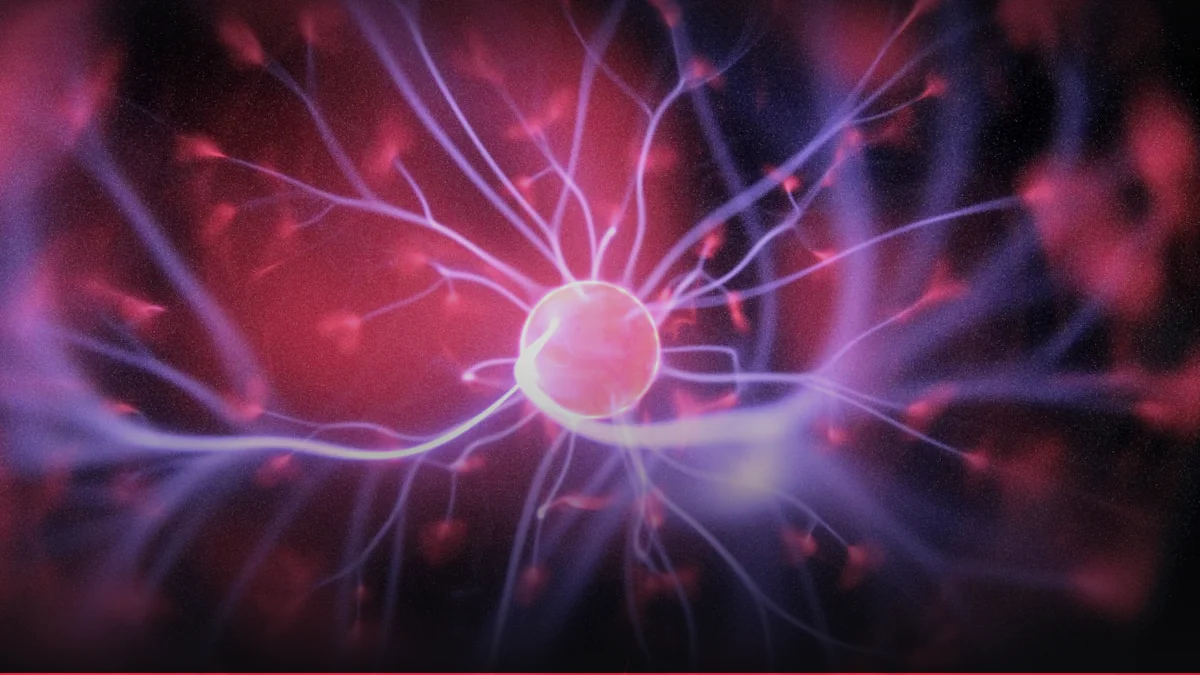
3. Anatomy of Plasticity: Synapses, Hippocampus, and Cortex
Anatomically, neuroplasticity manifests at several levels. At the microscopic level, it is the change in the shape and number of synapses (contact points between neurons). Dendritic anatomy becomes more complex, "sprouting" new spines to receive more signals. This is the anatomical basis of memory and motor skills. At the macroscopic level, plasticity leads to an increase in the volume of certain brain regions, such as the hippocampus.
The hippocampus is the anatomical hub for memory and spatial orientation. In athletes engaged in complex sports (e.g., orienteering or team games), this area often has a larger volume of gray matter. The brain's motor cortex also undergoes anatomical reformatting: areas controlling the most active limbs expand at the expense of neighboring regions.
- Dendritic Plasticity
- The ability of neuronal processes to change their anatomical structure to create new communication channels between cells.
- Myelination
- The anatomical thickening of the insulating sheath of nerve fibers, which accelerates the passage of signals from the brain to the muscles.
4. Biochemistry of Learning: BDNF, Dopamine, and Glutamate
The biochemical foundation of neuroplasticity is Brain-Derived Neurotrophic Factor (BDNF). It is "fertilizer" for neurons, stimulating their survival and growth. Physical exercise is the most powerful natural stimulator of BDNF release. When you exercise, your muscles secrete the protein irisin, which enters the brain and triggers a biochemical cascade of BDNF synthesis, making the brain receptive to learning.
Another key player is glutamate—the primary excitatory neurotransmitter. During learning, a state of Long-Term Potentiation (LTP) occurs, where the biochemical connection between two neurons becomes more stable due to an increase in the number of glutamate receptors. Dopamine plays the role of a biochemical marker of importance in this process: it records successful attempts, forcing the brain to remember the specific movement patterns that led to the result.
| Biochemical Agent | Role in Plasticity | Effect for the Athlete |
|---|---|---|
| BDNF | Growth and protection of neurons | Rapid acquisition of new technique |
| Dopamine | Skill consolidation (reward) | Formation of motor automatism |
| Glutamate | Signal transmission in synapses | Increased reaction speed |
| Acetylcholine | Focus and concentration | Precision in element execution |
The biochemical adaptation of the brain to regular loads leads to structural changes.

Electrolyte Hydration Formula
Formulate precise sodium, potassium, and magnesium ratios per liter to prevent cramps.
Launch Tool5. Physiology of Neurogenesis: How Sport Creates New Cells
Until recently, it was believed that the number of neurons in the adult brain was fixed. However, the physiology of neurogenesis proves otherwise: in certain brain regions, particularly the subgranular zone of the hippocampus, new neurons are born every day. Physical activity, especially moderate-intensity aerobic exercise, is the most powerful physiological stimulus for this process.
These new neurons have a unique property—they are extremely plastic and easily integrated into existing networks. This means that training literally upgrades your brain's hardware. Physiologically, this process takes several weeks: from stem cell division to the formation of a functional neuron with axons and dendrites, ready for work.
- Load Variability: Constant changes in exercises and training conditions force the brain to create new connections instead of exploiting old ones.
- Complex Motor Tasks: Balancing, coordination exercises, and ball games activate the cerebellum and cortex much more strongly than linear running.
- Quality Sleep: It is during sleep that memory consolidation occurs—the transfer of learned movements into long-term memory.
Your body is an instrument, but your brain is the musician. Neurogenesis gives you new "keys," and training teaches you how to play a symphony of victory on them.
6. Progression in Neuroathletics: From Conscious to Automatic
Progression in mastering motor skills goes through three physiological stages. The first is the cognitive stage, where the athlete consciously controls every micro-movement. At this stage, brain plasticity is working at its maximum, consuming huge amounts of glucose. The second is the associative stage, where movements become clearer and the number of errors decreases.
The third stage is autonomous. This is the ideal of neuroplasticity, where movement is performed at a subconscious level. Progression here involves shifting movement control from the prefrontal cortex to the basal ganglia and cerebellum. This frees up the athlete's cognitive resources for strategic thinking and reacting to opponents' actions.
- Encoding Phase: First introduction to the movement, creation of fragile synaptic connections.
- Consolidation Phase: Regular repetition, myelination of nerve pathways for signal stability.
- Integration Phase: The ability to perform a skill under conditions of noise, fatigue, and psychological pressure.
It is important to remember "use it or lose it" degradation.

7. Scientific Base: Hebb's Principle and Critical Periods
The scientific base of neuroplasticity is founded on Hebb's principle: "Neurons that fire together, wire together." This means that the more often you repeat a certain action, the stronger the neural circuit becomes. Modern neuroscience complements this with the concept of competition: neural pathways literally fight for territory in the athlete's brain.
Studies on "mirror neurons" are particularly interesting. It has been established that observing a technically perfect execution of an exercise by another athlete activates the same brain regions as the execution itself. This scientifically supports the effectiveness of watching video tutorials and visualization as methods for training neuroplasticity.
Scientific data on recovery after injuries shows that even when a certain brain area is damaged, neighboring regions can take over its functions. This is called vicariation.
8. Synergy: Neuroplasticity, Hormones, and Nutrition
Neuroplasticity works in synergy with the hormonal background. Testosterone and estrogens have neuroprotective effects and promote the growth of new synapses. Conversely, a chronic excess of cortisol (the stress hormone) is toxic to the hippocampus and can literally "turn off" neuroplasticity, making learning impossible. Synergy with proper nutrition provides the brain with the necessary building blocks.
- Omega-3 (DHA) + Physical Load: Fatty acids ensure the fluidity of neuronal membranes, which is necessary for the rapid formation of new connections.
- Curcumin + Resveratrol: These phytonutrients increase BDNF levels, synergizing with the training effect at the cellular level.
- Complex Coordination + Oxygen: An aerobic base provides the brain with the energy to conduct complex structural reformatting.
9. Common Mistakes: Monotony and Neural Overload
The main mistake is a lack of novelty. The brain responds to novelty by releasing plasticity neurotransmitters. If you do the same exercise for years, the brain "falls asleep," and plasticity stops. The other extreme is neural overload. Attempting to learn too many complex elements in one day leads to cognitive noise, where no skill is properly consolidated.
- Ignoring "Mental Pauses": The brain needs time between sets of complex coordination to process the information received.
- Training in a State of Severe Fatigue: When the nervous system is exhausted, plasticity works in "negative"—you consolidate errors and compensatory movements.
- Insufficient Hydration: Even mild dehydration reduces the speed of synaptic transmission and inhibits learning processes.
Interactive Apps & Calculators for Article
Empirical mathematical algorithms and scientific formulas for sports optimization
 Health & Rehabilitation
RED-S (Relative Energy Deficiency) Risk
Clinical assessment tool for Low Energy Availability (LEA) and Relative Energy Deficiency in Sport.
 Biohacking & Ergogenics
On-Cycle Cardiovascular & Lipid Guard
Evaluate atherogenic lipid ratio (LDL/HDL), hematocrit viscosity, and cardioprotective CoQ10 targets.
10. FAQ: Questions and Answers
- Is it possible to develop neuroplasticity after age 40?
- Yes, the brain retains plasticity into old age. The key is to constantly give it new, unusual tasks and maintain aerobic activity.
- How does meditation affect an athlete's neuroplasticity?
- Meditation strengthens connections in the prefrontal cortex, which improves the ability to focus and ignore pain signals during competition.
- Is it true that video games improve plasticity in sports?
- Yes, games that test reaction speed and strategic thinking can improve hand-eye coordination and decision-making speed.
- Which sport is best for the brain?
- Open-skill sports: tennis, soccer, wrestling—where conditions are constantly changing and the brain is forced to be as plastic as possible.
- Do nootropics help neuroplasticity?
- Some substances (e.g., Bacopa monnieri or Lion's Mane) can support BDNF, but without real practice, they do not create skills.