

Weight Loss Diet: Physiology of Fat Burning, Hormonal Regulation, and Strategies for Preserving Muscle Mass
1. Introduction and Relevance of the Topic
Weight loss, in an athletic context, refers to the reduction of body fat percentage while preserving muscle mass. Many perceive this process as a simple restriction of calories; however, for an athlete, such a simplistic approach often results in loss of strength and chronic fatigue. An effective weight loss diet is the management of biochemical processes aimed at activating lipolysis while minimizing catabolism.
The relevance of this topic is driven by the abundance of myths regarding "quick-fix" diets. It is crucial for an athlete to understand the difference between weight loss and fat loss. True "cutting" requires a balanced approach: a caloric deficit, high protein intake, and strategic carbohydrate use. In this article, we will dissect the physiology of fat burning and learn how to construct a diet that does not compromise hormonal health.
Weight loss is not a sprint; it is a marathon. The winner is the one who can create conditions in which the body itself wants to release its fat stores.
2. History and Evolution of the Issue
The issue of excess weight evolved alongside human development. In times of food scarcity, the ability to store fat was a survival advantage. With the advent of caloric abundance, the situation reversed. The first scientific diets appeared in the 19th century (e.g., the Banting diet), but they were aimed at general health rather than athletic performance.
During the Golden Era of bodybuilding, athletes utilized rigid restrictions, eliminating carbohydrates weeks before competition. In the 1990s, low-fat diets reigned supreme, eventually giving way to the boom of keto and intermittent fasting. The modern phase is based on "evidence-based nutrition." We now understand that while an energy deficit is paramount, the quality of its composition and psychological comfort determine long-term success.

3. Anatomy and Physiology of the Process
The process of fat burning consists of three sequential physiological stages.
- Mobilization (Lipolysis)
- This is the release of fatty acids from fat cells (adipocytes) into the bloodstream. This process is triggered by hormones—adrenaline, noradrenaline, and growth hormone—in response to an energy deficit and physical exertion. Fat cells in "stubborn areas" often possess more alpha-receptors, which inhibit this process, explaining why fat loss can be uneven.
- Transport
- Fatty acids must be delivered via the blood to the working muscles. The better the circulation in the tissues, the faster this stage occurs. This is why moderate cardio activity following a strength workout helps "flush" fat out of the depots.
- Oxidation (Burning)
- This is the final stage, occurring within the mitochondria—the "furnaces" of the cell. Using oxygen and with the assistance of L-carnitine, fatty acids are converted into ATP energy. If you are sedentary, the mobilized fat will simply return to the cells.
Physiologically, the body always strives to preserve fat as insurance. Our task is to convince it, through a gradual deficit and adequate protein, that there is no "starvation" and it is safe to utilize reserves.
4. Biochemical Impact on the Body
A weight loss diet triggers a cascade of biochemical reactions that can be either beneficial or harmful.
- **Hunger and Satiety Hormones:** During a caloric deficit, levels of **leptin** (the satiety hormone) drop, while **ghrelin** (the hunger hormone) rises. This is a biochemical trap that forces the brain to seek food. High consumption of protein and fiber helps suppress ghrelin at the GI tract level. - **Muscle Preservation via Nitrogen Balance:** In a deficit, the body is prone to burning muscle amino acids for glucose. To prevent this, it is necessary to maintain high amino acid levels in the blood (consuming 2.2-2.5g of protein per kg) and perform strength training, which sends a biochemical signal to the muscles: "You are needed; do not break down." - **Metabolic Adaptation:** During prolonged and rigid deficits, the thyroid gland reduces the production of T3 hormones, slowing metabolism. This is a protective mechanism that we must bypass through periodic "refeeds" (carbohydrate loading).
Biochemically, weight loss is also accompanied by the release of toxins stored in fatty tissue. Therefore, adequate support for the liver and kidneys through water and antioxidants is mandatory.
| Parameter | Normal Diet | Caloric Deficit | Impact on Progress |
|---|---|---|---|
| Insulin | High/Stable | Low | Activates fat burning |
| Cortisol | Low | Elevated | Can cause water retention |
| Testosterone | Optimal | May decrease | Risk of muscle mass loss |
| Leptin | High | Low | Increased hunger sensation |
Scientific TDEE & BMR Calculator
Calculate basal metabolic rate and target calories for fat loss, maintenance, or lean bulking.
Launch Tool5. Practical Methodology and Technique
Constructing a weight loss diet is based on three pillars: deficit, protein, and consistency.
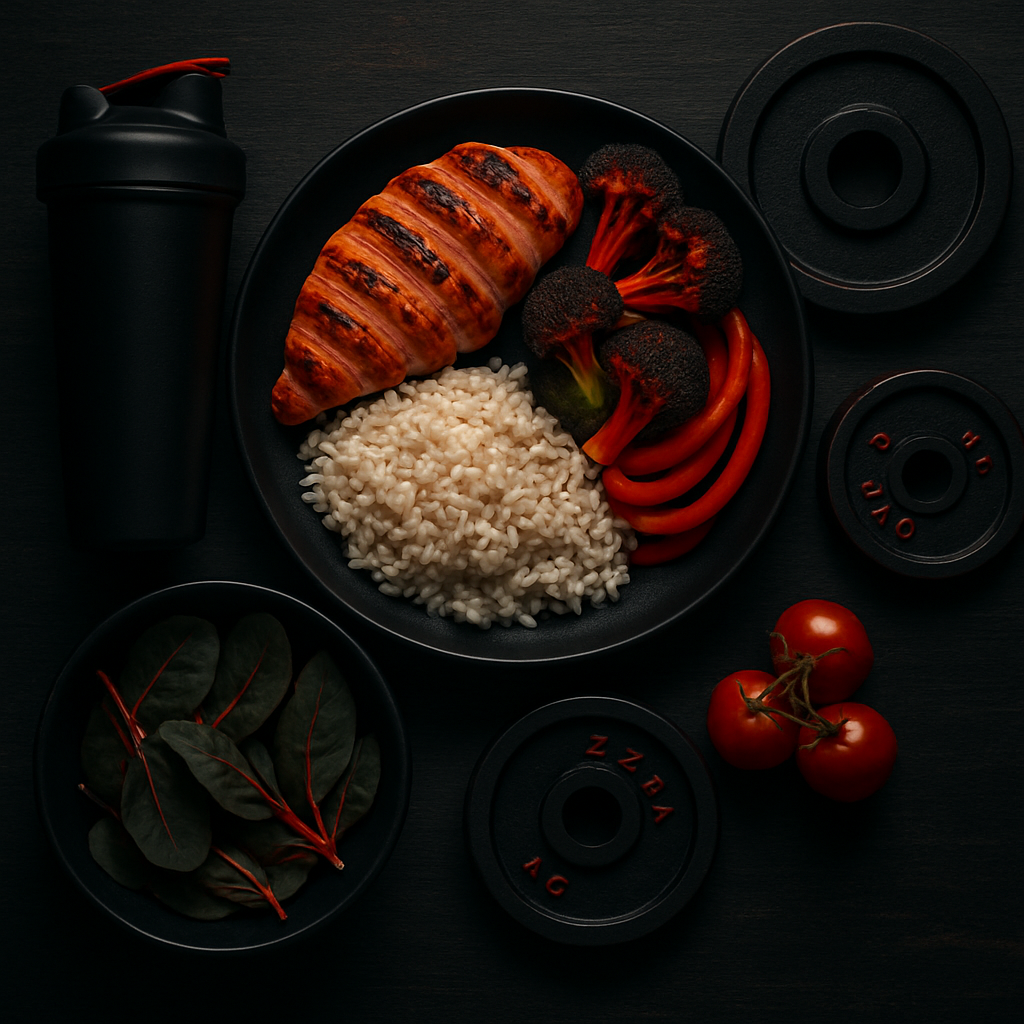
1. **Defining the Deficit:** An optimal deficit is 15-25% below maintenance. This typically amounts to 300-500 kcal per day. A larger deficit will lead to a rapid drop in metabolic rate and muscle loss. 2. **Macronutrients (Macros):** - **Protein:** 2.2-2.6g per kg of lean body mass. Protein has the highest thermic effect (digesting it consumes 20-30% of its caloric value). - **Fats:** 0.7-1.0g per kg. Necessary for maintaining hormonal balance and vitamin absorption. - **Carbohydrates:** The remaining calories. It is best to concentrate carbohydrates around the workout (before and after) to maintain intensity. 3. **Food Volume (Fiber):** Utilize foods with low energy density—green vegetables, salads. A large bowl of salad creates mechanical satiety with minimal calories. 4. **Food Selection:** Prioritize whole foods (eggs, poultry, fish, low-GI grains). Processed foods often contain hidden sugars and fats that interfere with deficit control.
Do not drink your calories. Juices and smoothies do not provide satiety but quickly exhaust your daily energy limit. Eat solid food that requires chewing.
6. Progression of Loads and Integration into the Plan
Many athletes make the mistake of switching to high-repetition training with light weights during a weight loss phase. - **Strength Load:** You must strive to maintain your working weights on the bar for as long as possible. Heavy weights are the best stimulus for muscle preservation. Muscle is energy-expensive tissue; if you do not provide a heavy load, the body will discard it first. - **Cardio Periodization:** Do not start with 2 hours of cardio daily. Add cardio gradually when progress in weight loss stalls. Start with 3 sessions of 20-30 minutes and increase as needed. - **NEAT (Non-Exercise Activity Thermogenesis):** Regular walking (10,000-15,000 steps) is often more effective than intense cardio because it does not raise cortisol as significantly and does not interfere with strength progression.
It is recommended to use "Diet Breaks": after every 4-6 weeks of a deficit, take 1 week at maintenance calories. This helps normalize hormonal balance and restore psychological health.
7. Analysis of Scientific Research and Evidence Base
A meta-analysis published in the "Journal of the International Society of Sports Nutrition" confirmed that for athletes who weight train, the most effective diet for muscle preservation is one high in protein (over 2.3g/kg) with a gradual rate of weight loss (0.5-1% of body weight per week). Faster weight loss is inevitably accompanied by significant loss of muscle fibers.
The "Minnesota Starvation Experiment" and modern observations of fitness-bikini and bodybuilding athletes have shown that extremely low levels of fat and calories can lead to prolonged disruption of the reproductive system and decreased bone density. This underscores the importance of fats in the diet (at least 20% of caloric intake) even during a rigid cut. Science has also proven the benefits of intermittent fasting (16/8) for some athletes as a tool for appetite control, though it possesses no magical advantages over a standard caloric deficit with identical macros.
8. Synergy: Nutrition, Nutraceuticals, and Recovery
To support the body during a caloric deficit: - **Omega-3s:** Reduce inflammation and improve insulin sensitivity, aiding better fat mobilization. - **Caffeine and Green Tea:** Slightly increase metabolism (by 3-5%) and help suppress appetite in the first half of the day. - **Multivitamins and Minerals:** On a restricted diet, you cannot obtain all micronutrients from food. Magnesium and zinc are particularly important for maintaining sleep quality and testosterone levels. - **Amino Acids (BCAA/EAA):** Can be useful for consumption during fasted training to protect muscles from catabolism.
The best synergy is a combination of evening strength training, a protein-rich dinner with plenty of vegetables, and 8 hours of sleep. It is during sleep, against a background of low insulin and high growth hormone, that primary fat burning occurs.
9. Common Mistakes, Myths, and Prevention of Injury
The biggest mistake is the belief in "spot reduction." No amount of abdominal exercises will burn belly fat if there is no overall caloric deficit.
- **Myth 1: "You can't eat after 6:00 PM."** Total daily balance is what matters. For many athletes, a light protein dinner before bed helps them sleep and recover better.
- **Myth 2: "Fat only burns in the cardio zone (HR 120-140)."** Fat is always burning; at low intensity, it is the primary energy source, while at high intensity, the body uses more carbohydrates. However, in an hour of intense training, you will burn more total calories, which is more important.
- **Mistake 3: Eliminating salt.** Attempting to "drop water" by eliminating salt leads to a drop in strength, cramping, and cellular dehydration. Salt is necessary for muscle function.
If you experience persistent dizziness, cold extremities, and a total lack of libido—your deficit is too aggressive. Stop and raise calories by 10-15%.
Interactive Apps & Calculators for Article
Empirical mathematical algorithms and scientific formulas for sports optimization
Sports Nutrition
Diet Break & Refeed Planner
Schedule structured 1-2 week diet breaks at maintenance calories to restore leptin, thyroid T3, and metabolic rate.
Sports Nutrition
Flexible Dieting IIFYM & 80/20 Micronutrient Rule
Distribute daily target calories into 80% nutrient-dense whole foods and 20% discretionary meals to prevent diet burnout.
10. FAQ: Answers to the Most Common Questions
- How long can I stay in a caloric deficit?
- Optimally, 8-12 weeks. After this, the body begins to adapt too strongly, and progress stalls. A maintenance phase of 2-4 weeks is required.
- Can I burn fat and build muscle simultaneously?
- This is possible for beginners or individuals with a high body fat percentage (recomposition). For experienced athletes, this task is nearly impossible without pharmacological support.
- Why has my weight plateaued even though I'm doing everything right?
- This could be water retention due to high cortisol (dietary stress). Also, fat may be replaced by glycogen during a refeed. Look at body measurements and the mirror, not just the scale.
- What is the best food for weight loss?
- The one that provides the most satiety per 100 kcal. Typically, this is chicken breast, white fish, boiled potatoes (due to their high satiety index), and all types of cabbage.
- Do I need to take L-carnitine for results?
- Carnitine helps only with a sufficient level of physical activity and a caloric deficit. It is not a "panacea," but it can slightly accelerate the fat transport process.
- Are "cheat meals" harmful?
- A cheat meal can help psychologically, but if it turns into uncontrolled overeating (3,000-5,000 calories at once), it can negate the entire deficit created over the week.
- How can I deal with evening hunger?
- Drink warm tea, consume more fiber with dinner, or save a portion of your protein macros for later (e.g., a serving of isolate or cottage cheese).