


Tendonitis: Physiology of Tendon Degradation, Inflammatory Mechanisms, and Biomechanical Recovery Strategies
1. Introduction and Relevance
Tendons are biological cables that transmit colossal force from muscles to bones. They are the foundation of our locomotion, yet simultaneously the most vulnerable link in the musculoskeletal system. **Tendonitis** is a term often used to describe pain, swelling, and impaired function of a tendon resulting from damage. However, modern sports science looks much deeper into this problem, distinguishing between acute inflammation and chronic tissue degradation.
The relevance of the topic of tendonitis today is driven by increasing training intensity and the popularity of exercises requiring explosive power. Tendons adapt to loads much slower than muscles. While muscles can become stronger in just a few weeks, tendons need months to rebuild their collagen structure. This imbalance often leads to an athlete feeling ready for new records, while their "cables" are already on the brink of rupture. Pain in the elbow, knee, or Achilles is not just discomfort; it is a signal that the biological structure of the tendon is beginning to fail.
In this article, we will break down the microscopic architecture of tendons, explore the difference between inflammatory and degenerative processes, and develop a scientific rehabilitation strategy that will allow not only for pain relief but for actual tendon strengthening for future loads.
2. Tendon Anatomy: Collagen Architecture and Vulnerability to Blood Supply
A tendon is not just a passive ligament. It is a complex living tissue where 80% of the dry mass is Type I collagen.
- Collagen Fibers
- They are arranged parallel to the muscle's line of pull. This architecture provides incredible tensile strength. Collagen is packed into bundles surrounded by endotenon—a thin sheath containing vessels and nerves.
- Tenocytes
- Specialized cells living within the tendon. They are responsible for the synthesis of new collagen and the repair of damage. Tenocytes are very sensitive to mechanical load: the right stress makes them work, while excessive stress kills them.
- Bradytrophic Tissue
- Tendons have 10-20 times poorer blood supply than muscles. This is why healing processes here last for months. Certain zones of tendons (for example, the mid-portion of the Achilles or the supraspinatus muscle of the shoulder) have so-called "critical zones"—areas with minimal blood flow where tendonitis most frequently occurs.
Due to poor vascularization, any tendon damage carries the risk of transition into a chronic stage, as the organism simply cannot supply enough nutrients for rapid repair.

3. Tendonitis vs. Tendonosis: Why the Name Matters for Treatment
In common parlance, we call any tendon pain tendonitis, but in science, these conditions are separated.
- Tendonitis: An acute inflammatory process. Occurs after a sudden overload. Characterized by classic signs of inflammation: swelling, redness, sharp pain. Heals in 1-2 weeks with proper rest.
- Tendonosis: Chronic collagen degradation without signs of active inflammation. On a microscopic level, fibers appear chaotically torn, with small cysts and nerve endings growing into the tendon body. This is the result of months or years of ignoring micro-traumas.
- Tendinopathy: A general term covering both conditions.
If you treat tendonosis as tendonitis (only with rest and anti-inflammatories), you will never cure it. A degenerative tendon needs loading for remodeling, not just rest.
This difference is critical: for tendonitis, ice and rest are needed; for tendonosis, specific strength exercises are required that force tenocytes to produce new collagen.
4. Biomechanics of Pathology: Cyclic Overload and Collagen Micro-tears
The main cause of tendon problems is not a one-time weight, but cyclic overload (Repetitive Strain).
When a muscle contracts, the tendon stretches and stores potential energy. If the load exceeds the elasticity limit of the collagen, micro-tears occur.
- "Cumulative Destruction" Effect: If there is insufficient time for repair between workouts, micro-tears accumulate. The tendon begins to thicken (swelling) in an attempt to compensate for the structural weakness.
- Reduced Stiffness: A damaged tendon becomes "soft." This disrupts force transmission: you push with the muscle at full power, but part of the energy is absorbed by the "loose" tendon, leading to a drop in strength performance.
- Mechanical Impingement: A tendon thickened by swelling begins to rub against surrounding structures (bones, ligaments), causing secondary inflammation—tenosynovitis.
Biomechanical Mechanics: Biomechanically, the most dangerous exercises are those with rapid changes in direction (plyometrics) and work at the extreme points of range of motion where the tendon is stretched to the limit.
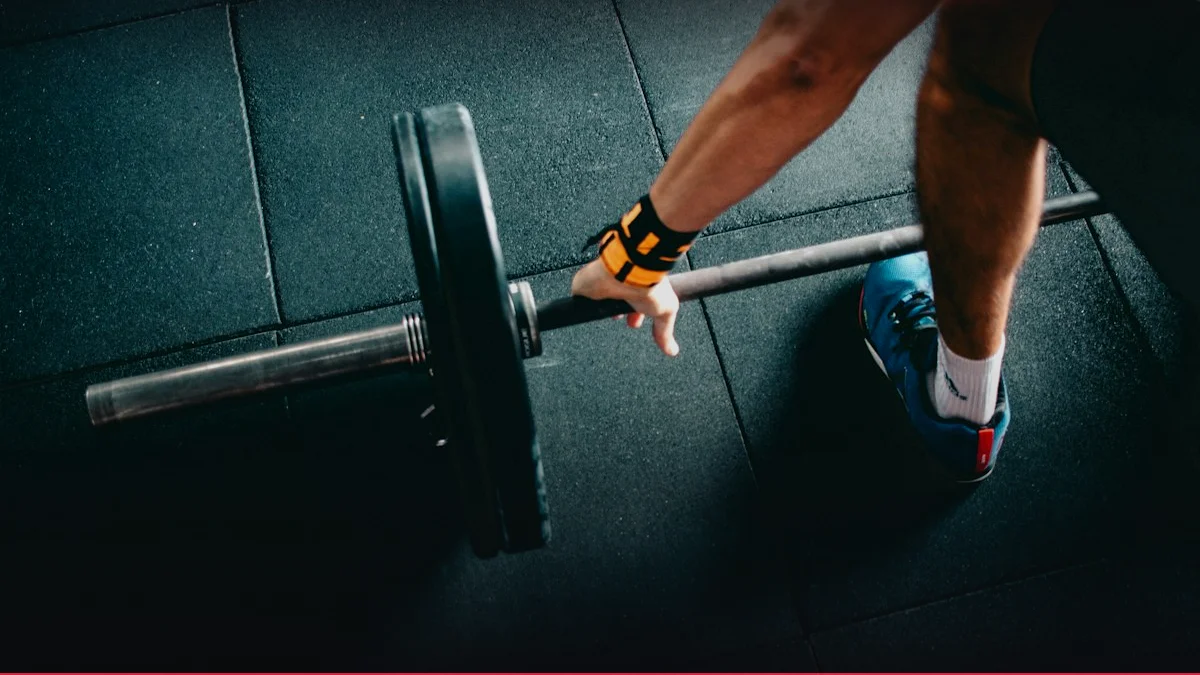
1RM & Bench Press Calculator
Calculate your One-Rep Max using 7 scientific formulas, percentage table (50-95%), and barbell plate loader visualizer.
Launch Tool5. Neurophysiological Aspect: Central Pain Sensitization in Chronic Inflammation
Pain in tendonitis often does not correspond to the actual scale of damage. This is the result of neurophysiological adaptation.
- Neovascularization
- New small vessels and, most importantly, new nerve endings begin to grow into a degenerative tendon. These nerves are extremely sensitive to any pressure or tension.
- Central Sensitization
- With prolonged pain, the brain becomes "hypersensitive" to signals from this zone. Even a light movement that does not harm the tissue is interpreted by the brain as danger, causing sharp pain. This is a protective mechanism that becomes pathological.
- Altered Motor Control
- Due to pain, the brain changes the movement pattern. You begin to "limp" or change your grip, which overloads other joints, creating a chain reaction of injuries.
Chronic tendonitis is often not a tendon problem, but a problem with your brain's "alarm system" stuck in alert mode.
6. Practical Methodology: Isometric Loading as an Analgesic
One of the most revolutionary discoveries in tendonitis rehabilitation was the role of isometric exercises (holding weight without movement).
Studies by Ebony Rio proved that heavy isometrics (holding 70% of maximum for 45 seconds) causes an immediate reduction in tendon pain for several hours. This occurs through the mechanism of "cortical inhibition"—the brain receives a signal about stability and turns off the pain drive.
| Parameter | Isometric Hold | Goal |
|---|---|---|
| Load | 70 - 80% of Maximum | Activation of mechanoreceptors |
| Hold Time | 30 - 45 Seconds | Stimulation of collagen synthesis |
| Number of Sets | 3 - 5 Sets | Reduction of pain sensitivity |
| Frequency | Can be daily | Gradual tissue adaptation |
This means you shouldn't just wait for the pain to pass. You can use isometrics as a "painkiller" that simultaneously makes the tendon stronger.
7. Scientific Research Analysis: Effectiveness of Shockwave Therapy (ESWT)
Extracorporeal Shockwave Therapy (ESWT) has become the gold standard for treating chronic tendinopathies. Scientific data confirms that high-energy sound waves cause micro-concussions in the tendon tissue.
This leads to several effects: 1. **Cavitation:** Destruction of calcifications and salt deposits in the tendon. 2. **Angiogenesis:** Stimulation of new healthy capillary growth in zones with poor blood flow. 3. **Substance P Release:** A temporary increase in pain followed by a profound inhibition of pain receptors.
Studies show that ESWT combined with therapeutic exercise has 40-50% higher effectiveness than exercise alone or rest alone. This is an ideal method for those whose tendonitis has lasted over 3 months.
8. Synergy: The Role of Eccentric Exercises in Tendon Remodeling
Once the pain has subsided thanks to isometrics, we must move to the "remodeling" stage of collagen. Here, eccentric loading (the negative phase) plays the main role.
The Alfredson Protocol is the baseline for treating Achilles and knee tendonitis. You slowly lower the weight (e.g., the heel from a platform) for 5-6 seconds but rise using the healthy leg.
- Mechanotransduction: Slow stretching under heavy weight creates a specific signal for tenocytes. They begin to align chaotic collagen fibers into neat, strong rows.
- Strengthening the Tendon Matrix: Eccentrics increase the content of glycosaminoglycans, which hold water in the tendon, making it more resilient and resistant to compression.
- Increased Rupture Threshold: Gradual loading teaches the tendon to withstand energy it previously could not absorb.
The synergy of isometrics (for pain relief) and eccentrics (for regeneration) is the only proven path to full recovery.
9. Common Mistakes, Myths, and Solutions
Errors in tendon treatment turn an athlete into a patient.
- Excessive Rest: A complete lack of load leads to "Tendon disuse atrophy." It becomes even weaker, and when you return to the gym, you tear it even more. Solution: Only relative rest, replacing heavy exercises with pain-free ones.
- Abuse of Steroid Injections (Cortisone): Cortisone relieves pain but makes collagen brittle. Studies show a higher risk of complete tendon rupture after 2-3 injections. Solution: Use only as a last resort in case of unbearable inflammation.
- Myth: "A tendon can be stretched so that it stops hurting." Stretching a degenerated tendon often causes "compression tendonitis" because you press damaged zones against the bone. Solution: Forget stretching; focus on strength work.
- Mistake: Working through acute pain. Constant irritation prevents tenocytes from closing the tears.
Interactive Apps & Calculators for Article
Empirical mathematical algorithms and scientific formulas for sports optimization
10. FAQ: Answers to Common Questions
- How long does it take to treat chronic tendonitis?
- Be realistic: 3 to 6 months. Collagen renews slowly, and attempting to speed up this process usually leads to recurrence.
- Which supplements actually work for tendons?
- Type I collagen (15-20g) together with Vitamin C 30-60 minutes before training. Loading helps direct amino acids specifically to the damaged tendon.
- Can I train other body parts with tendonitis?
- You must! This supports the general anabolic background and improves psychological state. Simply avoid movements that cause pain in the injured zone.
- Why does tendonitis worsen at night?
- Due to the drop in natural cortisol levels (an anti-inflammatory hormone) and the accumulation of edema because the limb is not moving.
- How do I know if an exercise is helping or hurting?
- Use the "24-hour rule": if 24 hours after a workout the pain has not become stronger than it was before—the load was adequate.
Tendonitis is not a sentence, but a challenge to your ability to plan load. Respect the biological speed of collagen renewal, use isometrics as a weapon against pain, and gradually harden your "biological cables." Only then can you return to heavy weights with a guarantee of reliability for every movement.