

Forearm Anatomy: Grip Biomechanics, Grip Strength, and Wrist Stability
1. Introduction and Relevance
The forearm is the most "visible" part of an athletic body, constantly on display. Powerful, vascular forearms have long been a symbol of physical labor and true strength. However, the importance of the forearms extends far beyond visual aesthetics. **Forearm muscles** (Antebrachium) are a critical link in any strength activity. They provide the grip strength without which it is impossible to perform a heavy deadlift, pull-up, or press. Weak forearms are the most frequent limiting factor hindering the progress of large muscle groups in the back and arms.
The relevance of deep forearm study today is driven by the rise in office-related conditions such as carpal tunnel syndrome and tendonitis. For an athlete, the forearms are a protective mechanism for the elbow and wrist joints. Understanding the complex anatomy of over 20 muscle bellies that control wrist and finger movements allows for not only building impressive volumes but also ensuring joint invulnerability to injury when working with extreme weights.
In this article, we will reveal the architecture of the forearm flexors and extensors, explore the biomechanics of various grip types, and develop a training strategy that will make your hands iron and your grip unshakable.
2. Anatomical Structure: Flexors, Extensors, and Pronators
The forearm is an anatomical labyrinth where muscles are arranged in several layers. They can be divided into three primary functional groups.
- Flexor Group (Volar side)
- Located on the inner side of the forearm. Consists of superficial and deep muscles (flexor carpi radialis and ulnaris, palmaris longus, flexor digitorum). They are responsible for wrist flexion and squeezing the fingers into a fist.
- Extensor Group (Dorsal side)
- Located on the outer side. These are the antagonists to the flexors. They extend the wrist and fingers. Their development is critical for the prevention of "tennis elbow."
- Brachioradialis
- The largest muscle of the forearm, forming its upper outer mass. It helps flex the elbow, especially with a neutral grip (hammer curls).
- Rotators (Pronators and Supinators)
- Small but very important muscles (pronator teres and quadratus) that rotate the forearm to turn the palm down or up.
Interestingly, most forearm muscles have very long tendons that pass through the wrist under special retaining ligaments (retinaculum). This allows the fingers to be thin and agile while maintaining the great strength generated by the massive muscle bellies higher up the arm.
3. Grip Biomechanics: Cylindrical, Pinch, and Power Grips
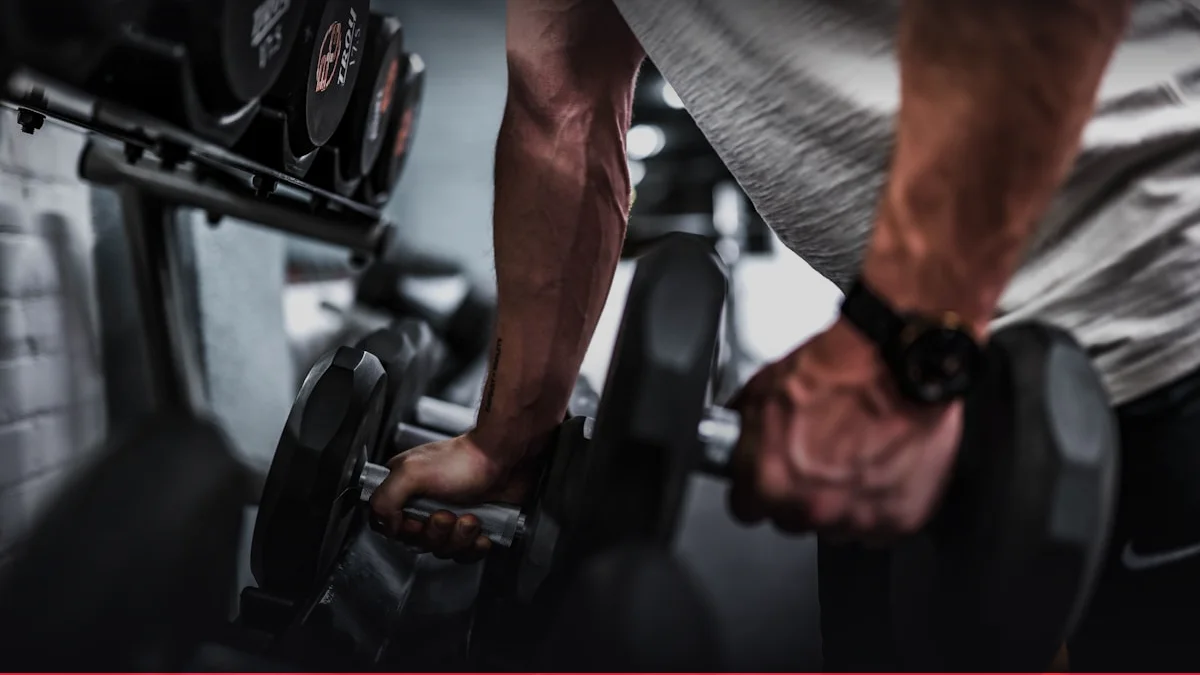
Grip is the primary function of the forearm. Biomechanically, we use different types of muscle activation depending on the task.
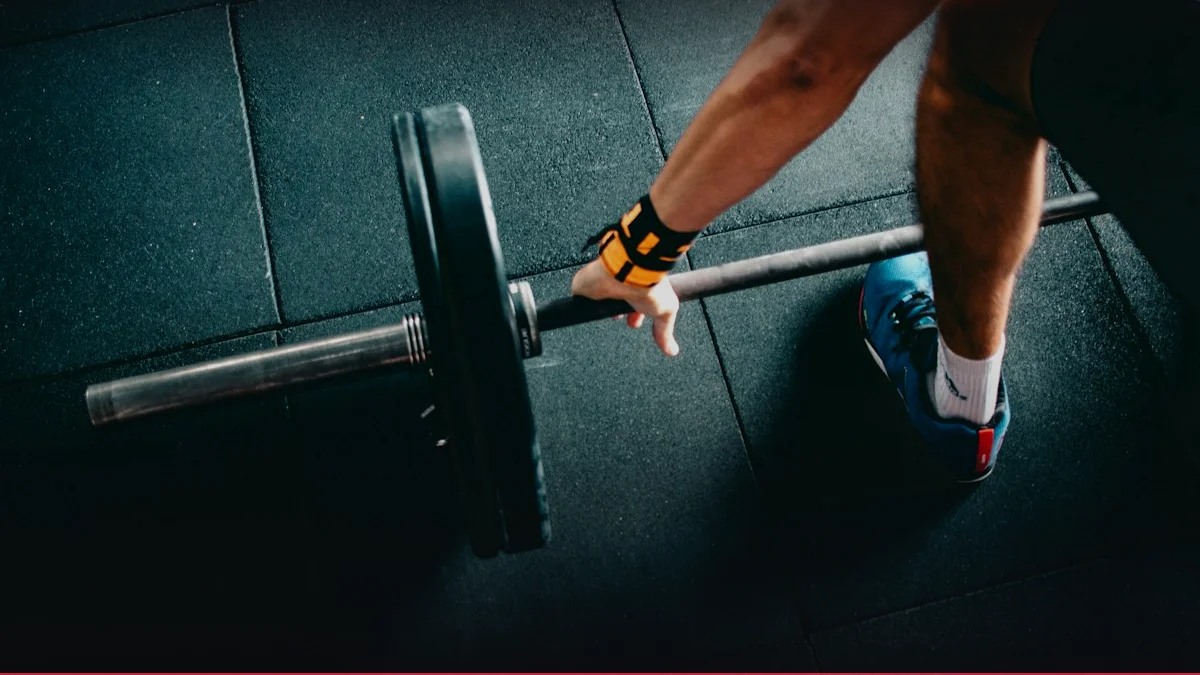
- Power Grip: The fingers wrap around an object (barbell shaft) and press it against the palm with the involvement of the thumb. This is the main grip in the gym. It requires maximum contraction of the deep finger flexors.
- Pinch Grip: The object is held only by the fingertips (for example, holding a barbell plate). Here, the strength of the thumb flexors and the interosseous muscles of the hand is critical.
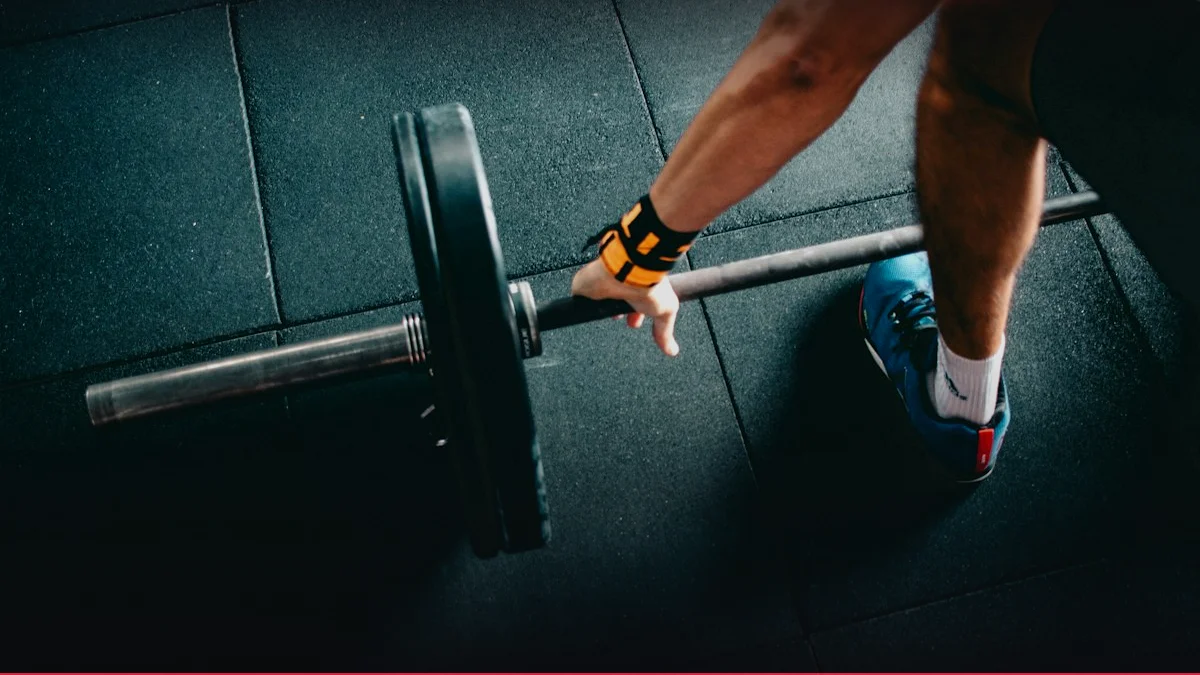
- Hook Grip: A specific grip in weightlifting where the thumb is pressed against the bar by the other fingers. This allows for holding enormous weights but requires high tendon strength.
- Static Hold: The ability of the forearms to counter finger extension under the action of gravity. This is what is trained during the "Farmer's Walk."
Biomechanical Mechanics: Biomechanically, grip strength is 20-30% higher when the wrist is in a position of slight extension (cocked back). If the wrist flexes forward under the weight of the bar, the finger flexors become mechanically weaker due to "active insufficiency." This is why it is important to keep the wrist straight or slightly extended during pulling movements.
4. Neurophysiological Aspect: Proprioception and the Finger-Brain Link
The forearms and hands occupy a vast area in the sensory and motor cortex of the brain (the famous "Penfield Homunculus"). Our hands have the highest density of proprioceptors—nerve endings that report to the brain about position, pressure, and tension.
Grip strength is a direct indicator of the state of your central nervous system. If your hands suddenly become weak, it is the first sign of systemic fatigue or overtraining.
Neurophysiologically, forearm training improves "kinesthetic intelligence." The better you feel the equipment, the more effectively you can transmit force through it. Moreover, a reflex link exists: squeezing the bar tightly (forearm activation) causes irradiation of excitation to the muscles of the shoulder and chest, allowing for lifting 5-10% more weight in presses. This neural reinforcement is the secret of professional powerlifters.
1RM & Bench Press Calculator
Calculate your One-Rep Max using 7 scientific formulas, percentage table (50-95%), and barbell plate loader visualizer.
Launch Tool5. Practical Methodology: Exercise Classification for Full Arm Development
For harmonious forearm development, training should include movements in all planes.
| Category | Exercise | Target Muscles |
|---|---|---|
| Flexion | Barbell/Dumbbell Wrist Curls | Flexor muscles (inner part) |
| Extension | Reverse Grip Wrist Extensions | Extensor muscles (outer part) |
| Holding (Static) | Farmer's Walk, Hangs, Plate Pinches | Deep finger flexors (Grip strength) |
| Rotation | Wrist Rollers, Dumbbell Rotations | Pronators and supinators |
A unique exercise is the "Hammer Curl" with dumbbells, where the brachioradialis works in synergy with the brachialis. However, for true forearm power, nothing replaces working with thick bars (Fat Gripz). Increasing the diameter of the equipment forces the forearms to work in a disadvantaged position, which dramatically accelerates the growth of strength and volume.
6. Load Progression and the Role of Frequent Forearm Training
The forearms are muscles with a very high density of Type I (slow-twitch) fibers because they are involved in almost every manual manipulation throughout the day. This makes them extremely endurant and resistant to ordinary loads.
- High Frequency: Forearms can be trained frequently—3-5 times per week. They recover quickly due to excellent blood supply.
- High Repetitions: Isolated wrist exercises work best in the 15-25 repetition range. This creates the necessary metabolic stress and pump.
- Time Progression: In static exercises (Farmer's Walk), try to add 5-10 seconds to the hold time every week.
- Negative Phase: Slowly extending the wrist with weight stimulates tendon strengthening, which is key to injury prevention.
Forearms grow not from the weight you "threw," but from the weight you "held." Statics are the foundation of their mass.
7. Scientific Research Analysis: Link Between Grip Strength and Overall Health
Science has uncovered a staggering fact: grip strength is one of the most accurate predictors of biological age and risk of premature death. In a large study (R. Sullivan et al.) involving 140,000 people, it was proven that every 5 kg decrease in grip strength correlates with a 17% increase in the risk of cardiovascular events.
Why is hand strength linked to the heart? Scientists suggest that grip strength is a marker of overall muscle integrity and the state of the autonomic nervous system. For an athlete, this means that forearm training is not just cosmetic, but an investment in systemic health. Additionally, research in the "Journal of Hand Therapy" showed that regular training of the forearm extensors significantly reduces pain in lateral epicondylitis by balancing tension in the joint.
8. Synergy: The Role of Forearms in Heavy Pulls and Barbell Stabilization
The forearm is the "transmitter" of your force to the equipment. In heavy basic exercises, a unique synergy arises.
- Deadlift: If your grip "opens" at 200 kg, your back will never know it could have lifted 220 kg. By training the forearms, you remove the "electronic limiter" from your large muscle groups.
- Bench Press: Strong forearms stabilize the wrist, preventing the barbell from "wobbling" and injuring the wrist joint. This creates a rigid support for force transmission from the chest.
- Pull-ups: Forearm endurance determines how many quality repetitions you can perform. Often the back is still ready to work, but the hands are already giving way.
To improve this synergy, it is recommended to occasionally skip lifting straps on warm-up and moderate sets of pulls. This allows the forearms to develop naturally along with the body's overall strength. Use straps only when the barbell weight truly exceeds your grip capacity, so as not to hinder back development.
9. Common Mistakes, Myths, and Solutions
Errors in forearm training make them weak and prone to injury.
- Flexion Only, Ignoring Extensors: Creates a terrible imbalance that leads to elbow pain. Solution: For every set of flexions, do a set of wrist extensions.
- Excessive Volume Despite Injury: Working through sharp pain. Solution: At the first sign of tendon inflammation, reduce intensity and add extensor stretching.
- Myth: "Forearms don't need training; they'll grow from pulls." For many, they indeed grow, but for most, they become a "bottleneck." Isolation is necessary for maximum results.
- Mistake: Working only with dumbbells. Dumbbells allow the wrist to rotate, which reduces the stabilization load. Solution: Use a thick barbell to train "dead" grip.
Interactive Apps & Calculators for Article
Empirical mathematical algorithms and scientific formulas for sports optimization
10. FAQ: Expert Answers to Common Questions
- How often can I train my forearms?
- You can train them every other day. The main thing is to monitor the state of the tendons. If you feel a dull pain in the elbow—take a break.
- Does a hand gripper help build forearm mass?
- It excellently trains finger crushing strength (grip), but for visual mass, dynamic exercises with weights (wrist flexion/extension) are needed.
- Why do my fingers go numb after a forearm workout?
- This could be a sign of compression of the median or ulnar nerve due to muscle swelling. Reduce training volume and add forearm massage.
- Can I strengthen my wrist if it's naturally thin?
- You cannot change the bone size, but you can significantly increase the thickness of the tendons and muscle bellies around it, making the wrist visually more powerful and resistant to loads.
- What is the best exercise for arm vascularity?
- Any exercise with a high number of repetitions (20+), creating a strong pump. This expands capillaries and superficial veins.
Forearms are the calling card of your strength. Do not leave them to chance; train them with the same passion as your chest or back. Only with an iron grip and powerful forearms can you truly conquer the iron and unlock your athletic potential.