

Core Anatomy: The Biomechanical Center of Strength, Stability, and Spinal Health
1. Introduction and Relevance
In the world of fitness and professional sports, the term "Core" has become one of the most frequently used, yet its understanding is often limited to just the visible "abs." This superficial view leads athletes to focus on aesthetics while ignoring the fundamental function of this complex system. The **Core** is not a single muscle, but an entire complex of deep and superficial muscle groups working in synergy to stabilize the spine, pelvis, and the kinetic chain as a whole. It is the body's energy hub, through which force is transmitted from the legs to the arms and vice versa.
The relevance of a deep study of core anatomy is driven by the increasing number of lumbar spine injuries among both athletes and sedentary individuals. A weak or unbalanced core is the primary cause of herniations, protrusions, and chronic pain. Furthermore, without a stable core, it is impossible to achieve maximum results in basic exercises like squats or deadlifts. Your body simply will not allow you to lift a heavy weight if it senses instability at its "center."
In this article, we will reveal the core's architecture as a "biomechanical cylinder," investigate the neurophysiological mechanisms of stabilization, and develop a scientific approach to training that ensures not only aesthetic abs but also rock-solid stability and health for years to come.
2. Defining the Core: Beyond the "Six-Pack"
To understand how to train the core, we must give it a clear anatomical definition. In biomechanics, the core is described as a box or cylinder where the abdominal muscles are at the front, the back and glute muscles are at the rear, the diaphragm is at the top, and the pelvic floor muscles are at the bottom.
- Functional Purpose of the Core
- The main task of the core is not to flex the spine (as we do in crunches), but to resist unwanted movement. This includes anti-flexion, anti-extension, anti-rotation, and anti-lateral flexion. It is a system of rigidity that protects the spinal cord and internal organs.
- Kinetic Transmission
- The core acts as a bridge. If the bridge is weak, it sags, and the energy you generate with your legs dissipates before reaching the barbell or an opponent. A stable core makes your movements efficient and explosive.
It is important to understand the difference between global and local stabilizers. Global muscles (large and superficial) create movement and control external forces. Local muscles (deep) create rigidity directly at each spinal segment. True core strength is the ability of these two systems to work in perfect synchronization at millisecond intervals.
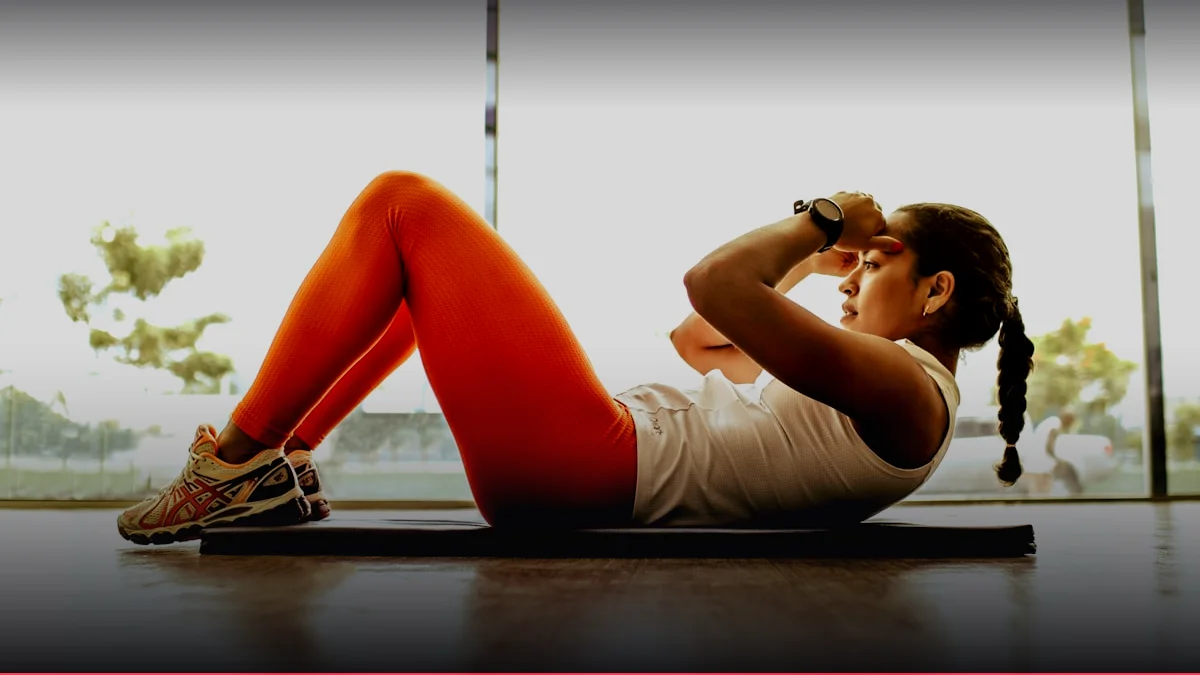
3. Anatomy of the Deep Layer: Transversus Abdominis and Multifidus
The deep layer of the core is your "internal corset." These muscles aren't visible in the mirror, but they determine whether your back will be healthy.
- Transversus Abdominis (m. transversus abdominis)
- The deepest muscle of the abdominal wall. Its fibers are arranged horizontally, similar to an athletic belt. When contracted, it increases intra-abdominal pressure and tensions the thoracolumbar fascia, creating a rigid cylinder around the spine.
- Multifidus (mm. multifidi)
- Short muscles connecting the processes of the vertebrae. They provide segmental stability. Studies show that in people with back pain, these muscles are often atrophied or "turned off" by the nervous system.
- Diaphragm
- Although known as a respiratory muscle, the diaphragm is the "roof" of the core. Its proper position allows for the creation of pressure that supports the spine from the inside.
- Pelvic Floor Muscles
- Form the "floor" of the cylinder. They work in inseparable connection with the transversus abdominis. Pelvic floor insufficiency instantly weakens the entire corset.
The deep core is the foundation of the house. Without it, even the most powerful walls (superficial muscles) will eventually collapse.
Activating these muscles does not require great effort. It is more a matter of control and breathing. Teaching the brain to engage the transversus abdominis at the right time is the first step in any rehabilitation or strength preparation program.
4. The External Layer: Rectus Abdominis, Obliques, and Erector Spinae
The external layer of the core is what we are used to seeing and training. These muscles are responsible for powerful movements and resisting large external loads.
- Rectus Abdominis (m. rectus abdominis): The "six-pack" itself. Its primary function is spinal flexion and posterior pelvic tilt. In athleticism, it works as a powerful "brace" preventing spinal hyperextension.
- External and Internal Obliques: Create the side wall of the core. They are responsible for rotation and lateral flexion, but their most important function is anti-rotation (the ability to keep the torso straight when weight pulls to the side).
- Erector Spinae (m. erector spinae): Powerful muscle cables along the spine. They hold the back straight during deadlifts and squats.
- Quadratus Lumborum (m. quadratus lumborum): A deep lateral stabilizer connecting the pelvis and spine. It is critical for stability during walking and running.
| Muscle | Primary Biomechanical Function | Type of Stabilization |
|---|---|---|
| Rectus Abdominis | Anti-extension | Global |
| Obliques | Anti-rotation | Global/Local |
| Transversus Abdominis | Intra-abdominal Pressure | Local (Fundamental) |
| Erector Spinae | Anti-flexion | Global |
Wilks & DOTS Powerlifting Score
Measure relative strength in powerlifting and bench press across different bodyweights.
Launch Tool5. Biomechanics of the "Cylinder": Intra-abdominal Pressure and the Role of the Diaphragm
The secret to core strength lies in hydraulics. Imagine an empty soda can. If it's open and empty, you can easily crush it with your hand. But if it's closed and there is pressure inside, it can support the weight of an adult. Our core works on the same principle.
The key element is **Intra-abdominal Pressure (IAP)**. When you take a breath into your stomach (diaphragmatic breathing), the diaphragm descends, compressing the internal organs. Simultaneously, the pelvic floor muscles and the transversus abdominis tense, preventing the organs from shifting. This creates a rigid support that braces the spine from the inside, removing up to 40% of the compressive load from it.
Biomechanical Mechanics: Biomechanically incorrect breathing (chest breathing) pulls the diaphragm upward, making the "roof" of the cylinder unstable. This leads to all the force pressing on the intervertebral discs rather than the muscle corset during weightlifting. This is why skills in proper "bracing" (tensing the abdominal muscles without vacuuming/sucking in) are critically important for safety.
6. Neurophysiological Aspect: Feed-forward Mechanism
The core is an intelligent system. In a healthy organism, the core muscles (especially the transversus abdominis and multifidus) contract **30-50 milliseconds before** you move an arm or leg. This is known as the feed-forward mechanism.
The brain knows that a limb movement will create a destabilizing moment for the spine, so it "tightens the corset" in advance. In people with back injuries, this mechanism is broken: the core muscles turn on too late or not at all, leaving the spine defenseless at the moment of loading.
Core training is not just endurance exercises; it is restoring the speed of muscle reaction to the nerve impulse.
Neurophysiologically, we can improve this mechanism using exercises on unstable surfaces or exercises requiring immediate reaction to changes in body position. For example, catching a medicine ball or working with TRX straps forces the brain to activate the core in real-time, restoring natural protective patterns.
7. Scientific Research Analysis: Stability vs. Mobility of the Spine
Modern sports science (led by Dr. Stuart McGill) has radically changed the view on core training. It was previously believed that spinal flexibility (the ability to flex deeply) was good. However, research has shown that excessive mobility in the lumbar section correlates with a high risk of herniation.
The spine is a mast, and the core is the guy-wires (cables) holding it up. If the cables are weak, the mast will break under the wind. Scientific data confirm that for lower back health, we need **stability**, not mobility. Mobility should be in the hip joints and the thoracic spine, while the lower back must remain rigid.
EMG (electromyography) studies show that exercises such as the "Bird-Dog," side plank, and "Curl-up" (The McGill Big 3) provide maximum core muscle activation with minimal loading on the intervertebral discs. This makes them the gold standard for both rehabilitation and strength preparation.
8. Synergy: Role of the Pelvic Floor and Glutes in Core Work
The core does not end at the navel. It is inseparably connected with the pelvis. The gluteal muscles are the most important partners of the core in maintaining posture and transmitting force.
- Glutes (Gluteus Maximus): Provide stability to the pelvis from the rear. If the glutes are weak (the "gluteal amnesia" phenomenon), the lower back is forced to take on their work, leading to over-tension of the spinal erectors.
- Pelvic Floor: Works like a trampoline, supporting internal organs. Its activation creates the necessary resistance for the diaphragm above.
- Thigh Muscles (Quadriceps and Hamstrings): Their tone determines pelvic tilt. For example, tight hip flexors pull the pelvis forward, creating excessive lordosis (lower back arch), which turns off the abdominal muscles.
This synergy means you cannot have a truly strong core without strong glutes. Core training must be comprehensive: abdominal work should be combined with hip mobilization and strengthening the posterior chain. Only then will the "cylinder" work as a single unit.
9. Common Mistakes, Myths, and Solutions
Errors in core training are the fastest way to get the injury you are trying to prevent.
- Excessive Crunches: Constantly flexing the spine under load "squeezes" the discs backward. Solution: Replace crunches with planks and anti-rotation exercises (e.g., Pallof Press).
- Stomach Vacuuming during weightlifting: This turns off intra-abdominal pressure and makes the core weak. Solution: Use "Bracing"—tense your stomach as if you are about to be punched, expanding it outward/to the sides.
- Ignoring Breathing: Holding the breath (Valsalva maneuver) without proper preparation can lead to a dangerous spike in pressure. Solution: Learn to "breathe behind the shield"—maintain abdominal tension during steady breathing.
- Myth: "Abs need to be trained every day with 100 reps." Abs are muscles just like any others. They need weight for growth and rest for recovery.
Interactive Apps & Calculators for Article
Empirical mathematical algorithms and scientific formulas for sports optimization
 Health & Rehabilitation
Bone Mineral Density T-Score & Osteogenic Loading
Evaluate bone mineral density T-score and determine minimum osteogenic loading thresholds (>4g ground reaction or >80% 1RM).
 Sports Nutrition
Mediterranean Diet Polyphenol & MUFA Score
Calculate daily oleic acid, hydroxytyrosol polyphenol intake, and estimated flow-mediated dilation improvement.
10. FAQ: Answers to Common Questions
- Does an athletic belt replace the core?
- No. A belt is an external support that helps the core create higher pressure. If your own core is weak, a belt may only create an illusion of safety, leading to injury with excessive weight.
- Why does my lower back hurt after a plank instead of my abs?
- This is a sign that your abs "gave up" and your spine sagged on the ligaments. Shorten the plank time, but hold the pelvis in a neutral position by squeezing the glutes.
- Can I get rid of belly fat with core exercises?
- No. Fat is burned through a caloric deficit. Core exercises strengthen the muscles under the fat, improve posture, and make the waist look visually narrower due to transversus abdominis tone.
- Which exercise is best for the core?
- There is no single "best." An ideal complex should include anti-extension (plank), anti-rotation (Pallof press), and anti-lateral flexion (single-arm farmer's walk).
- Is it harmful to train abs with back pain?
- It depends on the exercise. Crunches are harmful. Static stabilization (McGill Big 3) is the basis of treatment and rehabilitation for back pain.
Core anatomy is the architecture of your strength. By understanding how this biomechanical center works, you can build a body that not only looks impressive but works with perfect efficiency, remaining invulnerable to injury and time.