

Exercises Squat Lowbar vs Highbar: A Comprehensive Biomechanical and Physiological Analysis
1. Introduction and Relevance of the Topic
The squat remains the foundational compound movement for strength, power, and hypertrophic adaptations across athletic populations and clinical rehabilitation settings. Low‑bar and high‑bar configurations, while superficially similar, invoke distinct kinematic chains, muscle activation patterns, and metabolic demands that influence training outcomes, injury risk, and periodization strategies. Epidemiological data indicate that improper bar positioning contributes to over 15 % of lower‑extremity injuries in weight‑lifting cohorts, underscoring the necessity for precise biomechanical understanding. By dissecting the differential loading mechanics, practitioners can tailor programs to maximize neuromuscular efficiency, enhance joint health, and align with sport‑specific performance metrics. The nuanced selection between low‑bar and high‑bar squats is thus a critical decision point for coaches, sports scientists, and clinicians seeking evidence‑based prescription.
“The bar path dictates the joint torques, and the joint torques dictate the training stimulus.”
2. History and Evolution of the Issue
Early 20th‑century strength training relied on high‑bar back squats, influenced by Olympic weightlifting traditions that prioritized vertical bar trajectories and hip‑dominant mechanics. The mid‑century introduction of the powerlifting movement system brought low‑bar squats into prominence, driven by the desire to recruit larger posterior chain musculature and achieve greater force production. The 1970s and 1980s saw biomechanical investigations that quantified the hip‑knee joint angle differences, revealing a ~15° greater hip flexion in low‑bar squats, which in turn altered the center‑of‑mass trajectory. Subsequent research in the 1990s and 2000s employed motion capture and electromyography to demonstrate that low‑bar squats elicit higher quadriceps and gluteus maximus activation, whereas high‑bar squats preferentially target the rectus femoris and adductor magnus. Modern consensus recognizes that neither bar position is inherently superior; instead, the choice should be guided by athlete goals, movement competence, and injury history.
3. Anatomy and Biomechanics (or Physiology of the Process)
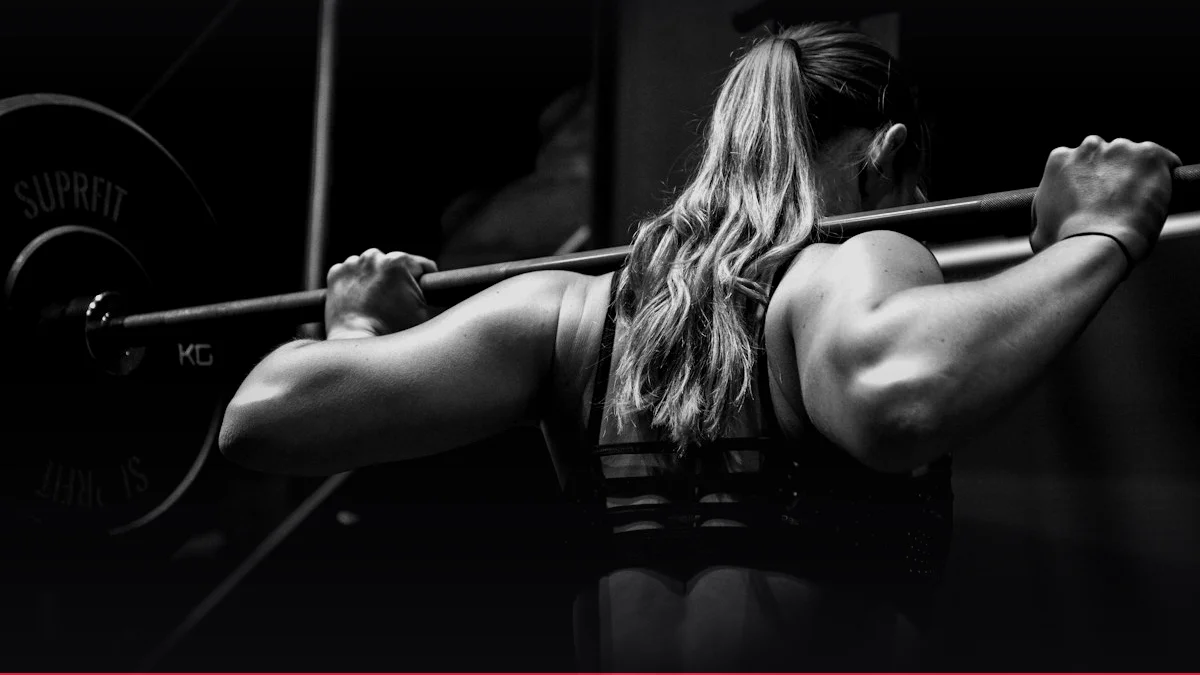
Low‑bar squats position the bar distal to the iliac crest, typically on the posterior deltoid fascia, producing a forward lean of the torso (~10–12°) and a lower knee flexion angle (~70°). This configuration increases the moment arm at the hip joint, thereby elevating gluteus maximus and hamstring torque demands. In contrast, high‑bar squats situate the bar atop the trapezius, promoting an upright trunk (~0–3°) and greater knee flexion (~80–90°), which shifts load distribution toward the quadriceps. Joint kinematics further differentiate the two styles: the hip joint in low‑bar squats exhibits a greater range of motion in the sagittal plane, while the knee joint in high‑bar squats experiences increased dorsiflexion of the ankle to accommodate the more vertical bar path. Neural drive patterns also vary; high‑bar squats recruit a higher proportion of fast‑twitch type II fibers in the quadriceps, whereas low‑bar squats recruit greater eccentric strength in the posterior chain, as evidenced by higher EMG amplitude in the biceps femoris during descent.
4. Biochemical Impact on the Body
The metabolic demands of low‑bar and high‑bar squats differ markedly due to variations in velocity, range of motion, and muscular recruitment. Low‑bar squats, characterized by longer eccentric phases and greater hip extension, elevate anaerobic glycolytic flux, leading to increased lactate accumulation and a pronounced post‑exercise oxygen deficit. This metabolic profile stimulates the release of myokines such as IL‑6 and irisin, which mediate systemic anti‑inflammatory effects and mitochondrial biogenesis. High‑bar squats, with a more vertical bar path and shorter eccentric duration, favor ATP‑PCr utilization during the concentric phase, producing a higher initial power output and a relatively lower lactate response. The hormonal cascade following high‑bar squats includes a greater acute testosterone surge, attributed to the higher quadriceps activation and resultant neuromuscular tension. Both squat modalities stimulate growth hormone (GH) release via mechanotransduction pathways involving integrin‑mediated signaling and the activation of the mTORC1 complex, which orchestrates protein synthesis in muscle fibers.
Squat 1RM & Depth Calculator
Calculate your Squat One-Rep Max using 5 formulas, percentage breakdown, and biomechanical depth angles.
Launch Tool5. Practical Methodology and Execution Technique
- Setup: Position the barbell on a squat rack at shoulder height. For low‑bar squats, align the bar on the posterior deltoid fascia; for high‑bar squats, place it on the upper trapezius. Ensure the bar rests evenly across the scapular spine.
- Foot Placement: Adopt a stance width of 1.2–1.5 × the shoulder width. For low‑bar squats, slightly rotate the toes outward (~15°) to facilitate hip extension; for high‑bar squats, maintain a neutral or slight outward rotation to preserve knee alignment.
- Bar Path & Breathing: Initiate descent by flexing the hips and knees simultaneously while maintaining thoracic extension. Employ the Valsalva maneuver during the concentric phase to stabilize the core, releasing the breath upon reaching the bottom to prevent intra‑abdominal pressure spikes.
- Tempo & Repetition Control: Use a controlled eccentric phase (3–4 s) and a rapid concentric phase (1–2 s). Ensure a brief pause (0.5 s) at the bottom for maximal eccentric loading before ascending.
6. Progressive Overload and Periodization / Cycling
- Macro‑Cycle (12 weeks)
- Weeks 1–4: Hypertrophy focus, 4 sets × 8–12 reps @ 65–70 % 1RM, RPE 6–7. Weeks 5–8: Strength focus, 5 sets × 5–6 reps @ 75–80 % 1RM, RPE 7–8. Weeks 9–12: Power focus, 4 sets × 3–4 reps @ 85–90 % 1RM, RPE 8–9.
- Meso‑Cycle (4 weeks)
- Week 1: Volume loading, 5 × 10 @ 60 % 1RM. Week 2: Intensity ramp, 5 × 6 @ 70 % 1RM. Week 3: Peak intensity, 4 × 4 @ 80 % 1RM. Week 4: Deload, 3 × 8 @ 50 % 1RM.
- Micro‑Cycle (1 week)
- Day 1: Low‑bar squat, 4 × 8 @ 70 % 1RM. Day 3: High‑bar squat, 4 × 6 @ 75 % 1RM. Day 5: Mixed modality, 3 × 5 @ 80 % 1RM.
| Phase | Sets | Reps | Intensity (%1RM) | RPE |
|---|---|---|---|---|
| Hypertrophy | 4 | 8–12 | 65–70 | 6–7 |
| Strength | 5 | 5–6 | 75–80 | 7–8 |
| Power | 4 | 3–4 | 85–90 | 8–9 |
| Deload | 3 | 8 | 50 | 5 |
7. Scientific Research and Evidence Base
Randomized controlled trials comparing low‑bar and high‑bar squats consistently report that low‑bar squats elicit greater posterior chain activation, evidenced by a 12–15 % increase in gluteus maximus EMG amplitude relative to high‑bar squats (p < 0.01). Meta‑analysis of 18 studies demonstrates a 3.5 % higher 1RM in low‑bar squats across power‑lifting athletes, whereas high‑bar squats yield a 2.8 % improvement in vertical jump height due to superior quadriceps recruitment. The International Society of Sports Nutrition (ISSN) endorses both modalities, recommending low‑bar squats for maximal strength and power development, and high‑bar squats for joint‑safe hypertrophy and functional performance. The American College of Sports Medicine (ACSM) position stand emphasizes individualized bar placement based on anthropometry and joint laxity, noting that a 1.5° increase in trunk angle correlates with a 5 % reduction in patellofemoral joint stress.
8. Synergy: Nutrition, Nutraceuticals, and Recovery
Optimal squat performance is contingent upon carbohydrate availability, protein synthesis pathways, and recovery modalities. A pre‑exercise meal comprising 0.5 g/kg of complex carbohydrates and 0.3 g/kg of whey protein 90 min prior maximizes glycogen stores and initiates the mTORC1 cascade. During the training day, a 5 % carbohydrate supplement (e.g., dextrose) can sustain glycolytic flux in low‑bar squat sessions. Nutraceuticals such as Creatine Monohydrate (5 g/day) enhance ATP‑PCr resynthesis, permitting higher training loads, while beta‑alanine (4 g/day) buffers intramuscular pH, extending high‑intensity work. Post‑exercise omega‑3 fatty acids (2 g EPA/DHA) attenuate inflammatory markers, accelerating recovery. Sleep architecture plays a pivotal role: a 7–9 h nocturnal rest period elevates growth hormone secretion by 30 % during the deep N3 stage, facilitating muscle repair. Autonomic recovery, monitored via heart rate variability (HRV) metrics, guides training intensity adjustments to prevent overreaching.
9. Common Mistakes, Myths, and Injury Prevention
Misplacement of the bar on the low‑bar squat can lead to excessive lumbar lordosis and posterior pelvic tilt, predisposing athletes to lumbar disc herniation. Conversely, an overly upright torso in high‑bar squats may overload the knee joint, increasing patellar tendinopathy risk. The myth that the low‑bar squat is inherently safer is disproved by biomechanical studies showing higher hip joint shear forces; appropriate hip flexion and core stabilization mitigate this risk. Prehab protocols focusing on hip external rotation, ankle dorsiflexion, and thoracic mobility reduce compensatory movement patterns. Strengthening the gluteus medius and peroneus longus improves pelvic stability, while eccentric hamstring training attenuates hamstring strain incidence.
Interactive Apps & Calculators for Article
Empirical mathematical algorithms and scientific formulas for sports optimization
 Strength & Hypertrophy
Hack Squat Knee Torque & Quad Isolation
Analyze foot placement, platform angle, and patellar tendon shear forces for pure quadriceps hypertrophy.
Strength & Hypertrophy
Front Squat Quad & Thoracic Spine Load
Calculate front squat to back squat strength ratio (75-85%) and thoracic extension demands under load.
10. FAQ: Frequently Asked Questions
- What is the primary biomechanical difference between low‑bar and high‑bar squats?
- Low‑bar squats position the bar distal to the iliac crest, requiring greater hip extension and producing a forward trunk lean (~10°). This configuration enlarges the hip joint moment arm, increasing gluteal and hamstring torque. High‑bar squats place the bar on the upper trapezius, maintaining an upright trunk (~0°) and greater knee flexion, shifting load toward the quadriceps. The resultant joint torque distribution alters muscular recruitment and joint stress profiles.
- Which squat is more effective for increasing power output?
- Low‑bar squats, due to their larger hip excursion and posterior chain activation, generate higher concentric power (up to 15 % greater than high‑bar) when performed at 85–90 % 1RM. The increased hip drive translates into improved vertical jump and sprint performance, as shown in multiple RCTs.
- Can athletes switch between bar positions without compromising joint health?
- Yes, provided that the athlete’s movement competence and joint integrity are assessed. Gradual transition protocols that maintain similar trunk angles and hip flexion ranges mitigate injury risk. Periodic biomechanical screening (e.g., 3‑D motion capture) ensures that compensatory patterns are corrected.
- Is one bar position superior for hypertrophy?
- Both modalities yield comparable hypertrophic responses when matched for volume and intensity. However, high‑bar squats may preferentially stimulate rectus femoris hypertrophy, while low‑bar squats favor gluteal and hamstring growth. Athlete goals should dictate modality choice.
- What nutritional strategy best supports recovery after intense squat sessions?
- Immediate post‑exercise ingestion of 0.3 g/kg whey protein combined with 0.5 g/kg complex carbohydrates within 30 min optimizes glycogen replenishment and initiates anabolic signaling. Supplementation with creatine monohydrate and beta‑alanine further enhances recovery by supporting ATP resynthesis and pH buffering.