


Animal Flow: Biomechanics of Primal Movement, Functional Stability, and Body Liberation
1. Introduction and Relevance
In the search for the ideal movement form, modern fitness has turned to what was laid down in us by evolution millions of years ago. **Animal Flow** is an innovative bodyweight training system based on imitating animal movements and using quadrupedal positions (on all fours). It is not just gymnastics; it is a holistic methodology that combines elements of yoga, capoeira, breakdancing, and functional training into a continuous, smooth flow. Animal Flow liberates the body from the restrictions imposed by a sedentary lifestyle, returning its primal agility, strength, and coordination.
The relevance of Animal Flow in the modern world is driven by the growing deficit of movement diversity. Traditional gym workouts often limit us to linear movements (forward-backward, up-down). Animal Flow, conversely, forces work in all three planes, engaging small stabilizer muscles and improving joint health through closed kinetic chains. For an athlete of any level, Animal Flow is a way to build a "smart" body that feels confident in any position, whether on two legs or supporting itself on its hands.
In this article, we will break down the neurophysiological and biomechanical secrets of primal movement, learn how to use the six components of Animal Flow to develop athletic grace, and discover how to build the training process so your body becomes an embodiment of functional perfection and invulnerability to injury.
2. History and Evolution
Animal Flow is a relatively young system created by Mike Fitch in 2010. Mike, having extensive experience in strength training, felt that his own body had become too "stiff" and limited. He began studying various disciplines using bodyweight work: from gymnastics to parkour and martial arts. Combining the best of these worlds with a scientific understanding of biomechanics, he created a system that allows every person, regardless of their fitness level, to again experience the joy of free movement.
The evolution of the exercise in the sports community was rapid. What began as an experiment quickly became a mandatory element in the preparation of elite athletes, including NFL players and MMA fighters. The reason for Animal Flow's success lies in its ability to "stitch" individual muscle groups into a single working block. The system proved that working in quadrupedal positions (on all fours) activates the brain and body significantly more intensely than any machines.
Today, Animal Flow is an international community of certified instructors and thousands of enthusiasts. Modern sports science has confirmed that rhythmic work in hand support improves scapular stability and the brain's cognitive functions. The practice has traveled the path from the personal need of one coach to a global fitness phenomenon, remaining a model of returning to the roots of athleticism through conscious and beautiful movement.
3. Anatomy and Biomechanics of Quadrupedal Movement
Animal Flow focuses on "integral" anatomy, where myofascial chains play the primary role rather than individual muscles.
- Superficial Front and Back Lines
- Ensure stability during forward and backward movements. In Animal Flow, they work synchronously, creating a "corset" around the spine.
- Scapulothoracic Stabilization
- Constant hand support strengthens the serratus anterior and rhomboids, which is key to shoulder health.
- Hip Joint Mobility
- Positions like "Ape" or "Crab" require and develop extreme range of motion in the pelvis.
- Ankle and Foot
- Animal Flow is performed barefoot, which strengthens the small muscles of the foot and improves proprioception.
- Wrist Joints
- Receive specific loading that strengthens ligaments and prepares the hands for handstands and planks.
Biomechanical Mechanics: Biomechanically, Animal Flow is based on "Closed Kinetic Chains" (CKC)—movements where limbs press against a fixed surface (the floor). This stimulates the co-contraction of antagonist muscles, which significantly improves joint stability. A key point is "contralateral" movement (simultaneous work of the opposite arm and leg), which reflects our basic walking pattern but in a much more complex and intense form.
4. Biochemical Impact: Improved Proprioception and Neuroplasticity
Performing complex Animal Flow sequences creates a unique neurochemical response aimed at developing coordinative intelligence.
Biochemically, working in unusual quadrupedal positions forces the brain to release an increased amount of Brain-Derived Neurotrophic Factor (BDNF). This stimulates neuroplasticity—the nervous system's ability to create new connections. The constant need to control body position in space increases acetylcholine levels, which improves muscle memory and reaction speed. Furthermore, rhythmic movements promote the release of endorphins, creating a feeling of "flow" and joy from the workout.
Animal Flow is the language your body speaks to gravity. Learn to build sentences to become free in every movement.
It is also important to mention the impact on the lymphatic system. Quadrupedal movement combined with deep breathing improves lymphatic drainage throughout the body, promoting detoxification and strengthening immunity. Biochemically, this also manifests in reduced systemic inflammation due to improved capillary blood flow in the fascial layers. Your body becomes "cleaner" and more adaptive at the cellular level.
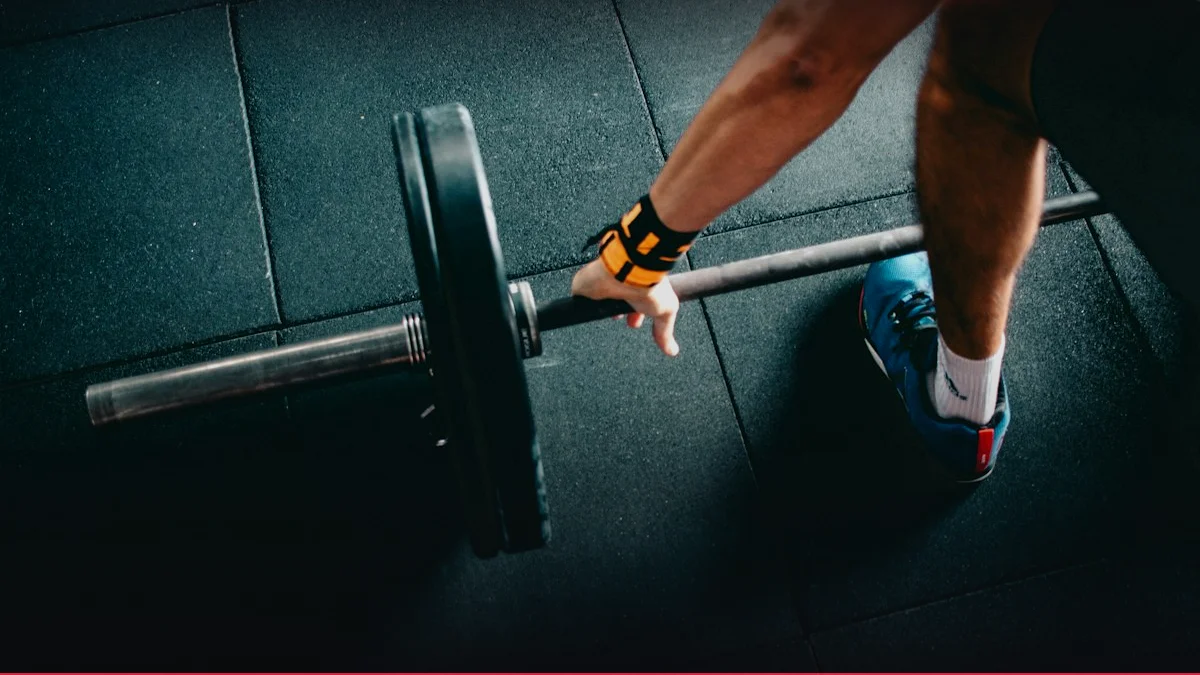
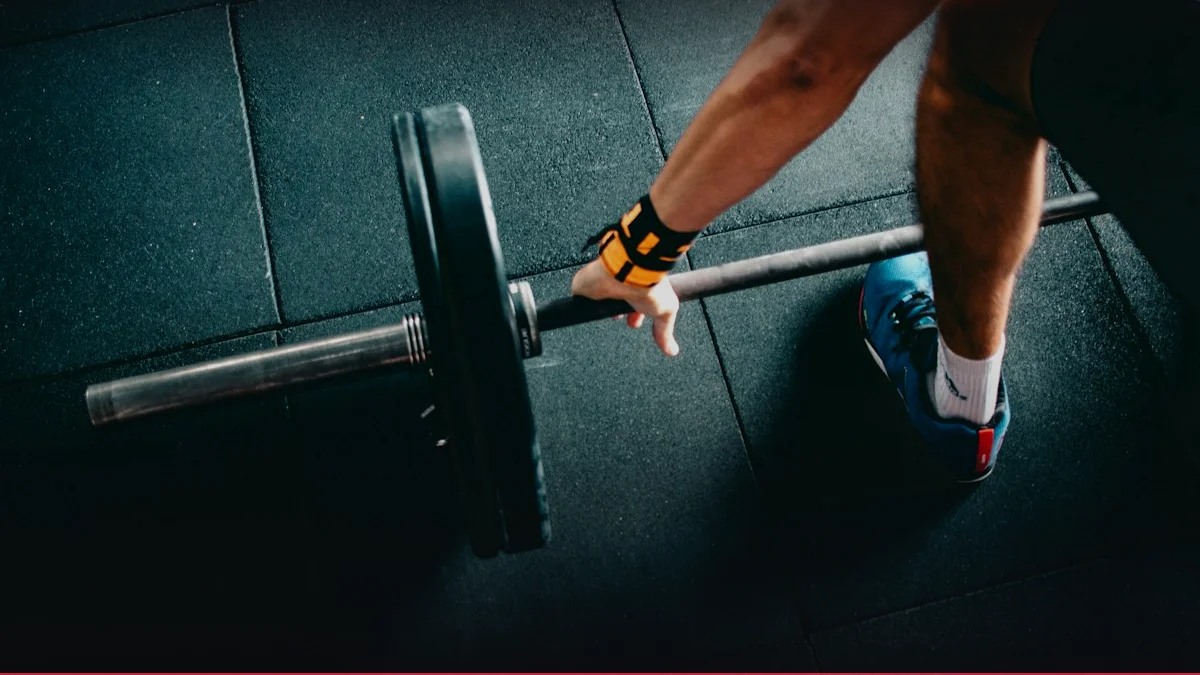
1RM & Bench Press Calculator
Calculate your One-Rep Max using 7 scientific formulas, percentage table (50-95%), and barbell plate loader visualizer.
Launch Tool5. Practical Methodology and the Six Components of Animal Flow
The Animal Flow system is built on six main components that are mastered sequentially.
- Wrist Mobilizations: Preparing the hands for the load. A fundamental part of every session.
- Activations: Static positions like "Beast" and "Crab" that turn on the nervous system and stabilizers.
- Form Specific Stretches: Dynamic movements like "Scorpion" or "Ape Reach" that improve mobility under load.
- Traveling Forms: Moving like a bear, crab, or ape. The basis of locomotion.
- Switches & Transitions: Dynamic elements (Underswitch, Kickthrough) that connect positions into a flow.
- Flows: Combining all elements into a continuous sequence of movements. The pinnacle of Animal Flow mastery.
| Position | Primary Focus | Main Benefit |
|---|---|---|
| Static Beast | Core and Shoulders | Neuromuscular activation |
| Crab Reach | Posterior Chain / Chest | Spinal and shoulder mobility |
| Underswitch | Coordination | Rotational stability |
| Scorpion Stretch | Spine and Pelvis | Lumbar release |
6. Load Progression and Integration
Progression in Animal Flow is the transition from static holding of positions to fast, complex, and improvisational flows.
- Increasing Activation Time: Build up to holding the "Beast" position with knees 1 cm off the floor for 2 minutes. This will harden your core.
- Smoothness of Transitions: The fewer extra movements you make during an "Underswitch," the higher your mastery. The movement should be like a cat's.
- Tempo Change: Perform movements very slowly to develop strength, or as fast as possible to develop explosive power and coordination.
- Integration: Animal Flow is ideal for warming up (5-10 min) or as a standalone mobility and strength workout. Try doing 3 sets of Flow for 2 minutes each.
Important: Animal Flow requires patience. Do not try to do complex jumps immediately if your wrists are not ready for the load. Listen to your body: if you feel joint pain, reduce the amplitude or holding time. Work barefoot for the maximum proprioceptive effect.
Progress in Animal Flow is when you stop thinking about individual arms and legs and start feeling yourself as a single flow of energy.
7. Analysis of Scientific Research and Evidence Base
Studies (e.g., Buckley et al., 2014) showed that quadrupedal exercises are 15-20% more effective at activating core muscles than standard floor exercises (crunches, planks), due to the need for pelvic stabilization during limb movement.
Scientific works on cognitive health indicate that performing cross-lateral movements in Animal Flow improves reaction time and memory in adults. This is explained by the need to synchronize both brain hemispheres to coordinate contralateral steps.
Scientists also investigated the role of Animal Flow in rehabilitation. It was established that dynamic exercises in hand support improve scapular stability in people with shoulder impingement syndrome significantly better than isolated band exercises, due to the activation of the entire kinetic chain.
8. Synergy: Nutrition, Nutraceuticals, and Recovery
To support fascial elasticity and high neural activity during Animal Flow, quality nutrient support is needed.
- Collagen + Vitamin C
- Building material for fascia and joints. Animal Flow actively uses fascial resilience, so collagen is critically important.
- Magnesium
- Necessary for muscle and nervous system relaxation after complex coordination sessions. Prevents foot cramps.
- Omega-3
- Supports cell membrane health, making tissues more "fluid" and adaptive to stretching.
- Hydration
- Fascia is 70% water. A dehydrated body becomes stiff and prone to injuries when performing Animal Flow.
Recovery after Animal Flow should include hot baths and SMR (massage roller) for deep muscle chains. Quality sleep is mandatory for consolidating motor skills. Use a contrast shower for arms and legs to improve microcirculation. Remember that Animal Flow is not only a physical but also a mental load, so a short meditation after the workout is useful for full grounding and relaxation.
9. Common Mistakes, Myths, and Injury Prevention
The main mistake is ignoring wrist preparation. This is the weakest link for most beginners. DEVOTE TIME TO HAND WARM-UPS!
- Myth: Animal Flow is just yoga for men. (Reality: It is a much more dynamic and strength-oriented system involving locomotion and explosive transitions).
- Mistake: Pelvis positioned too high in the "Beast" position. Knees should be 1 cm from the floor, and the back should be as flat as a table.
- Myth: This is too difficult for the average person. (Reality: Every movement can be scaled to any fitness level).
- Mistake: Holding your breath during complex transitions. Breathing should be smooth and synchronized with the movement.
To prevent injury, always monitor the surface: it should not be too slippery. If you feel sharp pain in the shoulder or wrist, stop immediately. Animal Flow is about health, not working through pain.
Interactive Apps & Calculators for Article
Empirical mathematical algorithms and scientific formulas for sports optimization
10. FAQ: Answers to Common Questions
- Can I practice Animal Flow every day?
- Yes, if you alternate intensive Flows with light sessions of wrist mobilization and stretching.
- Is it mandatory to practice barefoot?
- Very desirable. This improves grip with the floor and activates foot receptors, which is important for balance.
- How soon will I see results?
- You will feel improvements in mobility and well-being after the very first session. Coordination will improve after 2-3 weeks of consistent practice.
- Does Animal Flow help build muscle?
- It builds incredible muscle density and definition, but for maximum mass, it is better to combine it with strength training.
- Is Animal Flow safe for people with spinal herniations?
- Many Animal Flow exercises help strengthen the core and remove tension from the discs, but consult a rehabilitator before starting.
Animal Flow is your path to primal strength, athletic grace, and body liberation from all restrictions. Be technical, be consistent, and be patient, and your body will reward you with incredible energy and freedom in every breath and movement.