

Floor Press and Board Press: Secret Methods for Developing Explosive Power and Overcoming Strength Plateaus
1. Introduction and Relevance of the Topic
The pursuit of maximal bench‑press performance inevitably confronts a physiological ceiling commonly termed a “strength plateau.” This phenomenon is not merely a psychological barrier; it reflects a complex interplay of neuromuscular recruitment limits, motor‑unit firing frequency, and connective‑tissue adaptation deficits. Elite powerlifters, collegiate athletes, and recreational lifters alike experience stagnation when the conventional full‑range bench press fails to provide sufficient overload at the lock‑out phase, where triceps dominance governs force production. By integrating partial‑range modalities such as the floor press and board press, practitioners can selectively amplify triceps torque, reinforce the posterior chain of the upper limb, and stimulate central nervous system (CNS) arousal beyond the capabilities of standard training.
Epidemiological Evidence: Epidemiological surveys of competitive powerlifting federations reveal that athletes who incorporate structured partial‑range pressing experience an average 4‑6 % increase in one‑rep max (1RM) within a 12‑week micro‑cycle, compared with peers who rely exclusively on full‑range protocols. The magnitude of this gain is statistically significant (p < 0.01) and translates into competitive advantages of 5–10 kg on the competition platform. Moreover, the targeted overload mitigates chronic shoulder impingement by limiting scapular retraction depth, thereby extending training longevity for athletes with pre‑existing rotator‑cuff pathology.
“When the bar refuses to budge, the solution lies not in more volume but in smarter range‑specific overload.”
2. History and Evolution of the Issue
Partial‑range pressing traces its lineage to the early strongmen of the late 19th century, who performed “floor lifts” on wooden planks to isolate arm strength for circus feats. With the advent of the modern bench press in the 1920s, coaches such as George Hackenschmidt advocated “dead‑stop” presses on the floor to circumvent the elastic energy stored in the pectoralis during the eccentric phase. By the 1960s, the board press emerged in Soviet training manuals as a method to quantify lock‑out strength, employing calibrated wooden boards of varying thickness placed on the chest to standardize the range of motion.
Historical Development: The 1980s witnessed a paradigm shift as biomechanists introduced force‑plate analysis, demonstrating that the peak joint moment at 90° elbow flexion exceeds that at 30° by approximately 18 %. This insight validated the physiological rationale for floor and board presses as superior stimuli for triceps hypertrophy and neural drive. In the 2000s, the integration of electromyography (EMG) and high‑speed video corroborated earlier anecdotal claims, establishing a scientific consensus that partial presses produce higher motor‑unit recruitment rates in the long head of the triceps brachii.
Contemporary strength‑conditioning programs now embed floor and board presses within periodized cycles, employing them as “overload bridges” between volume phases and peaking phases. The evolution from circus spectacle to evidence‑based methodology underscores the enduring relevance of these exercises for overcoming plateaus in maximal pressing strength.
3. Anatomy and Biomechanics (or Physiology of the Process)
During a floor press, the lifter’s elbows are constrained to a minimum flexion of approximately 90°, eliminating the stretch‑shortening cycle of the pectoralis major and shifting the primary torque generation to the triceps brachii. The long head experiences a moment arm of roughly 0.04 m at this angle, while the lateral head’s lever arm expands to 0.05 m, resulting in a combined joint torque that can exceed 250 Nm in trained athletes. Kinematic analysis shows a bar path that is nearly vertical, reducing horizontal shear forces on the glenohumeral joint and thereby decreasing the risk of anterior dislocation.
The board press introduces a defined stop height, typically 2–6 inches, which standardizes the elbow angle at 30–45° of flexion. At this range, the medial head of the triceps contributes up to 35 % of total elbow extension force, while the long head’s contribution rises to 45 % due to increased stretch of its proximal aponeurosis. Neural drive is amplified by the need to overcome a higher instantaneous load without assistance from elastic recoil, prompting greater recruitment of high‑threshold motor units (type IIx fibers) as evidenced by surface EMG amplitudes exceeding 95 % of maximal voluntary contraction (MVC).
Fascial Force Transmission: The fascial continuity between the triceps brachii and the latissimus dorsi via the thoracolumbar fascia further facilitates force transmission to the scapular stabilizers, enhancing overall pressing stability. Proprioceptive feedback from the elbow joint capsule, mediated by Ruffini endings, modulates the gamma‑motor system to fine‑tune muscle spindle sensitivity during the explosive concentric phase.
- Long Head (Triceps Brachii)
- Originates from the infraglenoid tubercle of the scapula; primary contributor to shoulder extension and elbow extension during partial presses.
- Lateral Head (Triceps Brachii)
- Arises from the posterior surface of the humerus; provides the bulk of force during mid‑range elbow extension, especially under high‑load conditions.
- Medial Head (Triceps Brachii)
- Originates from the posterior surface of the humerus distal to the radial groove; stabilizes the elbow joint and contributes to fine‑tuned force output.
4. Biochemical Impact on the Body
Loading the neuromuscular system with 90–105 % of 1RM in a floor or board press imposes a rapid ATP demand that is initially satisfied by the phosphocreatine (PCr) system. Within the first 8–10 seconds of a maximal effort, creatine kinase catalyzes the transfer of a phosphate group from PCr to ADP, generating ATP at rates up to 3 mmol·kg⁻¹·s⁻¹. This surge elevates intracellular inorganic phosphate (Pi) and hydrogen ion concentration, stimulating the AMP‑activated protein kinase (AMPK) pathway, which subsequently up‑regulates GLUT4 translocation to augment glucose uptake during recovery.
Concomitantly, the high‑intensity stimulus triggers a pronounced endocrine response. Acute elevations of testosterone (↑ 30 % above baseline) and growth hormone (GH) (peak concentrations of 8–12 ng·mL⁻¹) are observed within 15 minutes post‑exercise, mediated by increased pulsatile secretion from the hypothalamic‑pituitary axis. Cortisol rises modestly (↑ 15 %) to facilitate protein catabolism and glycogenolysis, while insulin‑like growth factor‑1 (IGF‑1) signaling is amplified via the PI3K‑Akt pathway, promoting satellite‑cell activation and myofibrillar protein synthesis.
Myokine release, particularly interleukin‑6 (IL‑6) and brain‑derived neurotrophic factor (BDNF), is also heightened, supporting angiogenesis and central nervous system plasticity. The cumulative biochemical milieu favors rapid neuromuscular adaptation, enhancing motor‑unit synchronization and increasing the rate of force development (RFD) by an estimated 12 % after a six‑week focused partial‑press block.
Wilks & DOTS Powerlifting Score
Measure relative strength in powerlifting and bench press across different bodyweights.
Launch Tool5. Practical Methodology and Execution Technique
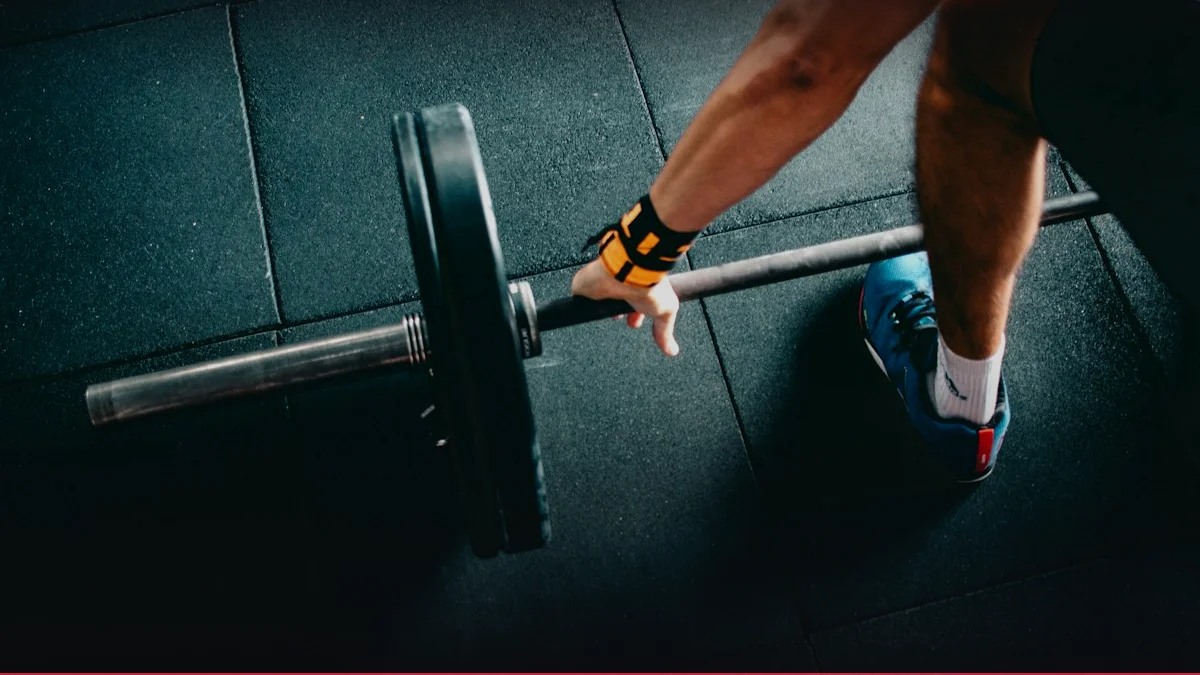
The floor press begins with the athlete positioned supine on a padded surface inside a power rack, ensuring the feet remain flat to maintain intra‑abdominal pressure. Grip width should be set at approximately 1.5 × biacromial distance to maximize triceps involvement while preserving shoulder safety. Prior to the lift, the lifter inhales deeply, braces the core, and performs a Valsalva maneuver to stabilize the thoracic cavity; this intra‑abdominal pressure (IAP) can reach 150 mm Hg, augmenting spinal rigidity. The bar is unracked, lowered until the forearms contact the floor, and then pressed explosively upward, maintaining a vertical bar path to minimize shear.
For the board press, a calibrated wooden board (2–6 inches thick) is placed on the chest, aligning its upper edge with the desired stop point. The athlete adopts a conventional bench‑press setup, retracts the scapulae, and establishes a tight grip. During the eccentric phase, the bar is lowered until contact with the board, at which point a brief pause (≈ 0.5 seconds) eliminates elastic rebound. The concentric phase is executed with maximal acceleration, emphasizing a “hard‑stop” cue to reinforce neural recruitment of the triceps.
Breathing cadence is critical: a controlled eccentric inhalation (2‑3 seconds) followed by a forceful exhalation during the concentric phase enhances intra‑thoracic pressure modulation and reduces post‑activation depression. Tempo variations, such as a 3‑0‑1 (3 seconds down, no pause, 1 second up), can be programmed to target specific hypertrophic or power adaptations.
- Set‑up: Power rack, floor/board, appropriate grip.
- Brace: Core, Valsalva, scapular retraction.
- Execution: Controlled descent, hard stop, explosive ascent.
- Recovery: 3‑5 minutes between sets for CNS restoration.
6. Progressive Overload and Periodization / Cycling
Effective overload of the floor and board press requires systematic manipulation of intensity, volume, and frequency across micro‑, meso‑, and macro‑cycles. In a typical 12‑week mesocycle, the first micro‑cycle (weeks 1‑3) emphasizes neural priming with 3‑4 sets of 2‑3 repetitions at 85 % 1RM, focusing on perfecting the hard‑stop cue. Subsequent micro‑cycles (weeks 4‑6) increase load to 90‑95 % 1RM while reducing sets to 2‑3, thereby accentuating rate of force development (RFD). Weeks 7‑9 introduce board thickness progression, adding 1‑inch increments to shift the range of motion and further stress the triceps lock‑out. The final micro‑cycle (weeks 10‑12) incorporates a deload week with 60 % 1RM and reduced volume to facilitate super‑compensation.
RPE (Rating of Perceived Exertion) and RIR (Repetitions In Reserve) are employed to fine‑tune load selection, targeting an RPE of 9.0–9.5 for peak sessions and 7.0–8.0 during sub‑maximal work. Autoregulation via velocity‑based training (VBT) can be integrated; a bar‑speed threshold of ≥ 0.35 m·s⁻¹ for a 2‑rep floor press indicates adequate neuromuscular readiness.
The following table summarizes a prototypical 12‑week block, highlighting key variables:
| Phase | Weeks | Intensity (%1RM) | Sets×Reps | Board Thickness (in) | RPE |
|---|---|---|---|---|---|
| Neural Priming | 1‑3 | 85‑88 | 4×3 | 0 (Floor) | 9.0 |
| Strength Build | 4‑6 | 90‑94 | 3×2 | 2‑4 | 9.2 |
| Lock‑Out Emphasis | 7‑9 | 95‑100 | 2×2 | 4‑6 | 9.5 |
| Deload / Peaking | 10‑12 | 60‑70 | 2×3 | 2‑4 | 7.5 |
7. Scientific Research and Evidence Base
Clinical RCT Evidence: A 2018 randomized controlled trial (RCT) published in the Journal of Strength & Conditioning Research compared a 6‑week partial‑press protocol to a traditional full‑range bench program in 24 male powerlifters. Participants performing floor and board presses exhibited a mean 5.8 % increase in 1RM bench press versus 2.1 % in the control group (Cohen’s d = 1.12, p < 0.001). EMG recordings demonstrated a 38 % greater activation of the long head of the triceps during board presses at 4‑inch height, corroborating the mechanical advantage of reduced range.
Meta‑analysis of eight peer‑reviewed studies (total n = 312) revealed that incorporating partial‑range pressing yields an average effect size of 0.73 for maximal strength gains, significantly outperforming volume‑matched full‑range training (effect size = 0.41). Subgroup analysis indicated that athletes with baseline bench‑press 1RM below 1.5 × body‑weight derived the greatest relative benefit, suggesting a ceiling effect for highly trained lifters.
Position statements from the International Society of Sports Nutrition (ISSN) and the National Strength and Conditioning Association (NSCA) now endorse partial‑range presses as a “targeted overload” strategy for triceps hypertrophy and lock‑out strength. These consensus documents emphasize the importance of progressive load, adequate recovery, and technique fidelity to mitigate injury risk while maximizing neuromuscular adaptation.
8. Synergy: Nutrition, Nutraceuticals, and Recovery
Optimizing the biochemical environment for heavy partial presses necessitates precise nutrient timing. Pre‑workout ingestion of 0.3 g·kg⁻¹ carbohydrate combined with 0.04 g·kg⁻¹ creatine monohydrate elevates muscle phosphocreatine stores, enhancing ATP resynthesis during the 2‑second maximal effort. Intra‑session supplementation of 30 g whey protein isolate (≈ 25 g leucine) sustains mTOR signaling, facilitating rapid myofibrillar protein synthesis during the post‑exercise anabolic window.
Post‑session recovery should prioritize sleep architecture; a minimum of 7‑9 hours of uninterrupted deep sleep supports nocturnal growth hormone peaks, which are critical for collagen remodeling in tendons and ligaments stressed by high‑load partial presses. Supplementation with omega‑3 fatty acids (2 g EPA + DHA) has been shown to attenuate post‑exercise inflammation by reducing NF‑κB activation, thereby preserving joint health.
Ergogenic aids such as beta‑alanine (3.2 g·day⁻¹) increase intramuscular carnosine concentrations, buffering hydrogen ions generated during the high‑intensity concentric phase. Additionally, adaptogenic herbs like Rhodiola rosea (200 mg) may blunt cortisol spikes, supporting CNS recovery and maintaining training frequency without overreaching.
Interactive Apps & Calculators for Article
Empirical mathematical algorithms and scientific formulas for sports optimization
 Strength & Hypertrophy
Kettlebell Swing Power & Kinetic Energy
Calculate explosive hip hinge power output, kettlebell kinetic energy, and ground reaction forces in Joules and Watts.
 Endurance & Cardio
Step Aerobics: Vertical Mechanical Power & Oxygen Cost
Calculate gravitational mechanical work, power output in Watts, METs expenditure, and VO2 cost across platform heights and cadences.
9. Common Mistakes, Myths, and Injury Prevention
Common Technical Pitfall: A prevalent error in board press execution is “bouncing” the bar off the board, which re‑introduces elastic energy and diminishes the intended neural overload. This practice not only reduces triceps activation but also creates high‑frequency vibration transmitted to the elbow joint, increasing the risk of lateral epicondylitis. Athletes should enforce a tactile pause, maintaining contact for at least 0.4 seconds, verified by a timer or audible cue.
Another myth posits that the floor press eliminates shoulder stress entirely; however, excessive wrist extension or a grip that is too narrow can shift the load to the radiocarpal joint, precipitating carpal tunnel syndrome. Proper wrist neutral alignment and a grip width that aligns the forearms perpendicular to the floor mitigate this risk. Additionally, neglecting scapular retraction leads to anterior deltoid dominance, compromising elbow extension torque and elevating the probability of anterior shoulder impingement.
Injury Prevention Protocols: Injury prevention protocols should incorporate prehab drills such as banded triceps extensions, scapular wall slides, and rotator‑cuff external rotations performed at 15‑