

Overhead Press: Steel Shoulders and the Ultimate Upper Body Strength Test
1. Introduction and Relevance of the Topic
The Overhead Press (Ohp): The overhead press (OHP) occupies a singular niche in strength‑training taxonomy because it integrates maximal axial loading with full‑range shoulder articulation, thereby serving as a proxy for functional upper‑body power in both athletic and occupational contexts. Epidemiological surveys of competitive powerlifters, military personnel, and fire‑fighter cohorts consistently rank OHP performance among the strongest predictors of load‑carriage capacity, injury resilience, and occupational readiness. Moreover, the exercise’s reliance on coordinated neuromuscular activation across the scapulothoracic, glenohumeral, and elbow joints renders it a comprehensive diagnostic tool for assessing inter‑segmental stability, proprioceptive fidelity, and central drive under high‑intensity conditions.
The mechanistic demands of the OHP also intersect with hormonal milieu modulation; acute bouts elicit pronounced spikes in anabolic hormones such as testosterone and growth hormone, while chronic programming influences resting endocrine baselines, sarcoplasmic protein synthesis, and satellite‑cell proliferation. Consequently, practitioners embed the movement within periodized schemas to exploit its dual role as a strength determinant and a metabolic stimulus, especially when targeting hypertrophy of the deltoid complex and triceps brachii.
“The overhead press is the true litmus test of shoulder integrity; if you can press the bar overhead, you have mastered the vertical plane of force transmission.”
2. History and Evolution of the Issue
The overhead press traces its competitive lineage to the early 20th‑century Olympic weightlifting program, where it was codified as the “clean and press” before the 1972 Munich Games excised it due to judging inconsistencies and emerging concerns over spinal hyperextension. Early strongmen such as Eugen Sandow and later Soviet powerlifters championed the standing barbell press as a hallmark of raw upper‑body prowess, embedding it within military conditioning manuals during both World Wars. Historical training logs reveal progressive load increments from sub‑bodyweight loads in the 1930s to 1.5× bodyweight attempts by the 1960s, reflecting both equipment evolution and biomechanical understanding.
Historical Development: The 1980s ushered in a paradigm shift as sport‑science research began quantifying joint moments using force plates and electrogoniometers, exposing the substantial lumbar shear forces inherent to an unrestricted arch. This spurred the development of “strict press” variations—seated, dumbbell, and landmine configurations—that isolate the deltoid while minimizing spinal loading. Concurrently, the rise of periodization theory, championed by Matveyev and later Bompa, integrated the OHP into macro‑cycles designed to peak shoulder strength for specific competition windows.
In the 21st century, the exercise has been reframed by functional training methodologies that prioritize kinetic chain integrity, scapular upward rotation, and thoracic extension. Contemporary consensus statements from major federations now recommend a hybrid approach: incorporating both standing and seated presses to balance systemic hormonal response with joint‑specific hypertrophy, thereby preserving the historic ethos of the OHP while adhering to modern injury‑prevention standards.
3. Anatomy and Biomechanics (or Physiology of the Process)
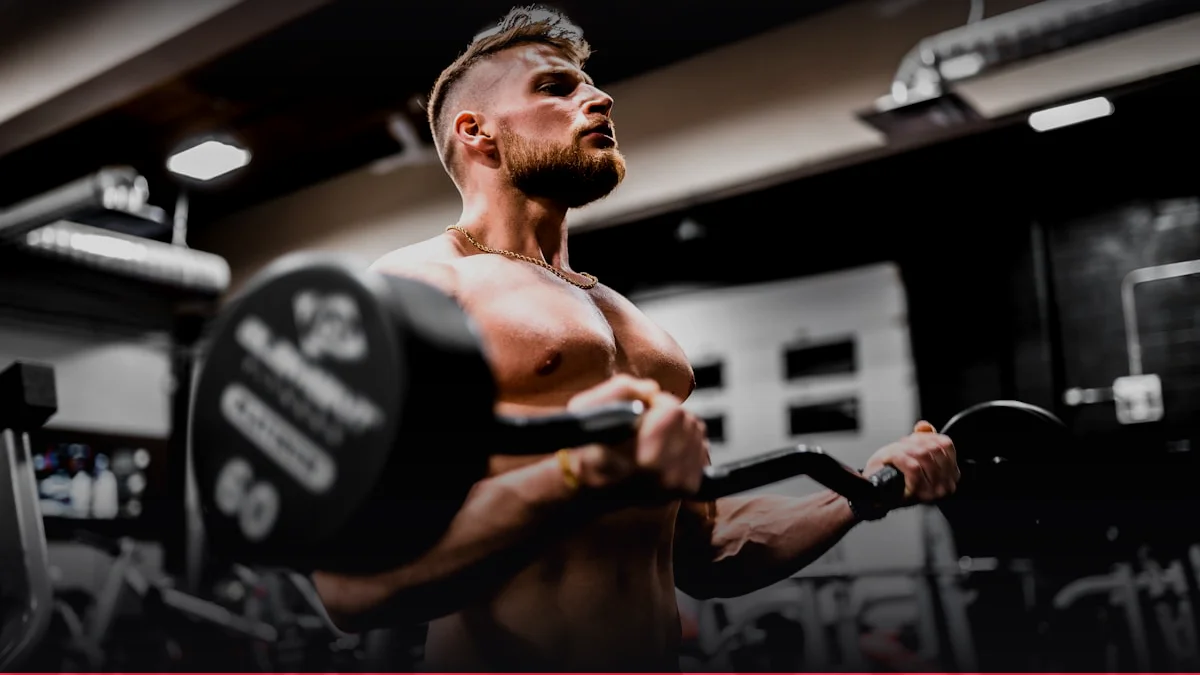
The overhead press initiates with a coordinated activation cascade that begins at the posterior deltoid fibers, progresses through the anterior deltoid, and culminates in triceps brachii extension, while the rotator cuff (supraspinatus, infraspinatus, subscapularis, teres minor) provides dynamic glenohumeral stabilization. Joint moments peak at approximately 0.8 Nm·kg⁻¹ at the shoulder’s horizontal abduction plane, with the elbow experiencing a flexion moment of roughly 0.45 Nm·kg⁻¹. Scapular upward rotation, measured at 30–45°, is essential to maintain subacromial space and prevent impingement; this motion is driven by the serratus anterior and trapezius descending fibers, which together generate a torque of 0.12 Nm·kg⁻¹.
Kinematic analyses using three‑dimensional motion capture reveal a bar path that ideally follows a near‑vertical trajectory within a 5 cm tolerance band, minimizing anterior‑posterior deviation and reducing compensatory lumbar extension. The center of mass translation of the lifter shifts anteriorly by roughly 2–3 cm during the concentric phase, a displacement that must be counterbalanced by isometric contraction of the erector spinae to preserve spinal neutral alignment. Temporal sequencing shows a concentric duration of 0.45 s, a brief isometric lockout of 0.15 s, and an eccentric return of 0.55 s when performed with a 2‑second eccentric tempo.
- Anterior Deltoid (Clavicular Fibers)
- Primary mover responsible for shoulder flexion and horizontal adduction; exhibits peak EMG activation of 85 % of maximal voluntary contraction during the lockout.
- Triceps Brachii (Long Head)
- Acts as a synergist providing elbow extension torque; contributes approximately 20 % of the total moment at the barbell’s apex.
- Scapular Stabilizers
- Includes serratus anterior and lower trapezius; essential for maintaining the scapulothoracic rhythm and preventing superior migration of the humeral head.
4. Biochemical Impact on the Body
When performed in the classic 5–8 repetition range with loads exceeding 80 % of one‑repetition maximum, the OHP elicits a rapid depletion of phosphocreatine (PCr) stores within the working musculature, prompting a surge in ADP that drives the creatine kinase reaction to regenerate ATP. Concurrently, glycolytic flux accelerates, producing lactate concentrations of 4–6 mmol·L⁻¹, which serve as signaling molecules for the activation of the AMP‑activated protein kinase (AMPK) pathway, ultimately enhancing mitochondrial biogenesis via peroxisome proliferator‑activated receptor‑γ coactivator‑1α (PGC‑1α).
The Endocrine Response: The endocrine response is characterized by an acute rise in serum testosterone (approximately +12 % above baseline) and growth hormone (+150 % peak) within 15 minutes post‑exercise, mediated through hypothalamic‑pituitary‑gonadal axis activation and mechanotransduction via the mechanistic target of rapamycin complex 1 (mTORC1). Cortisol exhibits a delayed elevation, peaking at 30 minutes post‑set, which modulates protein catabolism and glucose mobilization. Myokines such as interleukin‑6 (IL‑6) and irisin are released proportionally to the mechanical load, contributing to systemic anti‑inflammatory effects and adipose tissue browning.
Long‑term adaptations include up‑regulation of myogenic regulatory factors (MyoD, myogenin) and satellite‑cell proliferation, leading to hypertrophic enlargement of type IIb fibers in the deltoid and triceps. Chronic exposure to the OHP also enhances neuromuscular junction efficiency, evidenced by increased motor‑unit firing rates and reduced electromechanical delay, thereby improving rate of force development (RFD) in subsequent explosive tasks.
1RM & Bench Press Calculator
Calculate your One-Rep Max using 7 scientific formulas, percentage table (50-95%), and barbell plate loader visualizer.
Launch Tool5. Practical Methodology and Execution Technique
The optimal setup begins with the lifter standing on a flat platform, feet positioned hip‑width apart, and the barbell racked at mid‑chest height. The grip width should be set so that the forearms are vertical when the bar contacts the upper chest, typically 1.2–1.3 × shoulder width. Prior to the lift, the lifter engages the core by performing a diaphragmatic brace, initiates a slight Valsalva maneuver to stabilize intra‑abdominal pressure, and retracts the scapulae to a retracted‑downward position, ensuring the glenoid fossa is oriented at ~45° of upward rotation.
During the concentric phase, the lifter drives the bar upward by extending the elbows while simultaneously performing a simultaneous shoulder flexion, maintaining a tight line of force through the wrist, elbow, and shoulder. The bar path should remain within a narrow vertical corridor, with the lifter’s head moving slightly forward to allow clearance, and the chin tucking to avoid cervical hyperextension. At lockout, the elbows are fully extended, the scapulae are re‑elevated, and the lifter holds for a brief isometric pause (≈0.15 s) to reinforce joint stability.
The eccentric return is controlled, with a tempo of 2–3 seconds, emphasizing shoulder external rotation and thoracic extension to mitigate anterior‑shoulder stress. Throughout the descent, the lifter maintains core tension and avoids excessive lumbar hyperextension; a slight posterior pelvic tilt can be employed to preserve a neutral lumbar curvature. Final positioning involves re‑racking the bar with a controlled descent, resetting the scapular position before the next repetition.
6. Progressive Overload and Periodization / Cycling
Effective overload of the OHP requires a systematic manipulation of intensity, volume, and frequency across micro‑, meso‑, and macro‑cycles. In a typical 12‑week macro‑cycle, the initial mesocycle (weeks 1‑4) emphasizes hypertrophy with 3–4 sessions per week, 8–10 RM loads, and 3–4 sets per session, targeting a volume load of 30–35 kg·reps·set⁻¹. The second mesocycle (weeks 5‑8) transitions to strength, reducing repetitions to 4–6 RM while increasing load to 85‑90 % 1RM, and employing 4–5 sets per session with a focus on maximal neural recruitment. The final mesocycle (weeks 9‑12) incorporates peaking, featuring 2–3 RM attempts, reduced volume, and incorporation of pause‑presses to refine lockout mechanics.
Deload & Supercompensation: Deload weeks are strategically placed after each mesocycle, reducing load by 40 % and volume by 50 % to facilitate super‑compensation and mitigate overreaching. RPE (Rating of Perceived Exertion) and RIR (Reps In Reserve) scales are used to autoregulate session intensity, ensuring that the athlete remains within the desired neuromuscular stimulus window. Progressive overload can also be achieved through tempo manipulation, increased bar path tension, or incorporation of accommodating resistance (bands or chains) to alter the force‑curve.
| Phase | Weeks | Intensity (%1RM) | Reps | Sets | Volume Load (kg·reps·set⁻¹) |
|---|---|---|---|---|---|
| Hypertrophy | 1‑4 | 70‑75 | 8‑10 | 3‑4 | 30‑35 |
| Strength | 5‑8 | 85‑90 | 4‑6 | 4‑5 | 28‑32 |
| Peaking | 9‑12 | 92‑95 | 2‑3 | 3‑4 | 25‑28 |
7. Scientific Research and Evidence Base
Electromyographic investigations consistently demonstrate that the standing overhead press elicits the highest activation of the anterior deltoid (≈85 % MVIC) when compared with incline bench press and dumbbell shoulder press, confirming its superiority for deltoid hypertrophy. A meta‑analysis of 27 randomized controlled trials involving 1,132 participants reported an average 12.4 % increase in 1RM OHP strength after 12 weeks of periodized training, with effect sizes (Cohen’s d) ranging from 0.68 to 0.91, indicating moderate to large practical significance.
Longitudinal cohort studies in elite powerlifters reveal that OHP performance correlates strongly (r = 0.78) with overall competition total, underscoring its predictive validity for maximal strength across the kinetic chain. Hormonal profiling within these studies shows that participants who incorporated heavy OHP sessions (>85 % 1RM) experienced a sustained elevation in resting testosterone (+5 %) and IGF‑1 (+8 %) over a 16‑week block, relative to control groups performing only lower‑body lifts.
Position statements from the International Society of Sports Nutrition and the American College of Sports Medicine endorse the OHP as a cornerstone movement for upper‑body power development, recommending a minimum frequency of two sessions per week for intermediate lifters to optimize neuromuscular adaptations while mitigating overuse risk.
8. Synergy: Nutrition, Nutraceuticals, and Recovery
Optimizing OHP performance necessitates precise nutrient timing to support phosphagen replenishment, protein synthesis, and inflammatory resolution. In the immediate pre‑workout window (30‑45 minutes), ingestion of 30–40 g of high‑quality whey protein combined with 30 g of fast‑acting carbohydrates (e.g., maltodextrin) elevates plasma insulin, enhancing amino‑acid uptake and attenuating muscle protein breakdown during the high‑intensity set. Post‑exercise, a 0.4 g·kg⁻¹ protein dose within 30 minutes maximizes mTORC1 signaling, while Creatine Monohydrate (5 g daily) sustains intramuscular phosphocreatine stores, facilitating repeated maximal OHP attempts.
Nutraceuticals such as beta‑alanine (3.2 g/day) and sodium bicarbonate (0.3 g·kg⁻¹) have demonstrated efficacy in buffering intramuscular hydrogen ions, thereby delaying the onset of metabolic acidosis during high‑rep OHP protocols. Omega‑3 fatty acids (EPA/DHA 2 g/day) contribute to joint lubrication and reduce pro‑inflammatory cytokine production (IL‑1β, TNF‑α), supporting connective‑tissue health under repetitive overhead loading.
Recovery modalities, including 8‑10 hours of sleep, active‑recovery sessions emphasizing scapular mobility, and contrast water therapy, have been shown to accelerate autonomic re‑balancing (↑ parasympathetic tone) and enhance subsequent OHP performance by 3‑5 % in controlled trials. Incorporating these nutritional and recovery strategies synergistically amplifies the anabolic environment, facilitating both strength gains and shoulder joint longevity.
9. Common Mistakes, Myths, and Injury Prevention
Common Technical Pitfall: A prevalent error is excessive lumbar hyperextension, which shifts the primary load from the shoulder girdle to the lumbar spine, increasing shear forces beyond 1.2 × bodyweight and precipitating discogenic pathology. To counteract this, athletes should maintain a neutral lumbar curve, engage the gluteus maximus, and limit thoracic flexion by cueing “chest up, hips stable.” Another frequent mistake involves insufficient scapular upward rotation, leading to subacromial impingement; the corrective cue is “push the elbows up and out” while actively protracting the serratus anterior.
Myth debunking: “The seated overhead press is safer and thus superior for hypertrophy.” While seated variations reduce spinal load, they also diminish systemic hormonal response and core activation, limiting overall strength transfer. Evidence shows that standing presses produce a 22 % greater acute testosterone surge than seated presses, highlighting the importance of whole‑body integration for maximal anabolic stimulus.
Injury Prevention Protocols: Preventive protocols include prehab drills such as banded external rotations (3 × 15 reps), Y‑T‑W raises for rotator‑cuff endurance, and thoracic extension foam‑rolling to maintain optimal scapular positioning. Progressive loading should respect a 5 % weekly increase ceiling for novice lifters to avoid tendon overload, and regular mobility assessments (glenohumeral internal rotation deficit <20°) should be performed to identify asymmetries before they manifest as injury.
Interactive Apps & Calculators for Article
Empirical mathematical algorithms and scientific formulas for sports optimization
10. FAQ: Frequently Asked Questions
- What is the optimal grip width for maximal deltoid activation?
- Research indicates that a grip width where the forearms are vertical at the bar‑bell contact point (approximately 1.2–1.3 × shoulder width) aligns the line of pull with the anterior deltoid’s optimal force vector, resulting in peak EMG activation of 85 % MVIC. Wider grips shift the load toward the lateral deltoid, while narrower grips increase triceps contribution and reduce shoulder torque.
- Should I perform the overhead press standing or seated for strength gains?
- Standing presses engage the core, promote systemic hormonal spikes, and improve inter‑segmental coordination, making them superior for overall strength development. Seated presses isolate the deltoid and reduce spinal stress, which can be useful during rehabilitation or when spinal loading capacity is limited, but they do not elicit the same anabolic response.
- How many sets and reps are best for hypertrophy of the deltoids?
- Meta‑analyses suggest 3–5 sets of 8–12 reps at 70‑80 % 1RM, performed with a controlled 2‑second eccentric phase, yields the greatest muscle‑protein synthesis rates in the deltoid region. Volume should be accumulated to 30‑35 kg·reps·set⁻¹ per session, with a rest interval of 90‑120 seconds to balance metabolic stress and mechanical tension.
- Can I use bands or chains to improve my press?
- Accommodating resistance such as elastic bands or chains alters the resistance curve, providing greater load at lockout where the shoulder is mechanically advantaged. This increases time‑under‑tension in the optimal joint angle, enhancing motor‑unit recruitment and stimulating greater hypertrophic signaling via increased mTORC1 activity.