

The Deadlift: King of Strength Exercises and the Ultimate Test of Total Body Power
1. Introduction and Relevance
In the world of physical culture, there are only a few exercises capable of radically changing an athlete's body. The **Deadlift** is the undisputed king among them. It is the most fundamental movement, consisting of lifting a maximally heavy object from the floor to full torso extension. The deadlift does not just build back and leg muscles; it forges character, develops iron will, and creates the type of functional strength that is vital in any situation. It is an exercise that engages nearly every muscle in your body, making it a single, unbreakable mechanism.
The relevance of the deadlift in modern training is driven by its ability to trigger a colossal systemic response. For an athlete of any level, it is the fastest way to increase overall muscle mass, strengthen the skeleton, and raise anabolic hormone levels. In times when people spend most of their day sitting, the deadlift is the best means for restoring the health of the posterior chain, correcting posture, and preventing lower back pain. It is the gold standard of strength training that separates "boys" from "men" in the gym.
In this article, we will break down the biomechanical secrets of the perfect pull, learn how to choose the right style (classic or sumo) depending on your anatomy, and discover how to structure the training process so your strength becomes legendary and your body becomes the embodiment of athletic power.
2. History and Evolution
The deadlift is perhaps the oldest strength exercise in human history. Since ancient times, lifting stones and logs has been considered the main measure of a man's strength. However, the deadlift took shape as a sporting discipline at the end of the 19th century with the appearance of modern barbells. Legendary athletes of the past, such as Hermann Görner and Louis Cyr, demonstrated incredible results, lifting weights over 300 kg without any modern equipment. It was they who laid the foundation for what we today call powerlifting.
The evolution of the exercise led to the appearance of different execution styles. In the 1970s, athletes began mass-using the "Sumo" style (wide foot stance), allowing people with specific anatomy to lift even heavier weights by shortening the range of motion. It was discovered that the deadlift is not only a means of developing strength but also a powerful tool for overall body conditioning. The rise of CrossFit in the early 2000s popularized the deadlift among the masses, making it accessible not only to professional lifters but also to ordinary fitness enthusiasts.
Today, the deadlift is viewed as the pinnacle of strength training. Modern sports science has confirmed that this exercise ensures the highest level of neuromuscular activation among all movements. The exercise has traveled the path from crude stone lifting to a high-tech sport, remaining the ultimate test of human body and spirit durability.
3. Anatomy and Biomechanics of Lifting Weight from the Floor
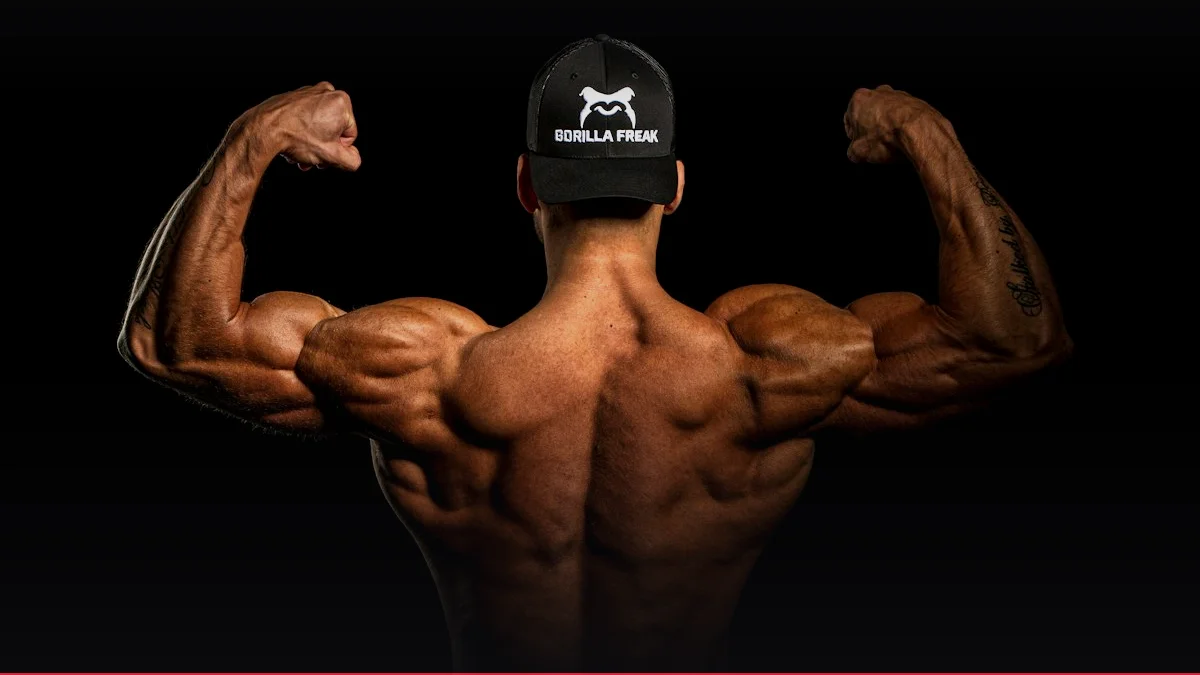
The deadlift engages nearly all muscle groups of the organism, creating conditions for holistic development.
- Spinal Erectors (m. erector spinae)
- Work in an extreme isometric mode, holding the spine perfectly straight under massive weight. This forms back thickness and density.
- Gluteal Muscles (m. gluteus maximus)
- The primary drivers of the exercise. They ensure extension in the hip joint and the final fixation of the weight.
- Hamstrings
- Actively work throughout the entire range, providing leg stability and force transfer from the floor to the pelvis.
- Quadriceps
- Play a key role in the phase of breaking the bar off the floor, providing the initial movement impulse.
- Latissimus Dorsi and Trapezius
- Keep the bar close to the body and ensure shoulder girdle stability under load.
- Core Muscles and Forearms
- Ensure force transfer and a reliable grip, which is often the limiting factor in this exercise.
Biomechanical Mechanics: Biomechanically, the deadlift is a second-class lever, where the axis of rotation is in the hip joints. The key to success is keeping the bar as close as possible to the body's center of gravity. Any distance between the bar and the shins creates a massive torque in the lower back, making the exercise dangerous. A correct pull starts with "slack pulling" the bar and a powerful leg push into the floor.
4. Biochemical Impact: Hormonal Explosion and Systemic Adaptation
The deadlift creates a level of systemic stress that is impossible to obtain from any other exercise.
Biochemically, performing heavy sets of deadlifts (1-5 repetitions with weight over 85% 1RM) stimulates a maximum release of testosterone and somatotropin. This occurs due to the involvement of a huge number of muscle fibers and the need for global coordination of all body resources. Such a hormonal response accelerates protein synthesis throughout the entire body, leading to the growth of not only the back and legs but all other muscles as well. Furthermore, the deadlift sharply increases bone density, which is the best protection against osteoporosis.
The deadlift is an atomic explosion in your endocrine system. Use this energy wisely, and your body will change forever.
It is also important to mention the impact on the central nervous system. The pull requires peak concentration and the recruitment of high-threshold motor units. This improves neuromuscular conductivity and "teaches" the brain to use muscles maximally effectively. After a heavy deadlift workout, athletes often feel systemic CNS fatigue, requiring long and high-quality recovery to realize the acquired adaptation resource.
Deadlift 1RM & Leverage Calculator
Estimate deadlift 1RM, analyze anatomical leverage (Conventional vs Sumo), and compute mechanical work in Joules.
Launch Tool5. Practical Methodology and Execution Technique
Deadlift technique does not forgive carelessness. Any mistake under heavy weight can be fatal for the spine.
- Starting Position: Stand before the bar, feet under the bar (bar over mid-foot). Shins touch the bar. Back perfectly straight, pelvis pushed back.
- Grip: Take the bar with an overhand grip or "hook grip" (thumb under the fingers). Shoulders should be slightly ahead of the bar.
- Tension: Before starting the lift, "pull the slack" out of the bar—tense the muscles so the bar nearly breaks off the floor. Take a breath into the abdomen (Valsalva maneuver).
- The Lift: With a powerful leg push into the floor, start lifting the bar, keeping it as close to the legs as possible. The back and pelvis should rise synchronously.
- Lockout: At the top point, fully straighten up. Do not lean back too far. Hold for a second.
- Descent: Start the movement by pushing the pelvis back. Once the bar passes the knees, slightly bend the legs and place the weight on the floor.
| Parameter | Classic Style | Sumo Style |
|---|---|---|
| Foot Stance | Narrow (Hip-Width) | Wide (Nearly to the Plates) |
| Back Loading | High | Moderate |
| Leg Loading | Medium (Posterior Chain) | High (Adductors and Quads) |
| Range of Motion | Maximum | Shortened |
6. Load Progression and Integration
Progression in the pull should be slow and consistent. This is a marathon, not a sprint.
- Linear Progression: For beginners, it is ideal to add 2.5-5 kg to the bar weekly as long as technique remains perfect.
- Cyclicity: Work in cycles. 4 weeks of heavy work, then 1 week of deload with weights at 50-60%. This will prevent CNS burnout.
- Auxiliary Exercises: Rack pulls, Romanian deadlifts, and hyperextensions will help strengthen the weak links in your movement.
- Integration: The deadlift should be the first exercise in a workout. It requires a fresh head and a full energy reserve. Once per week is ideal for heavy pulling.
Important: Use a lifting belt with weights over 80% of 1RM. This will help create intra-abdominal pressure and protect the spinal discs from dangerous shifting.
Do not chase records at the price of health. Your strength in the pull should be a reflection of your flawless technique.
7. Analysis of Scientific Research and Evidence Base
EMG studies confirm that the deadlift activates the spinal erector muscles more intensely than any other exercise, including squats. This makes it unsurpassed for creating a powerful muscle corset around the spine.
Scientific works on bone density indicate that people regularly performing the deadlift have 10-15% higher mineralization of the vertebrae and pelvic bones. This makes the exercise one of the best means of preventing age-related fractures and injuries.
Scientists also investigated the impact of the grip. It was established that using a mixed grip (one hand palm toward you, the other away) creates an asymmetric torque in the spine. Therefore, for back health, it is recommended to use an overhand grip with straps or a hook grip when working with sub-maximal weights.
8. Synergy: Nutrition, Nutraceuticals, and Recovery
To support systemic power and regeneration after the deadlift, extreme support is needed.
- Creatine Monohydrate
- Provides ATP for peak explosive strength. Without creatine, it is difficult to maintain high-level deadlift progress.
- Collagen + Vitamin C
- Critically important for the health of ligaments and tendons, which bear a colossal load in the pull.
- Magnesium + Zinc
- Necessary for CNS recovery and supporting testosterone after systemic stress.
- Omega-3
- Reduces systemic inflammation in the joints and accelerates muscle fiber recovery.
Recovery after the deadlift should be comprehensive. Quality sleep (minimum 9 hours), hot Epsom salt baths, and using SMR for the lower back and glutes will help you return to training faster. Remember: you grow not during the pull, but during the sleep after it.
9. Common Mistakes, Myths, and Injury Prevention
The main mistake is pulling with a "hunched" back. Any rounding of the back under load is a path to a herniation. KEEP THE BACK STRAIGHT!
- Myth: The deadlift kills the back. (Reality: Incorrect technique kills. Correct pulling makes the back invulnerable to injury).
- Mistake: Hips rising before the bar ("stripper pull"). This overloads the lower back and turns off the legs.
- Myth: This is an exercise only for professional strongmen. (Reality: Every person should know how to correctly lift weight from the floor).
- Mistake: Fully straightening the legs before the back.
To prevent injury, always start with a thorough warm-up of the hip joints and lower back. If you feel sharp pain—immediately stop execution and consult a specialist.
Interactive Apps & Calculators for Article
Empirical mathematical algorithms and scientific formulas for sports optimization
 Strength & Hypertrophy
Stiff-Leg Deadlift (SLDL) Force Ratio
Determine SLDL to conventional deadlift strength ratio (70-75%) and glute-hamstring isolation dynamics.
Strength & Hypertrophy
Romanian Deadlift (RDL) Hamstring Tension
Calculate hip hinge torque, 15-20° knee flexion lock, and hamstring eccentric stretch tension.
10. FAQ: Answers to Common Questions
- Which is better: classic or sumo?
- It depends on the length of your arms and legs. People with long torsos often prefer sumo; those with long arms prefer classic. Try both options.
- Can I do the deadlift every day?
- No, this will exhaust your CNS very quickly. 1-2 times per week is the limit for most people.
- Why does my head hurt after the pull?
- You might be tensing your neck muscles too much or holding your breath without proper pressure control. Monitor neck relaxation.
- What is the optimal number of repetitions for mass?
- For the deadlift, a range of 3-5 repetitions works best. High repetitions in the deadlift often lead to loss of technique due to fatigue.
- Does the deadlift help with weight loss?
- Yes, as the most energy-intensive exercise, it burns a huge amount of calories and speeds up metabolism for several days after training.
The deadlift is your path to absolute strength and an unbreakable body. Be technical, be consistent, and be patient, and your results will become a matter of pride and respect.