

Rack Pulls and Deficit Deadlifts: Strategic Plateau Breaking and Peak Power Development
1. Introduction and Relevance
In the world of strength training, the deadlift is the king of exercises. However, at a certain stage of development, athletes encounter "sticking points" where progress stops. This is where strategic variations come onto the stage: **Rack Pulls** and the **Deficit Deadlift**. These exercises manipulate the range of motion, allowing the athlete to work on specific weak links in the chain. Rack Pulls focus on the upper phase of the movement, allowing for the use of supra-maximal weights for back thickness, while the deficit deadlift develops explosive starting strength from the floor.
The relevance of these methods in modern training is driven by the need for specific adaptation for different strength tasks. For powerlifters, it is a tool for "locking out" record weights. For bodybuilders, it's a way of incredible overloading of the traps and spinal erectors. For the average person striving for strength, these exercises help strengthen the spinal corset in modes inaccessible to the ordinary deadlift. This is an intellectual approach to training, where every change in barbell height has a clear physiological goal.
In this article, we will break down the biomechanical secrets of working with an altered range, learn how to use blocks (racks) to overcome plateaus, and discover how to structure the training process so your strength becomes absolute and your back becomes invulnerable to any load.
2. History and Evolution
Rack Pulls and deficit deadlifts originate from the old-school weightlifting and powerlifting traditions. As early as the mid-20th century, athletes used wooden boxes (blocks) to practice individual phases of the snatch and clean & jerk. This allowed them to train the weakest part of the movement with a weight exceeding their maximum. In the 70s, powerlifters adapted these methods for the deadlift, making Rack Pulls a staple exercise for building a massive upper back.
The evolution of the exercise led to an understanding of the importance of the "deficit." Athletes noticed that by standing on a platform 5-10 cm high, they were forced to bend their legs more and activate the quadriceps at the start. This proved to be the best way to improve the speed of breaking the bar off the floor. Over time, these exercises became part of not only strength but also rehabilitation programs, where the limited range allowed athletes to maintain tone after injuries without overloading damaged zones.
Today, Rack Pulls and deficit deadlifts are an integral part of elite athlete preparation. Modern sports science has confirmed that changing the range by 10-15% radically alters the load vector on the muscles and nervous system. The exercises have traveled the path from makeshift wooden constructions to modern power racks, becoming the pinnacle of methodological thought in strength training.

3. Anatomy and Biomechanics of Altered Range
These exercises engage the entire posterior chain, but with different emphases depending on the starting height.
- Spinal Erectors (Erector Spinae)
- In Rack Pulls, they receive a colossal load in an isometric mode, making the back incredibly dense and resistant to flexion.
- Trapezius Muscles
- The lockout phase of a Rack Pull is the best exercise for trapezius hypertrophy. The heavy weight stimulates the growth of fibers that are impossible to engage with ordinary shrugs.
- Gluteal Muscles and Hamstrings
- In the deficit deadlift, they work in a stretched state, which develops incredible explosive power and tissue elasticity.
- Quadriceps
- Significantly more engaged in the deficit deadlift due to the need for a lower starting position, which improves the bar's start.
- Forearms and Grip
- In Rack Pulls, the grip is often the limiting factor due to the use of supra-maximal weights (100-110% of deadlift 1RM).
Biomechanical Mechanics: Biomechanically, the Rack Pull reduces the moment arm for the back, allowing for work with weights the athlete cannot break off the floor. The deficit deadlift, conversely, increases the range of motion, lengthening the muscle stretching phase, which creates greater "mechanical drive" for subsequent explosive contraction. In both cases, the key to success is maintaining a perfectly straight back and controlling the center of gravity.
4. Biochemical Impact: CNS Overload and Fiber Density
Rack Pulls and deficit deadlifts create an extreme level of systemic stress, triggering deep biochemical adaptations.
Biochemically, working with supra-maximal weights in Rack Pulls stimulates a maximum release of growth factors and testosterone. This is "shock" therapy for the organism, forcing bones to become denser and nerve impulses to become faster. The deficit deadlift causes a higher level of muscle micro-trauma due to work in a stretched state, which stimulates myofibrillar hypertrophy and increases glycogen stores in the leg and back muscles.
The Rack Pull is your ability to hold the weight of the world on your shoulders. The Deficit Deadlift is your ability to lift that weight from the abyss. Combine them for absolute power.
It is also important to mention the impact on the central nervous system. Working with weights over 100% 1RM in Rack Pulls teaches the brain not to "fear" heavy weights by suppressing the Golgi tendon organs. This allows the athlete to release hidden strength potential that was previously blocked by the body's protective mechanisms. However, such an overload requires prolonged recovery.
Barbell & Pendlay Row 1RM Calculator
Estimate barbell and Pendlay row 1RM, maintain 1:1 push-pull balance, and protect rotator cuff integrity.
Launch Tool5. Practical Methodology and Execution Technique
Execution technique must be flawless, as we are working at the limits of the body's capabilities.
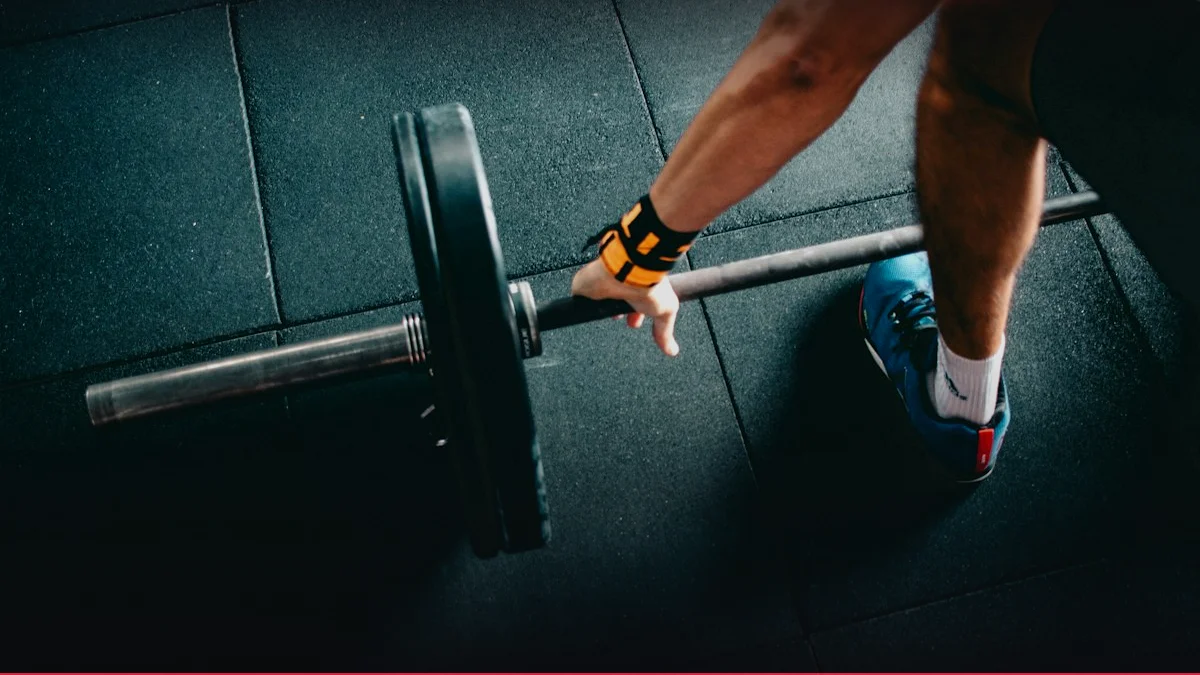
- Rack Pulls: Set the safety pins in a power rack so that the bar is slightly below the knees (or above, depending on the goal). Back straight, shoulder blades retracted.
- Movement in Rack Pulls: With a powerful effort from the legs and back, straighten up, bringing the pelvis forward. Do not overextend the back at the top—this is dangerous for the vertebrae.
- Deficit Deadlift: Stand on a platform 5-10 cm high. Technique is the same as a regular deadlift, but the starting position must be lower.
- Trajectory: The bar should slide along the shins. The closer the weight is to the body's center of gravity, the safer it is for the lower back.
- Breathing: Use the Valsalva maneuver (holding the breath on an inhale) to create maximum intra-abdominal pressure.
| Parameter | Rack Pulls | Deficit Deadlift |
|---|---|---|
| Resistance Weight | 100-110% of Max Deadlift | 70-80% of Max Deadlift |
| Repetitions | 3-5 (Strength Mode) | 5-8 (Explosive Mode) |
| Sets | 2-3 (High Intensity) | 3-4 |
| Main Goal | Upper Back Thickness / Lockout | Starting Speed / Leg Strength |
6. Load Progression and Integration
Progression in these exercises must be cyclic. One cannot constantly work at the limit of the maximum.
- For Rack Pulls: Add 5-10 kg every two weeks. As soon as the weight becomes too heavy to control—lower the pins 5 cm and start the cycle again.
- For Deficit: Start with a high platform (10 cm) and gradually reduce its height to 5 cm while increasing the working weight on the bar.
- Cyclicity: Use Rack Pulls for 4 weeks, then switch to the regular deadlift, and then to the deficit deadlift. This will prevent CNS overtraining.
- Integration: These exercises are best placed first on back or leg day. They require maximum concentration.
Important: When performing Rack Pulls, always use chalk or lifting straps. The weight here is so massive that a weak grip should not limit your back's development.
In altered-range pulls, every second under weight is a challenge to your will. Be as immovable as a rock.
7. Analysis of Scientific Research and Evidence Base
EMG studies confirm that Rack Pulls activate the upper trapezius and spinal erector muscles 30% more strongly than the classic deadlift. This makes the exercise unsurpassed for creating the back's "muscle corset."
Scientific works on deadlift starting mechanics indicate that the deficit deadlift improves pulling speed by 15-20%. This occurs due to increasing the quadriceps' work time in the lower phase of the range.
Scientists also investigated the impact of supra-maximal weights on bone density. It was established that athletes regularly practicing Rack Pulls have 12% higher mineral density in the vertebrae and pelvic bones, providing excellent protection against age-related osteoporosis and injuries.
8. Synergy: Nutrition, Nutraceuticals, and Recovery
For the CNS and joints to withstand such intensity, extreme support is needed.
- Creatine Monohydrate
- Provides ATP for peak strength. In altered-range pulls, every repetition is an explosion of energy.
- Collagen + Glucosamine
- Help joints and intervertebral discs adapt to the massive pressure occurring during Rack Pulls.
- Magnesium + Zinc
- Necessary for CNS recovery and supporting hormonal balance after systemic stress.
- B-Vitamins
- Improve nerve impulse conductivity, which is critical for coordination when working with heavy weights.
Recovery after such exercises must be prolonged. Quality sleep (minimum 9 hours) and using a contrast shower will help clear metabolites faster. SMR for the lower back and glutes is also recommended to relieve muscle hypertonicity.
9. Common Mistakes, Myths, and Injury Prevention
The main mistake in Rack Pulls is leaning too far back at the top. This creates dangerous compression in the lumbar region. ONLY VERTICAL LOCKOUT!
- Myth: The deficit deadlift kills the knees. (Reality: It strengthens them if you keep the shins vertical and do not let the knees "wander").
- Mistake: Using too high a platform in the deficit (over 12-15 cm). This changes the angle too much and becomes dangerous for the lower back.
- Myth: Rack Pulls are a cheating deadlift. (Reality: It is an independent exercise with a different load vector).
- Mistake: Poor grip without safety measures.
To prevent injury, always use a lifting belt with weights over 85% of 1RM. If you feel sharp pain in the back—immediately stop execution.
Interactive Apps & Calculators for Article
Empirical mathematical algorithms and scientific formulas for sports optimization
 Biohacking & Ergogenics
Endocrine Axis: Free Testosterone & SHBG Equilibrium
Vermeulen equation for free & bioavailable testosterone, Free Androgen Index (FAI), and testosterone-to-estradiol ratio balance.
 Strength & Hypertrophy
1RM & Bench Press Calculator
Calculate your One-Rep Max using 7 scientific formulas, percentage table (50-95%), and barbell plate loader visualizer.
10. FAQ: Answers to Common Questions
- What rack height is best for back mass?
- Usually, level slightly below the knee. This allows for using heavy weight while maintaining a significant range of motion.
- Can I do the deficit deadlift in sumo style?
- You can, but it is technically much more difficult and requires incredible hip mobility. Classic style is safer for the deficit.
- Why does my head hurt after Rack Pulls?
- This can be a sign of a sharp increase in blood pressure. Monitor your breathing and do not hold it for too long.
- How often can I do the deficit deadlift?
- No more than once every two weeks, as it very heavily exhausts the spinal erectors.
- What footwear is best for these exercises?
- Only footwear with a flat, hard sole or barefoot for maximum stability and floor awareness.
Rack Pulls and the deficit deadlift are your tools for achieving absolute power. Be technical, be consistent, and be immovable, and your strength will surprise even the most experienced athletes.