

Jefferson Curl: The Secret to Spinal Flexibility and Health Through Controlled Mobility
1. Introduction and Relevance
In the world of traditional strength training, we are taught to keep the back perfectly straight under any load. However, there is an exercise that challenges this dogma, offering conscious and controlled spinal flexion under resistance. The **Jefferson Curl** is a unique method for developing active flexibility in the posterior chain and strengthening the deep stabilizers of the back. This is an exercise that transforms your spine from a rigid stick into an elastic and strong mechanism capable of withstanding loads in any position.
The relevance of Jefferson Curls in modern training is driven by the need to prepare the organism for unpredictable movements in real life. Most back injuries occur precisely when we bend over for something light with "incorrect" form. The Jefferson Curl teaches the spinal tissues to be ready for such loading, strengthening ligaments and improving the nutrition (trophism) of intervertebral discs. However, this is not an exercise for strength records; it is a tool of surgical precision that requires respect for anatomy and gradual progression.
In this article, we will break down the biomechanical secrets of safe curling, learn how to build progression from bodyweight to light loads, and discover how to structure the training process so your back becomes the embodiment of health, mobility, and functional strength.
2. History and Evolution
The exercise is named after Charles Jefferson, a prominent strongman of the late 19th century who was known for his incredible flexibility and unconventional preparation methods. However, the curls gained true popularity in the preparation system for elite gymnasts. Coaches realized that to perform complex acrobatic elements, the spine must be not only stable but extraordinarily mobile in every segment. For decades, the Jefferson Curl remained a "secret weapon" of gymnastic halls.
The evolution of the exercise in mainstream fitness began with the development of the Gymnastic Bodies methodology and the work of Christopher Sommer. He popularized the Jefferson Curl as a means of recovery and preparation of the back for ordinary people and strength athletes. Previously, it was believed that bending the back under weight was a direct path to a herniated disc; however, the experience of thousands of athletes showed that controlled loading in this plane, on the contrary, makes the back invulnerable to injury.
Today, Jefferson Curls are integrated into rehabilitation, yoga, and CrossFit programs. Modern sports science has confirmed that segmental spinal flexion improves the elasticity of the posterior chain fascia significantly more effectively than static stretching. The exercise has traveled the path from circus arenas to a scientifically grounded method for spinal strengthening, becoming a symbol of an intellectual approach to physical development.
3. Anatomy and Biomechanics of Segmental Spinal Flexion
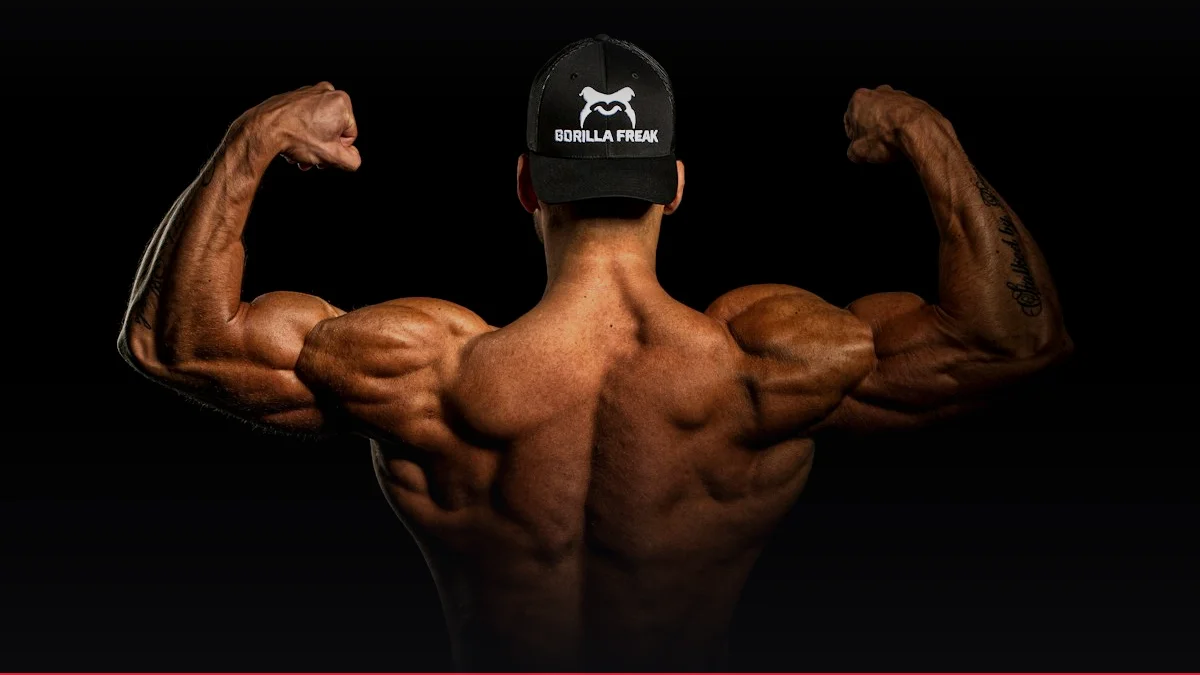
The Jefferson Curl engages the entire posterior chain, focusing on layer-by-layer stretching and strengthening of tissues.
- Spinal Erectors (m. erector spinae)
- In this exercise, they work in an eccentric mode, gradually lengthening under load and holding the weight of each body segment.
- Multifidus Muscles and Interspinous Ligaments
- Deep spinal structures that receive a stimulus to strengthen through the micro-movements of each vertebra.
- Hamstrings
- Experience maximum stretching at the bottom point of the range, which improves their active flexibility.
- Thoracolumbar Fascia
- The main connective structure of the back, which is "pumped" and becomes more elastic during the curl, relieving tension from the lower back.
- Gluteal Muscles
- Work as pelvic stabilizers, ensuring a smooth transition from spinal flexion to pelvic tilt.
Biomechanical Mechanics: Biomechanically, the Jefferson Curl is segmental spinal flexion from top to bottom. The movement begins with the chin, then the cervical region flexes, then the thoracic, and only lastly—the lumbar. The return occurs in reverse order. The key point is that every vertebra must move individually. The weight of the resistance (dumbbells or a light barbell) serves not as a strength factor but as a "weight" that helps gravity stretch the tissues deeper and more evenly.
4. Biochemical Impact: Spinal Disc Nutrition and Decompression
Performing Jefferson Curls creates a unique "pump" effect for the intervertebral discs and surrounding tissues.
Biochemically, this process stimulates the diffusion of nutrients into the discs, which do not have their own blood vessels. When the spine flexes and extends segmentally, the pressure in the discs changes, contributing to the absorption of fluid and nutrient elements (the process of imbibition). This prevents disc dehydration and the development of degenerative processes. Furthermore, prolonged stretching under load stimulates collagen synthesis in the spinal ligaments, making them stronger and more resistant to tears.
The Jefferson Curl is the hygiene of your spine. Every curl is a sip of fresh water for your discs and ligaments.
It is also important to mention the impact on the nervous system. Control of every spinal segment improves neuromuscular conductivity and proprioception. The brain learns to feel the spine better, which automatically corrects movement patterns in daily life, reducing the risk of accidental injuries. After performing the exercise, athletes often note a feeling of lightness and "alignment" of the entire body.
Barbell & Pendlay Row 1RM Calculator
Estimate barbell and Pendlay row 1RM, maintain 1:1 push-pull balance, and protect rotator cuff integrity.
Launch Tool5. Practical Methodology and Execution Technique
The technique for Jefferson Curls requires extreme smoothness and a complete absence of haste. Any sudden movement is unacceptable.
- Starting Position: Stand on the edge of a bench or step platform (this allows the bar to descend below the level of the feet). Legs straight, knees locked.
- Start of Movement: Press your chin to your chest. Begin slowly lowering your head, allowing the upper back to begin curling.
- The Curl: Gradually descend downward, vertebra by vertebra. Imagine you are rolling into a scroll. Arms with weight hang freely downward.
- Bottom Point: Descend as low as possible, feeling a deep stretch along the entire length of the spine and in the legs. Hold for 2-3 seconds.
- Return: Begin slowly unrolling upward, starting from the lower back. The head lifts last.
| Parameter | Recommended Value | Effect |
|---|---|---|
| Resistance Weight | Very light (2-10 kg) | Control and decompression |
| Repetitions | 5-8 | Deep work with tissues |
| Tempo | 10-0-10 (Down-Pause-Up) | Segmental control |
| Frequency | 1-2 times per week | Prevention and mobility |
6. Load Progression and Integration
In Jefferson Curls, progression must be extraordinarily slow. Here, we progress through range depth and execution time.
- Bodyweight Work: Start without any resistance. Your goal is to touch the floor below your feet with your fingers while keeping your legs perfectly straight.
- Increasing Weight: Add 1-2 kg only when you can perform 8 ideally smooth repetitions without the slightest discomfort.
- Increasing Time: Work on making the curl last 30-40 seconds. This increases time under tension and improves tissue relaxation.
- Integration: The Jefferson Curl is best placed at the end of a back or leg workout as a means of spinal decompression after heavy squats or deadlifts.
Important: This exercise is not suitable for people with acute herniations, sequestrations, or spondylolisthesis in the acute stage. It is a preventative tool for a healthy or recovered back. Always start with minimal range.
In the Jefferson Curl, less is more. The quality of your curl is more important than the weight of the dumbbell.
7. Analysis of Scientific Research and Evidence Base
Research in the field of rehabilitation confirms that controlled spinal flexion under light loading strengthens the anterior longitudinal ligament and improves intervertebral disc hydration. This refutes the myth that any tilt with a rounded back is harmful.
Scientific works on elite gymnast training indicate that the Jefferson Curl is a key factor in preventing injuries during falls and complex landings. It was proven that athletes practicing segmental flexion have 30% higher elasticity in the posterior chain's connective tissue.
Scientists also investigated the role of the hamstrings. It was established that the Jefferson Curl is one of the best exercises for combating chronic stiffness of the posterior thigh, which is often the true cause of lower back pain.
8. Synergy: Nutrition, Nutraceuticals, and Recovery
To support ligament elasticity and disc health, quality nutrient support is needed.
- Collagen + Hyaluronic Acid
- Basic components for spinal disc health. Hyaluronic acid retains water in the disc's nucleus pulposus.
- Magnesium
- Helps relax superficial back muscles, allowing the exercise to work with deep structures.
- Vitamin C
- Necessary for collagen synthesis in spinal ligaments.
- Omega-3
- Reduces systemic inflammation, making tissues more pliable for stretching.
Recovery after curls should include light activity (walking) and drinking enough water for disc hydration. It is also useful to combine the Jefferson Curl with iliopsoas stretching to balance tone around the pelvis. Quality sleep on the right surface is mandatory.
9. Common Mistakes, Myths, and Injury Prevention
The main mistake is a sudden drop or lift. This creates impulse loading on the discs, which is dangerous. THE MOVEMENT MUST BE SO SLOW AS IF YOU ARE MOVING IN WATER!
- Myth: The Jefferson Curl will necessarily cause a herniated disc. (Reality: Correctly dosed loading strengthens the back against herniations).
- Mistake: Bending the knees. If the legs are bent, the load leaves the hamstrings, and the exercise loses its integrity.
- Myth: You can take heavy weights (as in a deadlift). (Reality: This is a mobility exercise; weight over 20-30 kg for most people is excessive).
- Mistake: Performing the exercise during acute pain.
To prevent injury, always start with a thorough warm-up of the entire back line of the body. If you feel even the slightest "numbness" or "shooting pain"—immediately stop execution.
Interactive Apps & Calculators for Article
Empirical mathematical algorithms and scientific formulas for sports optimization
 Biohacking & Ergogenics
Endocrine Axis: Free Testosterone & SHBG Equilibrium
Vermeulen equation for free & bioavailable testosterone, Free Androgen Index (FAI), and testosterone-to-estradiol ratio balance.
 Strength & Hypertrophy
1RM & Bench Press Calculator
Calculate your One-Rep Max using 7 scientific formulas, percentage table (50-95%), and barbell plate loader visualizer.
10. FAQ: Answers to Common Questions
- Can I do the Jefferson Curl with scoliosis?
- You can, but under strict specialist supervision. The exercise can help relieve asymmetric muscle tension.
- What is the optimal weight for a beginner?
- Start with bodyweight. Then add a 2 kg dumbbell. Haste here is your main enemy.
- Why do my legs shake during the exercise?
- This is a normal reaction of the nervous system to intense stretching. This will pass over time.
- Can I replace back stretching with this exercise?
- This is active stretching. It is much more effective than passive tilts because it engages muscles in motion.
- How often can I do Jefferson Curls?
- 1-2 times per week is plenty for maintaining spinal health.
The Jefferson Curl is your key to an elastic and invulnerable spine. Be technical, be consistent, and respect your body, and your back will thank you with years of painless and active life.