


Barbell Wrist Curls: Building Powerful Forearms, an Iron Grip, and Athletic Strength
1. Introduction and Strategic Relevance for Arm Development
In the complex world of professional strength training, the forearm muscles often become that "forgotten zone" that novice athletes only remember when they lack the basic strength to hold a heavy barbell during a deadlift. However, it is precisely powerful, vascular, and defined forearms that are the true calling card of an experienced athlete, creating an unshakable impression of indomitable physical strength and readiness for any extreme challenge. **Barbell Wrist Curls** are a fundamental, indispensable exercise for the deep development of the forearm flexors. They provide not only the aesthetic volume of the arms below the elbow but also the critical grip strength that is the base for success in all strength sports—from powerlifting and arm wrestling to rock climbing.
The relevance of wrist curls in modern training is primarily driven by the need for radical strengthening of the wrist joint and the prevention of injury when working with large weights. Strong forearms reliably stabilize the wrist during heavy bench presses and back squats, preventing dangerous and traumatic backward wrist deviation. This is an exercise that requires the highest concentration from the athlete and the ability to work in a zone of intense muscle "burn," making it an ideal test of mental resilience and discipline.
Wrist curls are an exercise for athletes with a character of steel. When your muscles burn from lactate, that is the exact moment they become truly powerful and large.
2. Evolution and History: From Ancient Gladiators to "Golden Era" Legends
Wrist curls with various resistances were an integral part of athletes' physical preparation as far back as deep antiquity. Wrestlers and gladiators used special exercises to strengthen their wrists, as grip strength and the ability to hold a weapon often decided the fate of a duel. At the beginning of the 20th century, legendary strongmen like Eugen Sandow and Arthur Saxon considered developed, massive forearms a mandatory attribute of physical perfection. They performed curls with heavy dumbbells and awkward short barbells, paying attention to every small forearm muscle group.
The evolution of the exercise in the 70s and 80s led to the understanding of the critical importance of complete isolation. "Golden Era" bodybuilding athletes realized that forearms respond best to growth when the elbow is securely fixed on a solid support. Specialized wrist curl machines were developed, but the classic barbell remained the gold standard due to the ability to work with heavy weights and an entirely free trajectory. Today, barbell wrist curls are a basic tool in the arsenal of any professional arm wrestler.
3. Anatomy and Biomechanics: Mechanics of Wrist Flexion and Stabilization
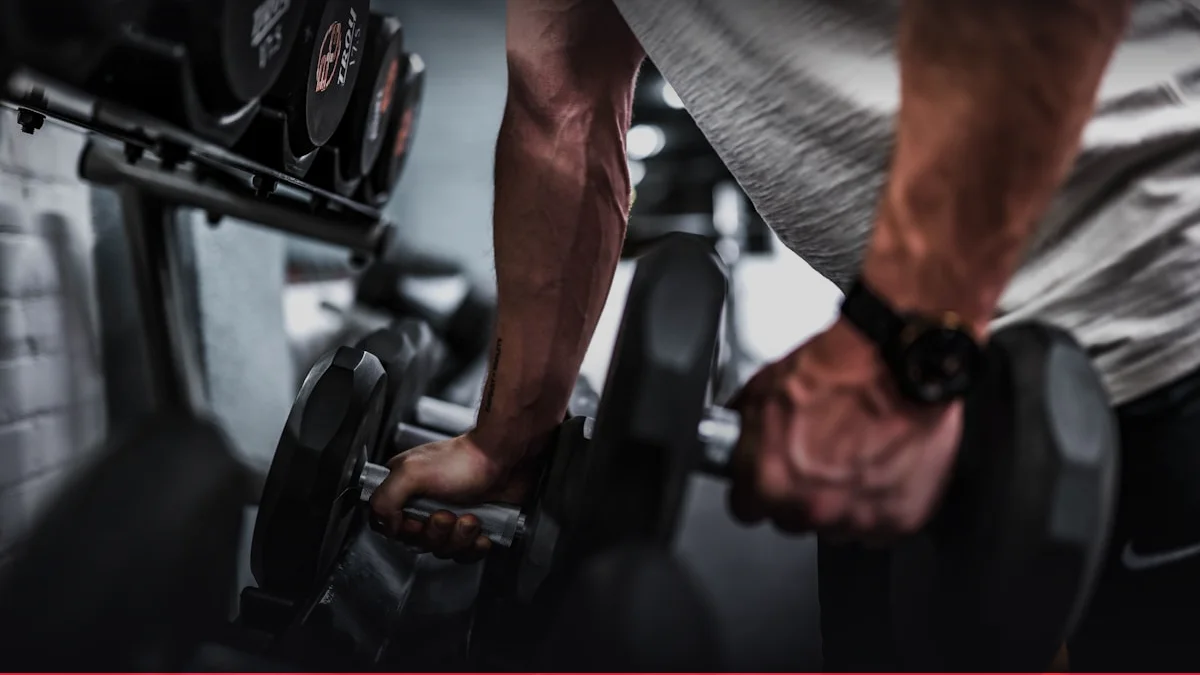
The forearm consists of a large number of small muscles, with the flexors occupying the entire inner side and part of the lateral surfaces. - **Flexor Carpi Radialis (m. flexor carpi radialis):** Responsible for wrist flexion and abduction. This is one of the main muscles forming the visual volume of the forearm closer to the elbow. - **Flexor Carpi Ulnaris (m. flexor carpi ulnaris):** Provides powerful flexion and adduction of the wrist. Works in constant synergy with the radial flexor. - **Flexor Digitorum Superficialis and Profundus:** These muscles pass through the entire forearm to the very tips of the fingers. They are responsible for the strength of squeezing the hand into a fist. - **Palmaris Longus:** Helps flex the wrist and creates tension in the palmar fascia.
Biomechanical Mechanics: Biomechanically, the wrist curl is a movement in the radiocarpal joint around the frontal axis with a fixed forearm position. The key point is adhering to a full range of motion: from maximum stretch (when the barbell "rolls" down to the fingertips) to the phase of maximum peak contraction.
4. Biochemical Impact: Metabolic Stress and Flexor Hypertrophy
Wrist curls are typically performed in a high-repetition mode (15-25 repetitions), triggering extreme metabolic stress in the forearm muscles. - **Capillarization:** The forearms have an extremely high capillary bed density, which promotes very rapid blood accumulation and intense pumping. - **Lactate Accumulation:** Rapid muscle acidification stimulates the secretion of local growth factors (IGF-1), triggering supercompensation and growth mechanisms. - **Fascial Stretching:** The powerful pump after a set literally inflates the forearm from within, contributing to the mechanical expansion of the dense fascial sheaths.
The strength of your arms starts with your wrists. Do not allow your forearms to be your "weak point" in the chain of strength achievements.
1RM & Bench Press Calculator
Calculate your One-Rep Max using 7 scientific formulas, percentage table (50-95%), and barbell plate loader visualizer.
Launch Tool5. Practical Methodology: Algorithm for Flawless Isolated Technique
Wrist Curl Technique: Wrist curl technique requires iron stability of the elbows and strict control of the barbell's movement trajectory. 1. **Starting Position:** Sit on a bench, place your forearms on the bench or your thighs so your wrists hang freely. Palms facing strictly up. 2. **Barbell Grip:** Take the barbell with an underhand grip. The grip width should be at your shoulder level to minimize stress on the wrists. 3. **Stretch Phase:** On an inhale, slowly lower the wrists, allowing the bar to slightly roll down onto the fingers at the bottom of the range. 4. **Active Flexion:** On a powerful exhale, flex the wrists upward, aiming to lift the barbell as high as possible. Do not lift the elbows off the support! 5. **Peak Fixation:** At the top point, maximally contract the muscles for 1-2 seconds. You should feel a deep contraction.
6. Load Progression and Integration
Progression in wrist curls must be very methodical and cautious, as the wrist is a fragile joint mechanism. - **Repetition Increase:** Aim to confidently perform 20 perfect repetitions before adding weight. Movement quality is much more important here than kilograms. - **Drop Sets:** Perform 15 repetitions to failure, drop 30% of the weight, and do another 15 without rest. This will "explode" your forearms. - **Using Fat Gripz:** Place thick bar adapters (Fat Gripz) on the barbell. This increases the load on crushing strength several times over. - **Placement in the Plan:** Only at the very end of an arm or back workout, once the large muscle groups are already fully worked.
7. Analysis of Scientific Research: EMG Data and Wrist Health
EMG studies confirm that barbell wrist curls in a full range of motion provide the highest activation of the forearm flexors among all grip exercises. It has been scientifically proven that "rolling" the bar onto the fingers at the bottom point increases the activation of the deep finger flexors by 30-40%. However, scientists warn against using excessively heavy weights, which can lead to dangerous compression of the median nerve (carpal tunnel syndrome). Forearm muscles have a great potential for glycogen accumulation, making them ideal candidates for high-volume training.
8. Synergy: Nutrition, Nutrients, and Wrist Recovery Strategy
Building massive forearms and supporting the health of small joints requires specific support for the body: - **Collagen + Vitamin C:** Wrist and forearm tendons are very thin, so collagen is critically necessary for their strengthening and elasticity. - **Magnesium:** Helps effectively relax forearm muscles after intense pumping, preventing cramps and spasms. - **Citrulline:** Improves forearm capillarization, ensuring a powerful blood flow and rapid metabolite removal. - **Recovery:** Using SMR (massage ball) to work the forearms will help avoid nerve entrapment.
9. Common Athlete Mistakes and Chronic Injury Prevention
- Torso Swaying (Cheating): Completely negates the benefit for the forearms and shifts the load to the biceps.
- Lifting Elbows off the Support: Transforms the exercise into work for the shoulders and back. Keep arms stationary!
- Incomplete Range of Motion: You lose most of the exercise's benefits by working only in the short middle phase.
- Too Heavy a Barbell: Leads to loss of control, jerking, and a high risk of wrist ligament strain.
Interactive Apps & Calculators for Article
Empirical mathematical algorithms and scientific formulas for sports optimization
 Strength & Hypertrophy
VBT Velocity Based Training
Determine % 1RM and target strength zones from mean barbell velocity (m/s).
 Strength & Hypertrophy
Squat 1RM & Depth Calculator
Calculate your Squat One-Rep Max using 5 formulas, percentage breakdown, and biomechanical depth angles.
10. FAQ: Expert Answers to Key Athlete Questions
- Can I do wrist curls every day for fast growth?
- Forearms are resilient, but they need time for growth and supercompensation. 2-3 times per week is plenty for progress.
- What is objectively better: barbell or dumbbells for the forearms?
- The barbell allows for working with more leveraged weight, while dumbbells allow for better isolation of each arm separately and avoid asymmetry.
- Why are my forearms not growing at all, even though I do this exercise?
- Most likely, you are not reaching true muscle failure. Forearms require a high level of intensity and "burn."
- Does this exercise help improve the deadlift result?
- Yes, strong flexors provide a reliable grip, allowing you to hold the bar without straps for much longer.
- What is the optimal barbell weight for a beginner?
- Start with an empty bar. The main thing is to learn to perfectly feel the muscles and perform the movement throughout the full anatomical range.
Barbell wrist curls are your path to powerful, iron, and athletic arms. Be technical, consistent in your progression, and your forearms will become a true symbol of your indomitable athletic strength and discipline.