

Upright Barbell Rows: Building Massive Traps, Middle Delts, and a Powerful Shoulder Girdle
1. Introduction and Strategic Relevance for Athletic Physique Development
In the endless search for the ideal athletic physique with wide, spread shoulders and a powerful, defined upper back, experienced athletes often turn to exercises that allow them to engage several large muscle groups simultaneously. The **Upright Barbell Row** (Upright Row) is a classic compound exercise that for many decades was considered the gold standard for developing the middle deltoids and the upper part of the trapezius muscles. It creates that impressive "armored" volume of the upper torso that immediately sets an athlete apart even in ordinary clothing, forming the coveted V-taper silhouette.
However, the relevance of this exercise in modern science-based training is always accompanied by heated discussions regarding its potential safety for the shoulder joints. With incorrect, negligent execution, the upright row can lead to shoulder impingement syndrome. This is why a deep understanding of biomechanics, correct selection of grip width, and strict control of the movement range are critical factors for ensuring the exercise only benefits your body. This is a movement for those who strive for maximum intensity but simultaneously have a deep respect for anatomical limitations and the health of their body.
The upright row is an exercise for building a truly "steel" upper body. It forces your shoulders to adapt to a colossal load, creating a powerful silhouette.
2. Evolution and History: From Olympic Platforms to Modern Iron Game
The upright barbell row was an integral part of weightlifters' training protocols as early as the beginning of the 20th century. It was used as an auxiliary, assistance movement to radically improve results in complex lifts like the snatch and the clean and jerk. In the legendary "Golden Era" of bodybuilding in the 60s and 70s, this exercise became a favorite of sport icons like Arnold Schwarzenegger and Dave Draper. They often performed it with a very narrow grip, trying to lift the bar as high as possible, which at the time was considered the best way to "explode" the rhomboid muscles and traps.
The evolution of views on this exercise began in the 90s with the rapid development of sports physiotherapy and kinesiology. Research clearly showed that an excessively narrow grip with high elbow elevation creates a dangerous position for the fragile shoulder rotator cuff. This led to a technical transformation: modern professional athletes increasingly use a wide grip and an EZ-bar, allowing them to gain all the benefits of the exercise while completely avoiding excessive internal rotation of the humerus. Today, the upright barbell row is experiencing a true renaissance in the context of functional bodybuilding, where not only volume but also joint health is valued.
3. Anatomy and Biomechanics: Mechanics of the Vertical Row and Joint Stability
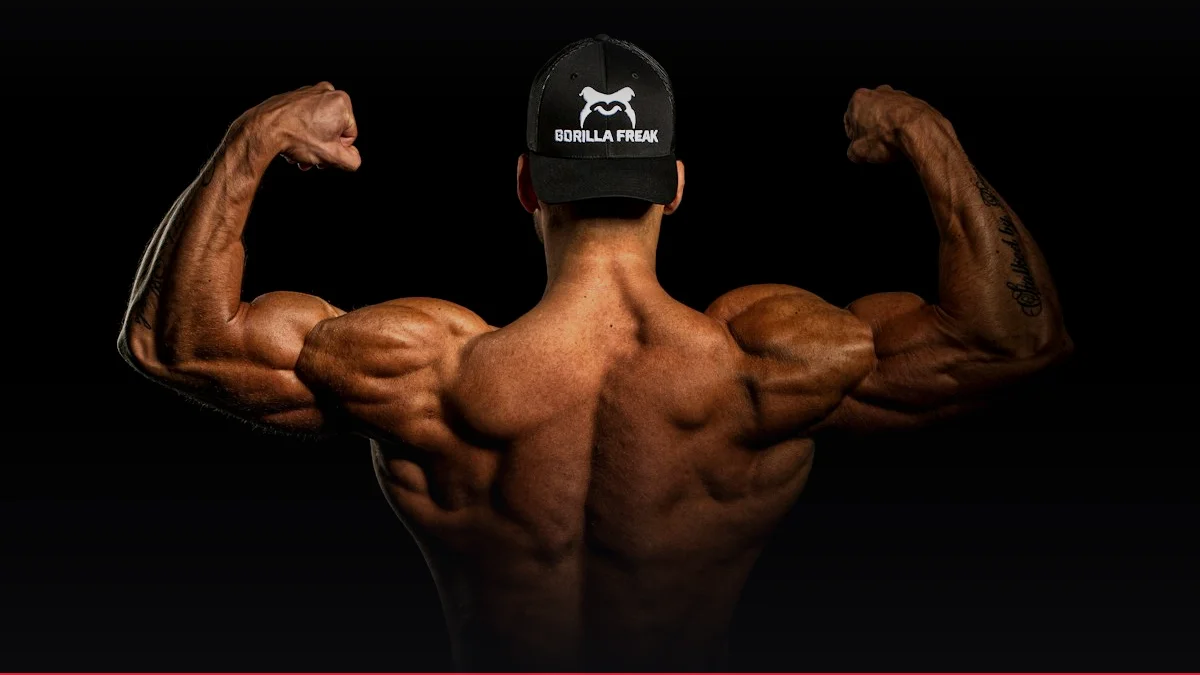
The upright row engages several powerful and massive muscle groups, creating a complex load on the athlete's entire upper torso: - **Middle Deltoid (pars acromialis):** The primary target muscle. Responsible for shoulder abduction to the sides. This exercise allows for working with limit weights for its maximum hypertrophy. - **Trapezius (Upper and Middle Parts):** Actively recruited for scapular elevation and dynamic stabilization of the entire shoulder girdle during the bar's upward movement. - **Front Deltoid:** Works as a synergist, helping to lift the bar in the initial phase of movement from the hips. - **Spinal Erectors:** Work in an intense isometric mode, holding the torso in a strictly vertical position. - **Forearms and Grip:** Forced to hold the weight of the barbell, which strengthens wrist strength.
Biomechanical Mechanics: Biomechanically, the upright row is a vertical movement of the resistance along the torso on the closest possible trajectory. The key point is that the elbows should always be higher than the wrists. This ensures an optimal angle for middle deltoid contraction. However, excessive lifting of the elbows above shoulder level can create compression in the subacromial space, which is the main risk of this exercise.
4. Biochemical Impact: Hypertrophy, Strength Endurance, and Metabolic Response
Performing the upright row in a 10-15 repetition range creates a high level of mechanical tension and intense metabolic stress in the shoulder girdle area. - **Type II Fiber Activation:** Heavy vertical rows cause micro-damage to fast-twitch muscle fibers, which is a powerful signal for triggering regeneration and supercompensation processes. - **Lactate Accumulation:** The burn that arises at the end of a set indicates the accumulation of metabolic products, stimulating the secretion of local growth factors (IGF-1). - **Androgen Sensitivity:** The delts and traps have a very high density of receptors for anabolic hormones, so they actively respond to strength stress with volume growth.
Your shoulders only grow when you fully control the weight, rather than letting the weight control your trajectory. Be more technical than the barbell.
Seated Cable Row Grip Width & Lat Isolation
Compare narrow neutral grip (latissimus dorsi focus) vs wide pronated grip (rhomboids and mid-traps EMG).
Launch Tool5. Practical Methodology: Algorithm for Flawless and Safe Execution Technique
To ensure the exercise is as safe and effective as possible, every technical phase must be strictly controlled. 1. **Starting Position:** Stand straight, take the barbell with a grip slightly wider than shoulder-width (this is critical for joint health). Back straight, shoulder blades slightly retracted. 2. **Beginning the Row:** On a powerful exhale, start pulling the bar upward along the torso itself. Lead the elbows clearly out to the sides and up. 3. **Range Limitation:** Lift the bar only to the level of the mid-chest or collarbones. Do not try to pull it "to your teeth"! 4. **Peak Fixation:** At the top point, the elbows should be higher than the forearms. Hold this position for 1-2 seconds for maximum deltoid contraction. 5. **Controlled Return:** On an inhale, smoothly lower the barbell over 3 seconds. Never drop the weight freely; control the negative phase.
6. Load Progression and Strategic Integration
Progression in the upright row must be very smooth and gradual. Do not set strength records in this exercise at any cost. - **Adding Weight:** Add minimal resistance (1-2 kg) when you can confidently perform 15 perfect repetitions. - **Grip Width Variation:** Experiment with a wider grip for maximum middle deltoid activation and reduced trap load. - **Drop Sets:** Perform 10 repetitions to failure, drop 30% of the weight, and do another 10-12 repetitions for an extreme pump. - **Placement in Training:** Ideally place the upright row as the second shoulder exercise after heavy presses or as a finisher after lateral raises.
7. Analysis of Scientific Research: EMG Data and Impingement Risks
EMG studies confirm that a wide-grip upright row activates the middle deltoid 25-30% more intensely than a narrow grip. Scientific papers also indicate that internal shoulder rotation during elbow elevation above shoulder level can lead to contact between the humerus and the acromion, causing tendon inflammation. This is why modern scientists recommend limiting the lift height to the level of the nipples or mid-chest, making the exercise absolutely safe for a healthy shoulder. Elbow trajectory control is the determining factor in injury prevention.
8. Synergy: Nutrition, Nutrients, and Joint Recovery Strategy
Building a powerful shoulder girdle and supporting joint health requires specific support for the body: - **Creatine Monohydrate:** A must-have for heavy vertical rows, providing energy for intense working sets. - **Glucosamine and Chondroitin:** Critically important for regenerating the cartilage tissue of the shoulder joints under regular load. - **Citrulline Malate:** Improves deltoid capillarization, ensuring an intense influx of nutrients and oxygen to the muscles. - **Magnesium and Potassium:** Help avoid cramps and improve nerve conductivity after heavy workouts. - **Recovery:** Using SMR (foam rolling) for the traps and rear delts after training will help relieve muscle tension.
9. Common Athlete Mistakes and Chronic Injury Prevention
- Torso Swaying (Cheating): Completely removes the load from the target muscles and creates danger for the lower back.
- Narrow Grip: Creates traumatic load on the wrists and shoulder joints. Always use a wide grip!
- Tossing the Head Up: This leads to overstrain of the cervical spine. Look strictly straight ahead.
- Letting the Bar Drift Away: The further the bar is from the body, the more load on the back and less on the delts.
- Fast Lowering: Lack of control in the negative phase leads to strains and ligament micro-traumas.
Interactive Apps & Calculators for Article
Empirical mathematical algorithms and scientific formulas for sports optimization
 Endurance & Cardio
Concept2 Rowing Pace & Watts Calculator
Official Concept2 physics formula linking 500m split pace, mechanical Watts, and caloric expenditure.
Strength & Hypertrophy
Barbell & Pendlay Row 1RM Calculator
Estimate barbell and Pendlay row 1RM, maintain 1:1 push-pull balance, and protect rotator cuff integrity.
10. FAQ: Expert Answers to Key Questions
- What is objectively better: barbell or dumbbells for this exercise?
- Dumbbells are safer because they allow each joint to move along its natural trajectory; the barbell is better for heavy weight progression.
- Why do my wrists always hurt when performing with a barbell?
- This is due to the fixed hand position on a straight bar. Try performing the exercise with an EZ-bar or dumbbells for more comfort.
- Can I do upright rows in a Smith machine?
- Yes, the Smith machine provides excellent trajectory stability, but be very attentive to the fixed vertical vector of movement.
- How often can I train shoulders with this exercise?
- 1-2 times per week is plenty for pronounced progress and full muscle fiber recovery.
- Does this exercise really help fix slouching?
- Yes, strengthening the upper trapezius and rear deltoid helps keep the shoulders in an anatomically correct, open position.
The upright barbell row is a powerful architectural tool for creating your athletic silhouette. Be technical, cautious, and consistent in your progression, and your shoulders will become a true source of pride.