

Stiff-Leg Deadlift: Extreme Stretch and Power for the Hamstrings
1. Introduction and Relevance
Among the vast variety of pulls, the **Stiff-Leg Deadlift** (SLDL) occupies a special place as one of the most intense exercises for the posterior chain. Unlike the Romanian deadlift, where the pelvis is actively pushed back, the SLDL involves a more vertical pelvic position and maximum knee extension, creating unprecedented tension in the hamstrings. This is not an exercise for the faint of heart; it requires incredible flexibility, steel-like lower back control, and the ability to work in a zone of significant discomfort.
The relevance of the stiff-leg deadlift in modern training is driven by its ability to build not just muscle mass but also extreme functional muscle length. For many athletes, the SLDL becomes the key to unlocking potential in squats and conventional deadlifts, as it strengthens the biceps femoris specifically in the position where it is typically weakest. Beyond the aesthetic aspect (deep separation of the back of the thigh), this exercise is a powerful tool for posture correction and strengthening the entire spinal column.
In this article, we will detail the biomechanical differences between the SLDL and other types of deadlifts, learn how to perform it as safely as possible for the intervertebral discs, and discover how to structure the training process so your legs become the embodiment of power and athleticism while preserving back health.
2. History and Evolution
The stiff-leg deadlift is one of the oldest exercises in the world of strength sports. As early as the beginning of the 20th century, strongmen used it as a primary method for strengthening the back and the back of the thighs. In those times, the exercise was often performed with a rounded back (the so-called "Jefferson style" pull), but with the development of sports medicine, the technique transformed into a safer version with a straight back.
The evolution of the exercise in the 70s and 80s led to the understanding that the SLDL is an ideal tool for hamstring isolation. The legendary Tom Platz, possessor of incredible legs, actively used the stiff-leg deadlift to create that fantastic biceps femoris definition that amazed judges. The exercise became a symbol of "hardcore" leg training, as it required immense will and concentration on every millimeter of range.
Today, the stiff-leg deadlift is viewed as a fundamental exercise for developing eccentric strength. Modern sports science has confirmed that this type of load is most effective at preventing hamstring tears in explosive sports such as sprinting and football. The exercise has traveled the path from a simple weight lift to a high-tech method for strengthening the posterior chain.
3. Anatomy and Biomechanics of the "Stiff" Pull
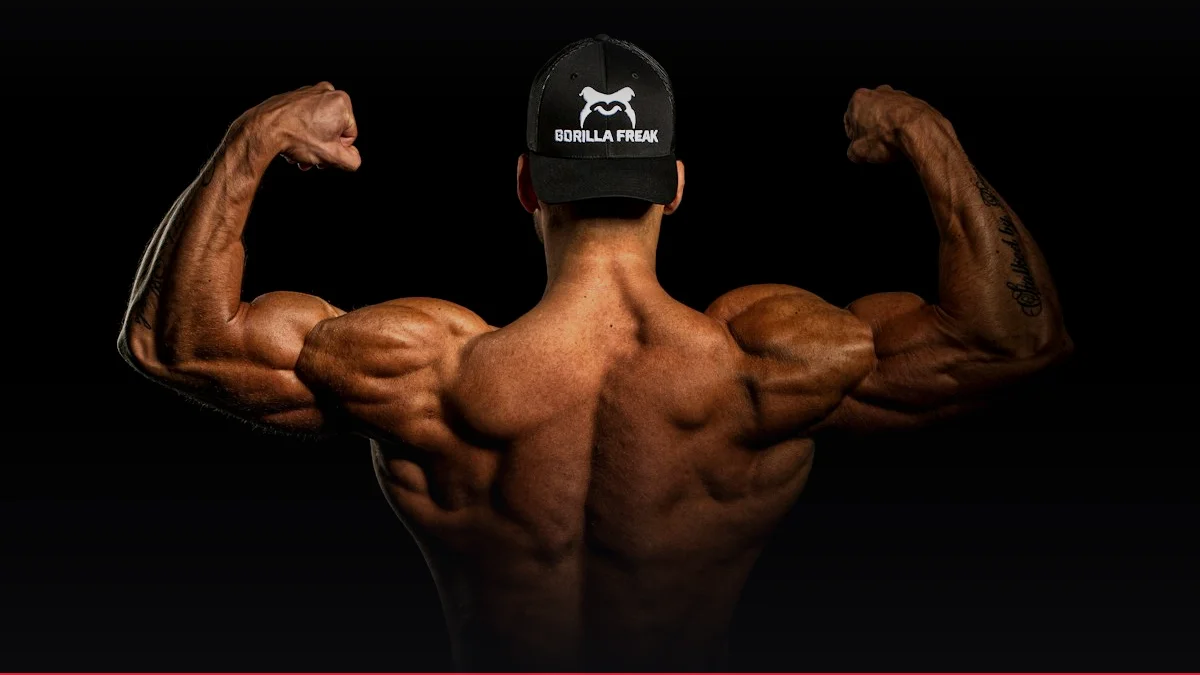
The stiff-leg deadlift focuses the load on the upper and middle parts of the biceps femoris, as well as on the spinal erectors.
- Hamstrings (biceps femoris, semitendinosus, and semimembranosus)
- The primary target muscles. In the SLDL, they experience maximum stretch at the hip joint with minimal activity at the knee, making the exercise unique for their hypertrophy.
- Erector Spinae
- Carry an enormous load, holding the torso in a stable state. In this exercise, they work through a significantly larger range of motion than in the Romanian deadlift.
- Gluteus Maximus
- Works as a synergist, helping to extend the pelvis in the final phase of the lift.
- Adductor Muscles
- Help stabilize the legs during the tilt and lift of the weight.
Biomechanical Mechanics: Biomechanically, the SLDL is a movement around the frontal axis of the hip joint. The main feature is the fixed (almost straight) knee position. This removes the load from the quadriceps and shifts it exclusively to the back of the thighs and the lower back. Due to the greater forward torso lean (compared to the RDL), the moment arm becomes longer, increasing the load on the spinal erectors.
4. Biochemical Impact: Mechanical Tension and Hypertrophy
The stiff-leg deadlift creates an extreme level of mechanical tension in the muscles of the posterior thigh. Working in an 8-12 repetition range triggers a powerful systemic response.
Biochemically, this state is characterized by massive sarcomere damage in the muscle fibers, specifically in the phase of maximum elongation. These micro-traumas activate satellite cells, leading to hyperplasia and hypertrophy of muscle fibers. Furthermore, the SLDL stimulates the release of local growth factors (IGF-1), accelerating tissue regeneration and growth. The pump after this exercise provides an intense blood flow to the usually "dry" posterior thigh.
The stiff-leg deadlift is an exercise that "wakes up" your muscles. When you feel like your hamstrings are about to tear—that's exactly when they grow.
It is also important to mention the hormonal aspect. Heavy deadlifts stimulate the production of testosterone and growth hormone, which positively affects the body's overall anabolic environment. Improving the neuromuscular connection in this exercise helps the athlete better control their center of gravity in any other strength movements.
Stiff-Leg Deadlift (SLDL) Force Ratio
Determine SLDL to conventional deadlift strength ratio (70-75%) and glute-hamstring isolation dynamics.
Launch Tool5. Practical Methodology and Execution Technique
SLDL technique does not forgive negligence. The slightest rounding of the back under load can lead to injury.
- Starting Position: Stand straight, bar in hands. Feet hip-width apart, knees almost fully straightened (but not "locked" back; maintain 1% flexion for safety).
- Beginning the Movement: On an exhale, begin leaning forward, keeping the bar close to the legs (but not necessarily sliding down them like in an RDL). The pelvis is almost not pushed back.
- Lowering: Lean forward until the point you can keep your back straight. In people with good flexibility, the bar can drop all the way to the feet.
- Back: This is critical. Throughout the movement, the back must remain absolutely straight. If you feel the back starting to round—you have reached your range limit.
- The Lift: With a powerful effort from the hamstrings and glutes, lift the torso to a vertical position. Do not lean back at the top point.
| Parameter | Recommended Value | Effect |
|---|---|---|
| Repetitions | 8-12 | Strength hypertrophy and stretching |
| Sets | 3-4 | Optimal volume for the posterior chain |
| Tempo | 4-0-1 (Down-Pause-Up) | Emphasis on a slow negative phase |
| Rest | 2 minutes | Recovery to maintain technique |
6. Load Progression and Integration
Progression in the SLDL must be smooth. Here we progress through weight and depth of the tilt.
- Adding Weight: Add 2-5 kg only when you can perform 12 repetitions in full range with a perfect back.
- Increasing Range: Over time, try to lower the bar further, developing hamstring flexibility. Using a platform (step) allows you to lower the bar below feet level.
- Drop Sets: Perform 10 repetitions, immediately drop 30% of the weight, and do another 10. This will create extreme pumping in the legs.
- Slowing the Eccentric: Lower the bar over 5-6 seconds. This forces the muscles to adapt to colossal tension.
Important: The stiff-leg deadlift is a heavy exercise. It is best placed at the beginning of a posterior thigh workout or as the second exercise after squats. It is not recommended to do it at the end of a workout when the back stabilizer muscles are already fatigued.
In the SLDL, weight is your enemy if you cannot control it. Your back is your fortress; protect it.
7. Analysis of Scientific Research and Evidence Base
EMG studies confirm that the stiff-leg deadlift activates the medial part of the hamstrings (semitendinosus) more intensely than any other deadlift variation. This is explained by the muscle being in a state of maximum stretch throughout the entire set.
Scientific papers on spinal mechanics indicate that the SLDL creates the highest level of shear force on the L5-S1 segment. This confirms the need for strict spinal neutrality. It was proven that using light weight in a full range of motion is more effective for hamstring hypertrophy than using heavy weight in a limited range.
Scientists also investigated the role of footwear. It was established that performing deadlifts barefoot or in hard-soled weightlifting shoes improves stability and allows for better engagement of the posterior chain due to better ground contact.
8. Synergy: Nutrition, Nutraceuticals, and Recovery
Recovery after such a heavy exercise requires powerful support for connective tissue and muscles.
- Collagen + Vitamin C
- Critically important for the health of the posterior thigh tendons, which undergo extreme stretching.
- Creatine Monohydrate
- Provides strength for heavy sets and accelerates back muscle regeneration.
- Magnesium
- Helps relax the hamstrings and lower back after training, preventing spasms.
- Glucosamine
- Supports the health of the hip joints, which are the center of rotation in this exercise.
Recovery should include active hamstring stretching and yoga. SMR (foam rolling) is also very effective for relieving tension in the biceps femoris. Quality sleep is necessary for restoring the central nervous system, which fatigues significantly from the high volume of mechanical tension.
9. Common Mistakes, Myths, and Injury Prevention
The main mistake is rounding the back to achieve greater depth. When you bend the spine, you transform the deadlift into an exercise for destroying discs. IF THE BACK ROUNDS—STOP!
- Myth: The stiff-leg deadlift is harmful to the knees. (Reality: It is safe if you don't lock the knees out and work smoothly).
- Mistake: Letting the bar drift away from the legs. This creates a huge lever that loads the lower back instead of the legs.
- Myth: This is a back exercise. (Reality: The back works statically here; it is a leg exercise).
- Mistake: Too fast an upward movement. Control the lift just as carefully as the lowering.
To prevent injury, always start with a thorough pelvic warm-up. If you feel sharp pain in the back of the thigh—immediately reduce the range of motion.
Interactive Apps & Calculators for Article
Empirical mathematical algorithms and scientific formulas for sports optimization
 Strength & Hypertrophy
Deadlift 1RM & Leverage Calculator
Estimate deadlift 1RM, analyze anatomical leverage (Conventional vs Sumo), and compute mechanical work in Joules.
 Strength & Hypertrophy
Leg Extension ACL Shear Force & Rectus Femoris
Quantify anterior tibial shear and ACL strain across terminal knee extension angles (0-30° vs 45-90° safe arc).
10. FAQ: Answers to Common Questions
- What is the difference between the Romanian deadlift and the stiff-leg deadlift?
- In the RDL, the pelvis goes back, knees bend more, and the bar slides down the legs. In the SLDL, the pelvis is higher, knees are almost straight, and the torso tilt is deeper.
- Can I do the SLDL with dumbbells?
- Yes, it's an excellent option for better control and the ability to find the most natural trajectory for your anatomy.
- What is the optimal weight for this exercise?
- Usually, it is 20-30% less than in the Romanian deadlift. Here, the main thing is the stretch range, not the kilograms.
- Does this exercise help increase the squat result?
- Absolutely. Strong hamstrings are the key to stability at the bottom point of the squat.
- Can girls do the stiff-leg deadlift?
- Yes, it is one of the best exercises for creating "tight" leg and glute shape without excessive quadriceps growth.
The stiff-leg deadlift is your path to powerful and functional legs. Be technical, respect your body, and the results will not be long in coming.