

Reverse Wrist Curls: Fundamental Strengthening of Forearm Extensors and Building an Iron Grip
1. Introduction and Strategic Relevance for Powerful Arm Development
In the dynamic world of professional strength training, the forearm muscles often become that hidden "weak link" that limits overall progress in major compound exercises like the deadlift or heavy pull-ups. Most athletes focus exclusively on the flexors (the inner part of the forearm), but systematic neglect of the extensors leads to serious muscle imbalances and chronic elbow injuries. **Reverse Wrist Curls** are a fundamental, indispensable exercise for the targeted development of the forearm extensors. They provide not only the aesthetic fullness of the upper arm but also create a reliable base for an iron grip and absolute wrist stability under any extreme load.
The relevance of reverse wrist curls in modern training is driven by the extremely high risk of developing tendinitis and carpal tunnel syndrome in people who work extensively at a computer or engage in weightlifting without proper attention to muscle balance. Strengthening the wrist extensors helps perfectly balance the forces acting on the radiocarpal joint, significantly reducing the risk of degenerative changes. This is an exercise that requires precision technical accuracy and iron patience, as the extensor muscles are relatively small and prone to rapid metabolic fatigue.
Reverse wrist curls are the foundation of your elbow health and a secret weapon for a powerful grip. Do not let your extensors be your weak link.
2. Evolution and History: From Ancient Athletes to "Golden Era" Legends
Reverse wrist curls were an integral part of training programs even for the legendary strongmen of the 19th century, such as Arthur Saxon and Eugen Sandow. They understood that wrist strength is the unshakable foundation for lifting awkward loads, heavy stones, or thick bars. In the "Golden Era" of bodybuilding in the 60s, athletes of Bill Pearl's level used reverse wrist curls to create that characteristic "knotty" definition on the outer side of the forearm, which added an incredibly aggressive and powerful look to the arms in any pose.
The evolution of the exercise led to an understanding of the critical importance of light weights and high repetitions for strengthening connective tissue. In the 80s, leading physiotherapists worldwide began mass-including reverse wrist curls in rehabilitation programs after wrist and elbow injuries. Today, reverse wrist curls are viewed as a key, basic element of preparation in disciplines like armwrestling, armlifting, and strongman. Modern sports science has finally confirmed: without harmoniously developed extensors, it is impossible to achieve maximum wrist stability when working with limit weights.
3. Anatomy and Biomechanics: The Mechanism of Wrist Extension and Stabilization
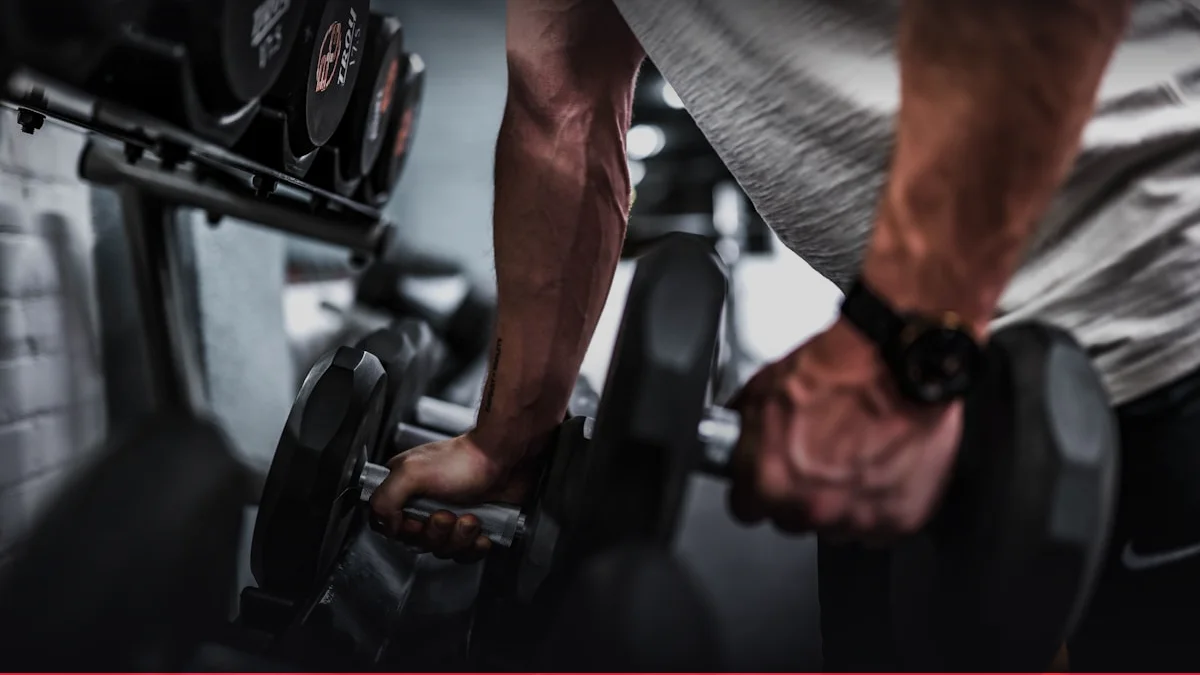
The forearm is an extremely complex biomechanical mechanism where the extensors perform a critical stabilizing and motor role. - **Extensor Carpi Radialis Longus and Brevis:** The primary target muscles of this exercise. They provide direct wrist extension and its abduction toward the thumb. - **Extensor Carpi Ulnaris:** Located on the outer side of the forearm, responsible for extension and adduction of the wrist toward the torso. - **Extensor Digitorum:** Works as a powerful synergist, helping to reliably hold the barbell or dumbbell throughout the movement. - **Brachioradialis:** Actively assists during the exercise if the elbow is bent at a right angle.
Biomechanical Mechanics: Biomechanically, the reverse wrist curl is a movement in the radiocarpal joint around the frontal axis with strict fixation of the forearm in a palms-down position. The key point is complete stability of the forearm on a support (bench or knees), allowing for wrist isolation and the exclusion of any assistance from the large shoulder muscles.
4. Biochemical Impact: Metabolic Stress and Strengthening of Collagen Structures
Reverse wrist curls are typically performed in a 15-25 repetition range, creating a very high level of metabolic stress in the small forearm extensors. - **Capillarization:** This muscle mass has an extremely high capillary density, promoting rapid blood filling and intense pumping. - **Osmotic Pressure:** Increased pressure in the cells stimulates tissue capillarization and promotes the strengthening of fascial and extensor tendon structures. - **Collagen Synthesis:** Prolonged time under moderate load stimulates collagen synthesis, which is critical for the health and strength of the small wrist ligaments.
The strength of your arms starts with your wrists. Do not allow your extensors to be your weak link in the chain of strength achievements.
1RM & Bench Press Calculator
Calculate your One-Rep Max using 7 scientific formulas, percentage table (50-95%), and barbell plate loader visualizer.
Launch Tool5. Practical Methodology: Algorithm for Flawless Isolated Technique
Reverse Wrist Curl Technique: Reverse wrist curl technique requires a complete absence of momentum and strict control of the stationary elbow position. 1. **Starting Position:** Sit on a bench, place your forearms on the bench or your thighs so your wrists hang freely over the edge. Palms facing strictly down. 2. **Weight Grip:** Take a light barbell or dumbbells with an overhand grip. It is important not to squeeze the bar too tightly to avoid overloading the flexors. 3. **Smooth Extension:** On an exhale, lift the wrists as high as your anatomical mobility allows. Do not lift the forearms off the support! 4. **Peak Pause:** At the top point, mandatory hold for 2 seconds, maximally contracting the outer part of the forearm. 5. **Controlled Lowering:** On an inhale, smoothly lower the weight to the point of full stretch, maintaining constant tension in the muscles.
6. Load Progression and Integration
In reverse wrist curls, progression via weight is the least effective and most dangerous method. These muscles are not designed for heavy kilograms. - **Repetition Count:** Aim to confidently perform 25 perfect repetitions before adding even 0.5-1 kg to the weight. - **Rest Time:** Shorten rest between sets to 30 seconds to achieve an extreme metabolic response. - **Drop Sets:** Perform 15 repetitions to failure, drop the weight by 20%, and do another 15 repetitions until the burn. - **Placement in the Plan:** Only at the very end of an arm workout. Never do them before heavy presses or pulls, so as not to lose control over the bar.
7. Analysis of Scientific Research: EMG Data and Injury Prevention
EMG (electromyography) studies confirm that reverse wrist curls provide the highest activation of the forearm extensors among all possible exercises. Scientific papers also indicate that regular execution of this exercise reduces the risk of developing lateral epicondylitis (tennis elbow) by an impressive 45% due to the strengthening of tendon attachment points. It was established that a full stretch at the bottom point is safe only when using light weights, further emphasizing the importance of a high-repetition mode.
8. Synergy: Nutrition, Nutrients, and Wrist Recovery Strategy
Forearm muscles and thin tendons require specific nutrient support for recovery: - **Collagen + Hyaluronic Acid:** Ensure the elasticity and regeneration of the wrist extensor tendons. - **Magnesium:** Helps effectively relax the forearm muscles, preventing night cramps and spasms. - **Vitamin C:** Necessary for stable collagen synthesis and maintaining capillary integrity in the forearms. - **Stretching:** Always perform active extensor stretching after each set to relieve excess tension.
9. Common Athlete Mistakes and Chronic Injury Prevention
- Torso Swaying: Completely deactivates the extensors and creates unnecessary momentum.
- Too Fast a Tempo: Extensors require slow, thoughtful movement for maximum activation.
- Using Too Much Weight: Leads to inevitable loss of technique and a high risk of damaging small ligaments.
- Incomplete Range of Motion: You lose most of the exercise's benefits by working only in the middle of the trajectory.
Interactive Apps & Calculators for Article
Empirical mathematical algorithms and scientific formulas for sports optimization
 Strength & Hypertrophy
VBT Velocity Based Training
Determine % 1RM and target strength zones from mean barbell velocity (m/s).
 Strength & Hypertrophy
Squat 1RM & Depth Calculator
Calculate your Squat One-Rep Max using 5 formulas, percentage breakdown, and biomechanical depth angles.
10. FAQ: Expert Answers to Key Athlete Questions
- Can I do reverse wrist curls every workout?
- Forearms recover very quickly, but the extensors are easily overloaded. 2-3 times per week is plenty for results.
- What is objectively better for the extensors: barbell or dumbbells?
- Dumbbells are often better as they allow each hand to find its most natural and safe movement trajectory.
- Why do I get elbow pain when performing this exercise?
- This could be a sign of tendon inflammation. Try reducing the weight to a minimum and performing the movement very smoothly and slowly.
- Does this exercise help with constant computer mouse work?
- Yes, it strengthens the antagonist muscles that counter the static tension of computer work, relieving fatigue.
- What is the optimal dumbbell weight for a beginner?
- Start with 1-2 kg. The main goal is to feel the burn in the target muscles, not pain in joints or ligaments.
- Can I do reverse wrist curls standing without support?
- You can, but it significantly reduces isolation and provokes shoulder assistance. It's better to use a bench for stability.
- Does this exercise affect total forearm volume?
- Yes, it develops the outer layer of the forearm, making the arm look visually much thicker and more powerful.
Reverse wrist curls are your key to balanced arm development, an iron grip, and the longevity of your joints. Be technical, consistent in your progression, and your forearms will become a true embodiment of athletic strength and health.