


Reverse Barbell Curls: Building Massive Forearms, a Powerful Brachialis, and an Iron Grip
1. Introduction and Fundamental Relevance for Arm Development
In the endless pursuit of impressive bicep volume, beginner athletes often unfairly neglect the muscles that actually provide the arm with true athletic massiveness, functional power, and visual completion. The **Reverse Barbell Curl** is an often-underrated but extremely effective exercise aimed at the deep development of the brachioradialis, brachialis, and wrist extensors. While classic curls build the bicep "peak," the reverse grip builds the actual foundation of the entire arm, making your forearms powerful and the elbow joint maximally stable under any extreme load.
The relevance of this exercise in modern training is driven by the growing popularity of functional strength, armlifting, and armwrestling, where forearm strength and grip durability are decisive factors for success. Furthermore, the reverse grip helps effectively correct the chronic imbalance between the flexors and extensors of the forearm, which is the most frequent cause of elbow pain in strength athletes. This is an exercise that harmoniously combines aesthetics with real, raw power, making your arm look impressive from any angle, regardless of genetic predispositions or experience.
The reverse grip is your secret path to truly massive arms. When your forearms get thicker, your biceps visually appear even larger due to the contrast.
2. Evolution and History: From Ancient Gladiators to "Golden Era" Legends
Reverse grip curls were an integral part of athletic preparation as far back as antiquity, when gladiators used heavy stones and iron bars to strengthen their wrists before battles. The exercise received true recognition in modern bodybuilding in the 50s and 60s. Legendary Bill Pearl and the first Mr. Olympia, Larry Scott, considered the reverse grip a mandatory element of arm training. Scott often performed reverse curls on a specific incline bench to completely eliminate momentum and ensure perfect brachialis isolation.
The evolution of the exercise led to the understanding that it is not just a cosmetic movement for the stage. In the 70s, weightlifters began actively using the reverse grip to strengthen the elbow's ligamentous apparatus, which often suffered from excessive supinated loads. The appearance of EZ-bars allowed for a significant reduction in wrist tension, making the exercise accessible for people with limited wrist mobility. Today, the reverse barbell curl is viewed as a fundamental exercise for developing the functional strength of the upper extremities in any strength sport.
3. Anatomy and Biomechanics: Deep Analysis of Pronated Elbow Flexion
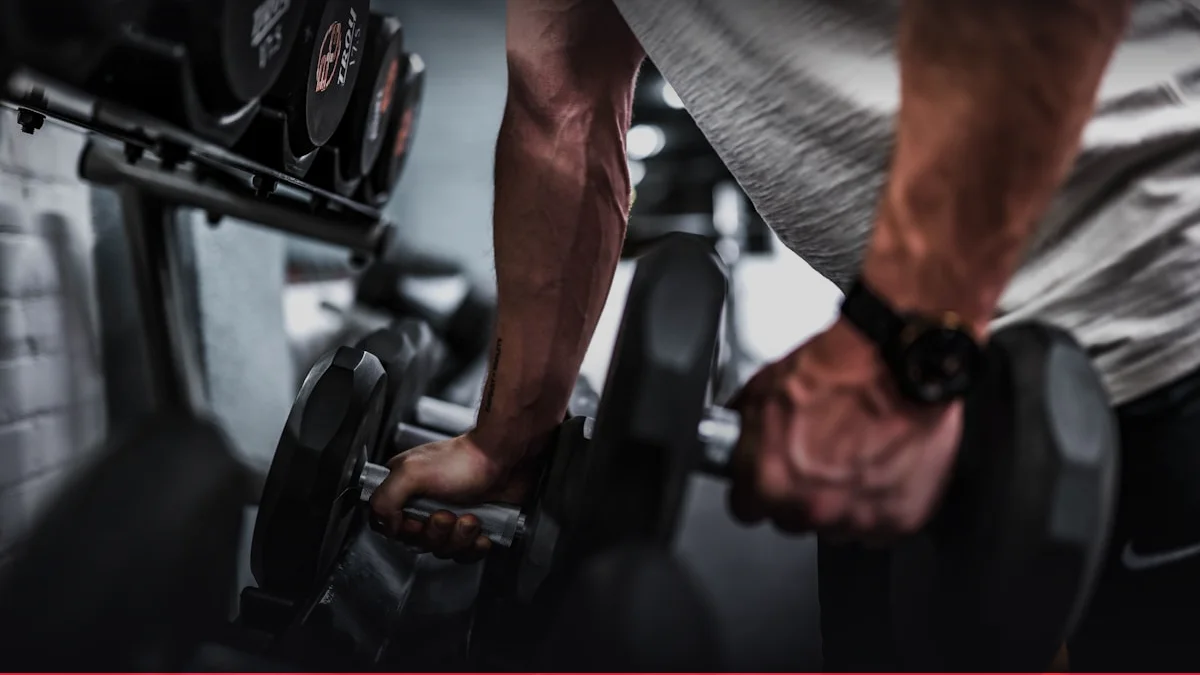
The reverse grip (strict pronation) fundamentally changes the hierarchy of activation of the primary elbow flexor muscles: - **Brachioradialis:** The largest muscle of the forearm. In a reverse grip, it becomes the primary strength mover because the bicep is in a biomechanically disadvantaged position. - **Brachialis:** Lies deep beneath the biceps. Receives a colossal growth stimulus because, during pronation, the bicep is partially "deactivated," leaving all the main work to the brachialis. - **Biceps Brachii:** Works only as a secondary synergist. Its activity is reduced by almost half because the bicep tendon "wraps" around the radius during pronation. - **Wrist Extensors and Supinator:** Work in an intense isometric mode, stabilizing the heavy barbell and strengthening the wrist against unwanted flexion.
Biomechanical Mechanics: Biomechanically, a reverse grip curl is elbow flexion around the frontal axis with strict fixation of the forearm, palms down. This creates an ideal situation for isolating the brachialis and creating that specific arm thickness that cannot be obtained with regular bicep curls.
4. Biochemical Impact: Metabolic Stress and Tissue Hypertrophy
Performing reverse curls usually occurs in a high-repetition range (12-25 repetitions), creating extreme metabolic stress in the forearm muscles. - **Lactate Accumulation and Hyperemia:** Rapid tissue acidification stimulates forearm capillarization and increases osmotic pressure in the cells, leading to their expansion. - **Pumping and Fascial Stretching:** The intense blood flow after a set literally inflates the forearms, promoting the mechanical expansion of dense fascial sheaths and stimulating hypertrophy. - **Neural Adaptive Response:** Coordinating the work of wrist extensors and elbow flexors requires the creation of new neural connections, improving overall grip strength and arm coordination.
The reverse grip is a true test of your will. It is precisely when your forearms begin to burn from lactate that the real growth of your strength and mass begins.
Reverse Nordic Curl: Knee Extensor Torque & Stretch
Calculate body lean angle, knee extensor moment arm, and rectus femoris fascicle elongation for patellar tendon resilience.
Launch Tool5. Practical Methodology: Algorithm for Flawless Execution Technique
Reverse Curl Technique: Reverse curl technique requires absolute immobility of the elbows and strict control of wrist position throughout the entire range. 1. **Starting Position:** Stand straight, take the barbell with a reverse grip (palms clearly down). Grip width—shoulder width. 2. **Iron Wrist Control:** This is a critical moment! Hold the wrist rigidly as a straight extension of the forearm. Do not allow the barbell to "break" the wrist downward. 3. **Smooth Weight Lift:** On a powerful exhale, lift the barbell to the level of the upper pecs. Your elbows should be tightly "glued" to the sides of your torso. 4. **Peak Fixation:** At the top point, maximally contract the forearms and brachialis for 2-3 seconds. Feel the peak contraction. 5. **Controlled Lowering:** On an inhale, as smoothly as possible, lower the barbell over 3-4 seconds. Do not relax the muscles at the bottom point.
6. Load Progression and Strategic Integration
Progression in reverse curls must be methodical and cautious, as wrists require considerable time to adapt. - **TUT Method (Time Under Tension):** Stop the barbell for 2 seconds at a 90-degree angle during the lift. This significantly increases time under tension. - **Drop Sets for Pumping:** Perform 15 repetitions to failure, immediately drop the weight by 30%, and do another 15 repetitions. - **Using Fat Gripz:** This will multiply the load on grip strength and the brachioradialis. - **Placement in the Plan:** It is best to place the reverse curl at the very end of an arm workout or after heavy back pulls, when the biceps are already fatigued.
7. Analysis of Scientific Research: EMG Data and Elbow Joint Health
EMG studies confirm that reverse curls activate the brachioradialis 40-50% more intensely than the traditional supinated version. Scientific papers also indicate that training in a pronated position strengthens the ligaments, which is a preventive measure for "tennis elbow." The brachialis has a higher proportion of slow-twitch fibers, so it responds ideally to high repetitions and long time under tension.
8. Synergy: Nutrition, Specific Nutrients, and Recovery
For growing powerful forearms and strengthening tendons, specific nutrient support is necessary: - **Collagen and Vitamin C:** Forearm tendons are very thin, so collagen is necessary for their fast and quality regeneration. - **Magnesium:** Effectively prevents spasms and cramps in the forearms after intense pumping. - **Creatine Monohydrate:** Provides the energy needed for heavy final repetitions, where finger grip strength often "fails." - **Stretching:** Regular stretching of the wrist extensors after every workout is a mandatory condition for maintaining mobility.
9. Common Mistakes and Chronic Arm Injury Prevention
- Torso Swaying (Cheating): Completely nullifies the benefit for the forearms and overloads the lower back.
- Breaking the Wrists: Creates traumatic load on the wrist ligaments. Always keep the wrist straight!
- Bringing Elbows Forward: Engages front delts, taking the main work away from the target brachialis.
- Too Heavy a Barbell: Leads to inevitable loss of technique and a high risk of elbow ligament strain.
- Fast Negative Phase: You lose 50% of the muscle growth stimulus by simply dropping the weight.
Interactive Apps & Calculators for Article
Empirical mathematical algorithms and scientific formulas for sports optimization
Strength & Hypertrophy
Concentration Curl: Peak Biceps Isolation & Cheating Elimination
Eliminate anterior deltoid momentum: calculate peak torque for the biceps brachii short head in the top third of the ROM.
Strength & Hypertrophy
Nordic Hamstring Curl Eccentric Force
Calculate break angle, peak eccentric hamstring tension, and relative reduction of sprint strain risk (-51%).
10. FAQ: Expert Answers to Key Athlete Questions
- Can I perform the reverse grip on every arm workout?
- Forearm muscles are durable, but they need time to grow. 2-3 times per week is plenty for progress.
- Which bar is better: straight or EZ-bar?
- The EZ-bar is safer for the wrists, while the straight bar provides the most complete anatomical pronation.
- Why are my forearms not growing at all, even though I do this exercise?
- Likely, you are using momentum. Try lowering the weight over 4-5 seconds in each repetition.
- Do reverse curls help increase pull-up results?
- Absolutely. Strong forearms and a stable elbow directly affect your pulling strength.
- How to hold the thumb correctly: on top or below?
- For maximum extensor activation, professionals often use an open ("monkey") grip with the thumb on top.
- Will a woman's forearms become too massive?
- No, the arms will simply become more toned, defined, and strong without excessive volume.
- Do reverse curls help with wrist pain from bench pressing?
- Yes, by strengthening the extensors, you create muscle support that stabilizes the wrist under load.
Reverse barbell curls are an exercise for true athletes who value not only volume but also real strength. Be technical, consistent in your progression, and your arms will acquire a truly powerful and athletic look.