

Neutral Grip Dumbbell Curls: Building Bicep Peak, Arm Thickness, and Powerful Forearms
1. Introduction and Fundamental Relevance for Arm Development
In the endless quest for ideal and proportional arm development, athletes often focus exclusively on classic supinated bicep curls (palms up). However, the true power, massiveness, and visual volume of the arm are determined not only by the two-headed muscle but also by the development of the deep brachialis and the forearm muscles. **Neutral Grip Dumbbell Curls**, also known in the fitness community as **Hammer Curls**, are one of the most effective exercises for creating real arm thickness and emphasizing the bicep peak by mechanically pushing it outward with a developed and hypertrophied brachialis.
The relevance of the neutral grip in modern training is driven by its pronounced physiological advantage and significantly lower load on the wrists. The neutral wrist position (palms facing each other) is the most natural for humans from an anatomical standpoint, allowing for working with heavier weights compared to a supinated grip without the risk of injuring the delicate ligaments of the radiocarpal joint. This is an exercise equally necessary for bodybuilders creating aesthetic definition and for strength athletes radically strengthening their grip and increasing elbow joint stability during heavy presses.
The neutral grip is your secret path to voluminous arms. You don't see the brachialis directly, but it is what makes your arms truly massive and impressive.
2. Evolution and History: From the Blacksmith's Hammer to the Modern Iron Game
The name "Hammer Curls" comes from the visual similarity of the movement dynamics to the heavy work of a blacksmith or carpenter methodically driving large nails. This exercise has been an integral part of athletic preparation since the emergence of professional strength sports in the mid-19th century. At the beginning of the 20th century, legendary strongmen used the neutral grip to develop functional arm strength, which was critically necessary for lifting awkward loads and stones, and in wrestling, where finger and forearm strength played a decisive role.
The evolution of the exercise in 70s and 80s bodybuilding led to the understanding that the neutral grip is the key to targeted development of the brachialis—a powerful muscle lying deep beneath the biceps. Sports legends like Sergio Oliva and later Ronnie Coleman actively used heavy "hammers" to create incredible arm thickness that impressed from any angle. They understood a simple truth: without maximum brachialis development, the arm will never look truly three-dimensional and full. Today, the exercise is a mandatory standard in programs of any level—from beginners to pros.
3. Anatomy and Biomechanics: Force Distribution in the Neutral Grip
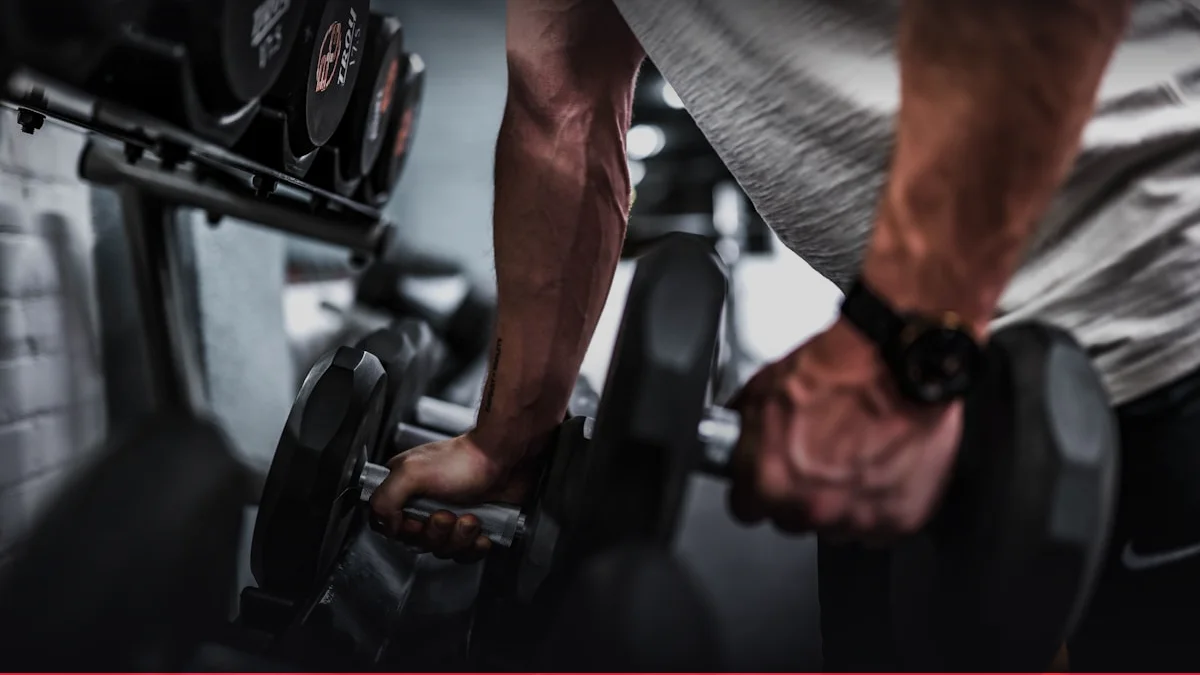
The neutral grip fundamentally changes the force vector and load distribution between the primary flexor muscles of the upper extremity. - **Brachialis:** Lies directly beneath the biceps. It is the primary mover in a neutral grip. Brachialis development visually "pushes" the bicep upward, making its peak higher and more defined. - **Brachioradialis:** The largest muscle of the forearm. Receives maximal stimulating load specifically during a hammer grip, forming a powerful arm look from the elbow to the wrist. - **Biceps Brachii:** Works as a synergist. Since the arm is not supinated, the bicep is engaged less than in the classic curl, allowing for emphasizing the load specifically on the deep muscle layers. - **Coracobrachialis:** Helps stabilize the humerus in the initial phase of the lift.
Biomechanical Mechanics: Biomechanically, a neutral grip curl is a single-joint movement of flexion at the elbow joint. The lack of forearm rotation (supination) removes a significant portion of the tension from the distal bicep tendon, making this movement much more comfortable for athletes with chronic elbow or forearm issues.
4. Biochemical Impact: Hypertrophy of Deep Fibers
Neutral grip dumbbell curls are typically performed in a 10-15 repetition range, creating ideal conditions for metabolic stress and intense pumping. - **Mechanical Tension:** Working with moderately heavy dumbbells in the eccentric phase causes micro-trauma to the deep brachialis fibers, which is the trigger mechanism for protein synthesis. - **Lactate Accumulation:** The burning sensation during the set indicates the accumulation of metabolic products, stimulating the release of local growth factors (IGF-1). - **Fascial Stretching:** The powerful blood flow (hyperemia) after the set stretches dense muscle sheaths, creating physical space for subsequent volumetric muscle growth.
Hammer curls are your tool for creating true "muscle armor" for your arms, visible even through thick clothing.
Concentration Curl: Peak Biceps Isolation & Cheating Elimination
Eliminate anterior deltoid momentum: calculate peak torque for the biceps brachii short head in the top third of the ROM.
Launch Tool5. Practical Methodology: Execution Technique and Variability
Hammer Curl Technique: Hammer curl technique requires absolute stability of the entire torso and a complete absence of inertial swaying. 1. **Starting Position:** Stand straight, dumbbells in hands at the sides, palms facing the thighs. Chest open, shoulder blades slightly retracted. 2. **The Lift:** On an exhale, maintaining a neutral grip, lift the dumbbells to shoulder level. The thumb should be pointed clearly upward. 3. **Peak Pause:** At the top point, maximally contract the muscles for 1-2 seconds. Do not allow the dumbbells to touch the shoulders themselves. 4. **Return:** On an inhale, smoothly lower the dumbbells over 3 seconds. Never drop the weight freely. 5. **"Cross-Body" Variation:** Lifting the dumbbell toward the opposite shoulder rather than in front. This further emphasizes the load on the lateral head and brachialis.
6. Load Progression and Integration into the Training Plan
Progression in hammer curls usually occurs faster than in classic exercises due to the stronger anatomical position. - **Weight Increase:** Add 1-2 kg to the dumbbells as soon as you can perform 15 repetitions with perfect control. - **Incline Bench Work:** Performing hammers while sitting on a bench at a 45-degree angle (leaning back) creates colossal brachialis stretching at the bottom point. - **Drop Sets:** Perform a set to failure, drop the weight by 30%, and immediately do as many more. This guarantees extreme forearm growth.
7. Analysis of Scientific Research: EMG Data and Wrist Health
EMG studies confirm that the neutral grip provides 25-30% higher brachioradialis activation compared to a supinated grip. Scientific papers also indicate that the brachialis has a very high density of Type II fibers, making it prone to rapid strength hypertrophy when working with heavy weights. From a safety perspective, scientists have proven that the neutral wrist position minimizes torque in the radiocarpal joint, making the exercise safe even for athletes with chronic wrist injuries.
8. Synergy: Nutrition, Nutrients, and Recovery Strategy
For growing powerful arms and strengthening tendons, quality support is necessary: - **Creatine:** Allows for working with heavier weights in the strength repetition range. - **Beta-Alanine:** Helps withstand the burn in the forearms, allowing for 2-3 more repetitions. - **Collagen:** Critically important for elbow ligaments, which experience great tension during hammers. - **Citrulline:** Improves vascularity and arm fullness during training.
9. Common Athlete Mistakes and Elbow Injury Prevention
- Torso Swaying: Using back momentum removes the load from the arms and overloads the spine.
- Bringing Elbows Forward: Turns the exercise into front delt work. Keep elbows tucked!
- Wrist Flexion: Aim to keep the wrist as an extension of the forearm; do not allow the dumbbell to "flop" over.
- Too Fast a Negative Phase: You lose half the growth stimulus if you just drop the dumbbells down.
Interactive Apps & Calculators for Article
Empirical mathematical algorithms and scientific formulas for sports optimization
 Sports Nutrition
Reverse Nordic Curl: Knee Extensor Torque & Stretch
Calculate body lean angle, knee extensor moment arm, and rectus femoris fascicle elongation for patellar tendon resilience.
Strength & Hypertrophy
Nordic Hamstring Curl Eccentric Force
Calculate break angle, peak eccentric hamstring tension, and relative reduction of sprint strain risk (-51%).
10. FAQ: Expert Answers to Key Athlete Questions
- Can I do hammers one arm at a time for better concentration?
- Yes, alternating execution allows for better focus on each arm and slightly assisting with the torso on the last repetitions.
- What is better: dumbbell hammers or cable rope curls?
- Dumbbells provide better mechanical tension and range, while the cable provides constant tension. It's best to combine both.
- Why do my forearms hurt more than the bicep after hammers?
- This is perfectly normal since the brachioradialis is one of the primary movers in this exercise and it often fatigues faster.
- Do hammers help increase pull-up results?
- Absolutely. Strong brachialis muscles and a powerful grip directly affect your ability to do many heavy pull-ups.
- How often can I train arms with a neutral grip?
- For most athletes, 2 times per week is enough to ensure progress without overtaxing the CNS.
Neutral grip dumbbell curls are your key to creating truly powerful, athletic, and three-dimensional arms. Be technical, consistent in your progression, and your results in the form of massive arms will become your source of pride.