

Hammer Curls: Building Arm Thickness and a Powerful Brachialis
1. Introduction and Relevance
Many athletes make the mistake of focusing solely on the "peak" of the biceps, ignoring the muscles that create real arm thickness and power. **Hammer Curls** are a unique movement that focusedly loads the brachialis and the brachioradialis. A well-developed brachialis, located underneath the biceps, visually pushes it upward, making the arm look more massive from any angle.
The relevance of hammer curls in modern fitness is driven not only by aesthetics but also by joint health. The neutral grip used in this exercise is the most natural and safe for the wrists and elbows. This allows athletes who experience pain when using a straight barbell to work with heavy weights. Furthermore, the strong forearms built by hammer curls are the foundation for progress in all pulling exercises and the deadlift.
In this article, we will examine the anatomical nuances of the neutral grip, learn how to correctly exclude momentum for maximum isolation, and discover how to integrate hammer curls into your program so your arms become your true calling card.
2. History and Evolution
The name of the exercise comes from the movement's similarity to using a hammer. It is one of the oldest dumbbell movements, used by "old school" athletes to develop grip strength and forearm power. However, true popularity in bodybuilding came in the 70s when athletes began to realize that full arm development required more than just curls with supination.
The evolution of the exercise led to various versions: standing, seated, Preacher bench, and even using a rope attachment in a cable machine. Each of these modifications allows for shifting the load emphasis to different parts of the brachialis and forearm. In the 80s and 90s, hammer curls became a mandatory element for legends like Dorian Yates, who possessed incredibly powerful and detailed forearms.
Today, hammer curls are viewed not only as a cosmetic exercise but also as an important element of functional training. They help balance the development of the arm flexors, preventing epicondylitis (elbow tendon inflammation). Modern sports science has confirmed that combining hammer curls with classic bicep curls ensures the most harmonious development of the entire upper arm musculature.
3. Anatomy and Biomechanics of the Neutral Grip
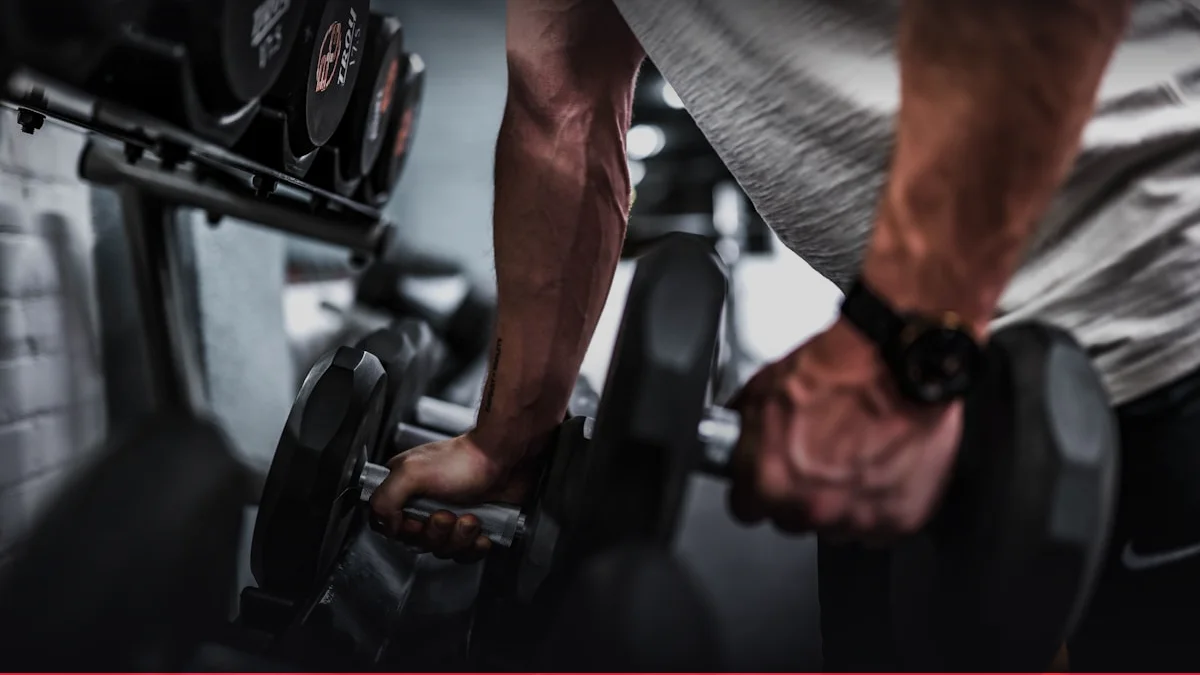
The neutral grip (palms facing each other) radically changes the load distribution among the arm flexors.
- Brachialis
- Located under the biceps. It is the strongest elbow flexor. In hammer curls, it becomes the primary mover because the biceps is partially inhibited in a neutral position.
- Brachioradialis
- The largest muscle of the forearm. It forms the outer part of the arm and works actively in the upper phase of the range.
- Biceps Brachii
- Works as a synergist. Although the emphasis is shifted, the biceps still receives a powerful stimulus, especially its long head.
- Pronator Teres
- A forearm muscle that helps stabilize the wrist in a neutral position.
Biomechanical Mechanics: Biomechanically, hammer curls are the most effective flexion because all three primary elbow flexors work in synergy along the most natural axis of movement. The lack of rotation (supination) allows for a focus on heavy weights and controlled lowering, which is critical for brachialis hypertrophy.
4. Biochemical Impact: Neuromuscular Connection
Performing Hammer Curls: Performing hammer curls requires a high level of neuromuscular activation. Since the brachialis is not visible externally, the athlete must learn to feel its work deep inside the arm. Gradually increasing the weight stimulates the brain to recruit more high-threshold motor units.
Biochemically, working in a 10-12 repetition range causes lactate accumulation in the elbow and forearm area. This acidification stimulates the production of local anabolic growth factors and increases osmotic pressure in muscle cells, leading to swelling (pumping). Expanding the brachialis fascia creates physical pressure on the biceps, pushing it outward.
Hammer curls are for those who want arms that look powerful not only in a double bicep pose but also when simply hanging at their sides.
It is also important to mention the impact on the central nervous system. Since the neutral grip allows for heavy weights, it creates a strength stress that improves the overall ability of the CNS to transmit powerful impulses, which positively affects results in barbell rows and pull-ups.
Concentration Curl: Peak Biceps Isolation & Cheating Elimination
Eliminate anterior deltoid momentum: calculate peak torque for the biceps brachii short head in the top third of the ROM.
Launch Tool5. Practical Methodology and Execution Technique
Hammer curl technique seems simple but has several critical nuances for achieving results.
- Starting Position: Stand straight or sit on a bench. Grab dumbbells with a neutral grip (palms facing each other). Keep your back straight, shoulder blades retracted, and elbows pressed to your sides.
- The Lift: On an exhale, lift the dumbbells toward your shoulders. The movement should be strictly vertical. Do not rotate your wrists!
- Important Nuance: Keep your elbows stationary. Do not bring them forward during the lift—this engages the anterior delts and takes the load off the brachialis.
- Peak Contraction: At the top point, maximally squeeze the muscles for 1 second.
- Return: Slowly and smoothly lower the dumbbells. Do not fully relax your arms at the bottom; maintain muscle tension.
| Parameter | Recommended Value | Effect |
|---|---|---|
| Repetitions | 10-12 | Hypertrophy and strength |
| Tempo (Eccentric) | 3 seconds | Increase in Time Under Tension (TUT) |
| Sets | 3-4 | Optimal volume for detailing |
| Execution Variant | Simultaneous or Alternating | Shift focus to strength or concentration |
6. Load Progression and Integration
In hammer curls, progression should occur through weight and control quality. Since the neutral grip is very strong, you can progress relatively quickly.
- Adding Weight: Try to add 1-2 kg every 2 weeks. However, do not let the weight dictate your technique.
- Drop Sets: Perform 10 reps with heavy dumbbells, then immediately take lighter ones and do another 10. This creates an incredible pump in the forearms.
- Pauses in the Range: Hold for 2 seconds at the point where the forearm is parallel to the floor. This is the hardest part of the movement.
- Cross-Body Hammers: Lift the dumbbell toward the opposite shoulder. This further emphasizes brachialis work.
Important: Hammer curls are ideal for finishing a bicep workout. Start with bicep curls with supination and finish with hammers to work the deep muscle layers and forearms. The exercise also works excellently in supersets with skull crushers.
A firm grip and powerful forearms begin with correctly performed hammer curls.
7. Analysis of Scientific Research and Evidence Base
EMG studies confirm that a neutral grip activates the brachialis and brachioradialis significantly more than supinated or pronated (palms down) curls. Scientists explain this by the anatomical position of the biceps tendon, which in a neutral grip is in a position of least mechanical advantage, forcing the brachialis to take on the primary work.
Scientific papers on joint health indicate that hammer curls are the best choice for athletes with signs of "elbow tendonitis." The neutral wrist position minimizes the rotational load on the epicondyles (bony protrusions of the elbow) where the tendons attach.
Studies have also shown that a strong brachialis directly affects performance in pull-ups and horizontal rows. Athletes who added hammer curls to their plan showed a 10-15% increase in barbell row strength after 8 weeks, specifically due to strengthening the shoulder flexors.
8. Synergy: Nutrition, Nutraceuticals, and Recovery
Growing arm thickness and tendon strength requires quality nutrient support.
- Creatine Monohydrate
- Provides strength for working with heavy dumbbells, critical for progression in this exercise.
- Citrulline Malate
- Improves brachialis and forearm capillarization, enhancing the pump.
- Collagen + Vitamin C
- Strengthen elbow and wrist tendons, which bear heavy loads during hammer curls.
- Magnesium
- Helps relax muscles and forearms after training, preventing tightness.
Recovery should include active forearm massage and stretching of the wrist flexors. Since hammer curls heavily fatigue the grip, using contrast hand baths will help flush metabolites faster and improve neuromuscular response for the next workout.
9. Common Mistakes, Myths, and Injury Prevention
The main mistake is body swaying. When you use momentum from your back to toss the dumbbell, the brachialis is turned off at the most important point—the start.
- Myth: Hammer curls are only for forearms. (Reality: This is the best exercise for the brachialis, which makes your arm thick).
- Mistake: Fully rotating the palm upward. If you rotate the wrist, you are doing a standard bicep curl. Maintain a neutral grip!
- Myth: You can only build arms with a barbell. (Reality: Without hammer curls, you will never achieve full and proportional arm development).
- Mistake: Lifting elbows away from the sides. This engages the delts and takes the load off the target muscles.
To prevent elbow injury, avoid sharp jerks and sudden weight drops. If you feel wrist pain, try using lifting straps to reduce tension on the finger flexors, or slightly change your torso incline.
Interactive Apps & Calculators for Article
Empirical mathematical algorithms and scientific formulas for sports optimization
 Sports Nutrition
Reverse Nordic Curl: Knee Extensor Torque & Stretch
Calculate body lean angle, knee extensor moment arm, and rectus femoris fascicle elongation for patellar tendon resilience.
Strength & Hypertrophy
Nordic Hamstring Curl Eccentric Force
Calculate break angle, peak eccentric hamstring tension, and relative reduction of sprint strain risk (-51%).
10. FAQ: Answers to Common Questions
- Is it better to do them simultaneously or alternately?
- Alternating raises allow for better focus on each arm and handling slightly more weight. Simultaneous raises create higher metabolic stress.
- Can I do hammer curls seated on an incline bench?
- Yes, this is a great option for stretching the brachialis and biceps at the starting point. It's one of the most intense variations.
- Why do I only feel my forearms and not my brachialis?
- Likely, your forearms are weaker than your brachialis. Over time, they will strengthen, and you will feel the deep shoulder muscles working. Also, try slowing down the movement.
- What is the optimal weight for hammer curls?
- The weight with which you can perform 10-12 repetitions without body swaying or lifting your elbows.
- Is it mandatory to touch the dumbbells to the shoulders?
- It is not mandatory. Lifting to the point where the biceps and brachialis are maximally contracted (usually an angle slightly less than 90 degrees) is sufficient.
Hammer Curls are your path to powerful and impressive arms. Be technical, be patient, and your results in developing upper arm and forearm musculature will surprise even the professionals.