

Farmer's Walk: The Best Exercise for Functional Strength and an Iron Grip
1. Introduction and Relevance
In a fitness world dominated by isolation exercises and complex machines, we often forget about the most natural and functional human movements. The **Farmer's Walk** is an exercise that consists of carrying heavy loads over a certain distance. It is the quintessence of "raw" strength training, engaging practically every muscle in your body—from your fingertips to your calves.
The relevance of the Farmer's Walk in modern training cannot be overstated. It is not just an exercise for developing grip strength; it is a powerful tool for strengthening core muscles, improving posture, and increasing overall strength endurance. In a world where we constantly carry bags, children, or equipment, the ability to move weight correctly is a critical life skill. For professional athletes, the Farmer's Walk is a foundational element of preparation in strongman, CrossFit, and martial arts.
In this article, we will examine the biomechanical advantages of loaded carries, learn how this exercise can change your body composition through a colossal metabolic response, and master the technique that will allow you to grow stronger with every step without risking your spine.
2. History and Evolution
The Farmer's Walk is one of the oldest forms of physical training. The name originates from the daily labor of farmers who for centuries carried heavy buckets, sacks, and tools. As a sporting discipline, this movement became famous thanks to Strongman competitions in the second half of the 20th century. Spectators were amazed by the strength of athletes who could run a distance carrying hundreds of kilograms in each hand.
The evolution of the exercise in gyms began with the use of standard dumbbells, but over time, specialized implements emerged—long bars with handles (Farmer's Walk Handles) that allow for significantly more weight and provide better stabilization. In the 2000s, loaded carry methodologies became part of functional training and programs for special forces, as they best mimic real-world combat and rescue tasks.
Today, we view the Farmer's Walk not only as a strength exercise but also as a means of health promotion. Orthopedic surgeons and physical therapists use its lighter variations to restore pelvic and spinal stability. The exercise has traveled the path from an agricultural necessity to a high-tech tool of elite physical preparation.
3. Anatomy and Biomechanics of Loaded Carries
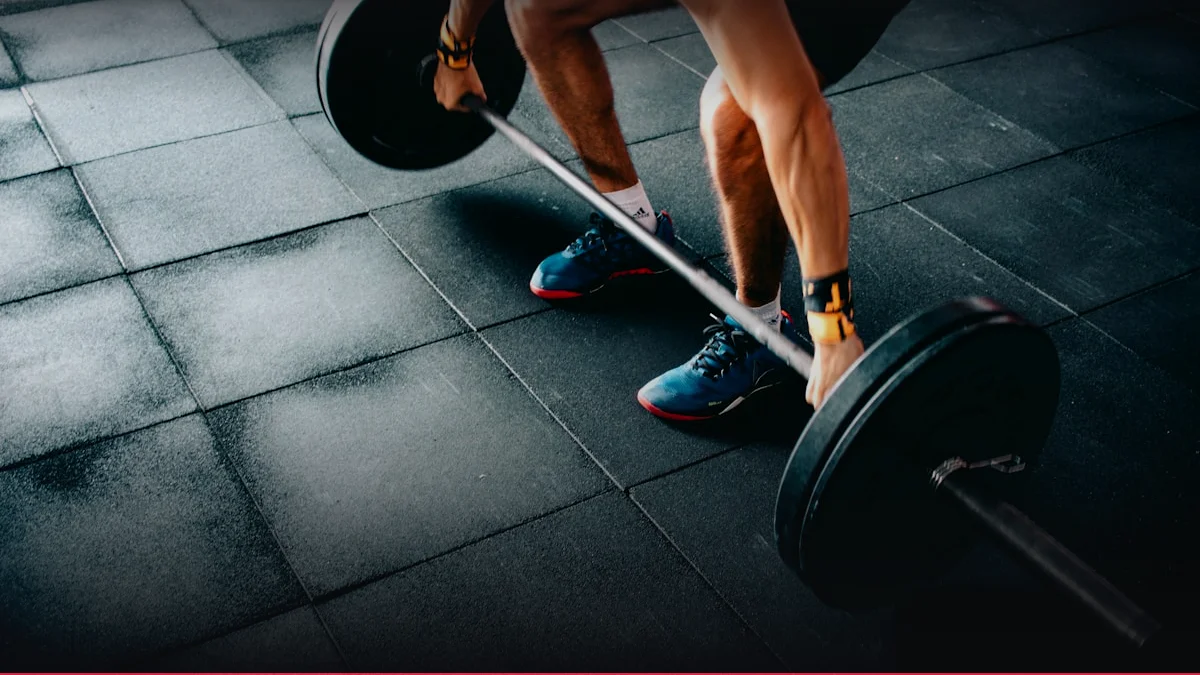
The Farmer's Walk is a full-body exercise that creates colossal isometric and dynamic loading.
- Forearms and Hands
- Bear the primary load. Grip strength here is trained dynamically, which is significantly harder than simply holding a barbell stationary.
- Trapezius and Upper Back Muscles
- Keep the shoulder girdle from "sagging" under the weight of the implements, ensuring scapular stability.
- Core Muscles (Abs, Obliques, Spinal Extensors)
- Work at their limits to prevent the spine from bending or twisting with each step. This is called "dynamic stability."
- Glutes and Legs
- Provide movement. Each step is essentially a half-squat or lunge with a massive weight, powerfully loading the quadriceps and hamstrings.
Biomechanical Mechanics: Biomechanically, the Farmer's Walk is a test of power transfer from the ground through the legs and core to the hands. The primary challenge lies in the weight constantly swaying during movement, forcing small stabilizer muscles to work in "emergency response" mode. This improves proprioception and makes the body resilient to any external jolts.
4. Biochemical Impact: Metabolic Response and Hormones
Performing the Farmer's Walk for 30-60 seconds causes an incredible surge in energy expenditure. It is one of the few exercises where you can lift a total weight multiple times your own and move it.
From an endocrinology perspective, such massive muscle fiber recruitment stimulates the release of testosterone and growth hormone. Biochemically, working to "failure" leads to rapid lactate accumulation throughout the body, triggering fat-burning processes for several hours after the workout (the EPOC effect).
The Farmer's Walk is a metabolic furnace. No other exercise can change your metabolism and mental grit so quickly.
It is also important to mention the impact on bone mineral density. High axial and tensile stress stimulates osteoblasts (cells that build bone tissue), making the skeleton stronger. This is the best prevention against osteoporosis and age-related tissue degradation.
Farmer's Walk Grip Endurance & Axial Load
Calculate total work tonnage, grip time-under-tension, and spinal axial compressive loading during farmer's carries.
Launch Tool5. Practical Methodology and Execution Technique
Despite the simplicity of "pick it up and carry it," Farmer's Walk technique requires strict adherence to rules for spinal safety.
- Starting Position: Place the implements (dumbbells, bars) at your sides. Squat with a straight back and grab the handles in the center. Stand up using leg strength, as in a deadlift.
- Posture: Open your chest, retract your shoulder blades, and keep your chin slightly tucked. Look forward 3-5 meters. Abdominal muscles must be braced (breathing "into the stomach").
- The Walk: Begin moving with small, quick steps. Do not try to take wide strides—this leads to weight swaying. Feet should be placed parallel to each other.
- Stopping: Once the distance is covered or strength wanes, stop and carefully lower the implements to the floor while keeping the back straight. Do not drop the weight!
| Parameter | Recommended Value | Effect |
|---|---|---|
| Weight (Total) | 50-100% of body weight | Development of functional strength |
| Distance | 20-40 meters | Optimal for hypertrophy and endurance |
| Time Under Tension | 30-60 seconds | Maximum metabolic response |
| Sets | 3-5 | Sufficient volume for progress |
6. Load Progression and Integration
You can progress in the Farmer's Walk in three ways: weight, distance, or time.
- Increasing Weight: Aim to add 2-5 kg every 2 weeks. The limit for strength here is almost non-existent.
- Changing Surfaces: Try walking on sand, grass, or uphill. This radically changes the load on the stabilizers.
- Unilateral Carry: Take a heavy implement in only one hand. This forces the obliques to work in an extreme mode against lateral flexion.
- Relays: Combine the Farmer's Walk with other exercises (e.g., 20 meters of walking + 10 burpees).
Important: The Farmer's Walk is best placed at the very end of a workout. Since it critically fatigues the grip and core, performing it at the beginning can ruin your technique in squats or deadlifts. It works perfectly as a "finisher" that squeezes the last drops of energy out of you.
You don't know true fatigue until you've walked 40 meters with weights tearing your arms from their sockets.
7. Analysis of Scientific Research and Evidence Base
Studies published in the *Journal of Strength and Conditioning Research* compared muscle activation in the deadlift and the Farmer's Walk. It was found that the walk causes significantly higher activation of the core muscles and scapular stabilizers due to the need to dampen weight oscillations with every step.
Scientific papers on heart health indicate that the Farmer's Walk creates a specific load on the cardiovascular system—the so-called "Valsalva maneuver effect" combined with cardio. This strengthens vessel walls and improves the heart's ability to work under high pressure.
An interesting study in geriatrics (the science of aging) showed that loaded walking speed is one of the best predictors of longevity. The longer a person is able to maintain grip strength and gait stability under load, the lower the risk of age-related injuries and cognitive impairment.
8. Synergy: Nutrition, Nutraceuticals, and Recovery
Such Heavy Work: Such heavy work requires plenty of fuel and resources for nervous system regeneration.
- Creatine Monohydrate
- A must-have for the Farmer's Walk. It provides rapid energy recovery for explosive steps with heavy weight.
- Electrolytes (Magnesium, Sodium, Potassium)
- Critical for preventing cramps in the forearms and legs during long carries.
- Glucosamine and MSM
- Support joint health, which bears massive static load.
- Adaptogens (Ashwagandha)
- Help the CNS recover after the extreme stress created by this exercise.
Recovery after the Farmer's Walk should include deep forearm stretching and foam rolling the feet and calves. It is also very beneficial to use a contrast shower to improve microcirculation throughout the body, as the exercise engages too many muscle groups simultaneously.
9. Common Mistakes, Myths, and Injury Prevention
The main mistake is "shoulder sagging." When you allow the weight to pull your shoulders down and forward, you create critical stress on the shoulder joint ligaments and the cervical spine. Keep your shoulders "engaged"!
- Myth: The Farmer's Walk is harmful to the spine. (Reality: With correct technique, it is the best medicine for strengthening the back).
- Mistake: Taking too large steps. This leads to weight swaying and loss of control over the lower back.
- Myth: This is an exercise only for strongmen. (Reality: It is beneficial for everyone—from office workers to seniors).
- Mistake: Holding your breath. This can lead to a sharp spike in pressure and dizziness. Breathe rhythmically!
To prevent injury, always start with weights you can carry for 20 meters with perfect posture. If your fingers begin to uncurl, it is a signal to stop. Do not try to hold the weight at any cost if technique has already "slipped."
Interactive Apps & Calculators for Article
Empirical mathematical algorithms and scientific formulas for sports optimization
 Strength & Hypertrophy
1RM & Bench Press Calculator
Calculate your One-Rep Max using 7 scientific formulas, percentage table (50-95%), and barbell plate loader visualizer.
 Strength & Hypertrophy
VBT Velocity Based Training
Determine % 1RM and target strength zones from mean barbell velocity (m/s).
10. FAQ: Answers to Common Questions
- Can I use straps for the Farmer's Walk?
- You can if your goal is to train the legs and back and grip is the limiting factor. But for full functionality, it is better to work without them.
- What can replace specialized handles for the walk?
- The best replacement is heavy dumbbells or kettlebells. You can also use two bars or a trap bar, but this requires more space for turning.
- How many times a week can I do this exercise?
- Since it heavily drains the CNS, 1-2 times per week is quite sufficient for most athletes.
- What footwear is best for the Farmer's Walk?
- Only shoes with a hard, flat sole (weightlifting shoes or flat sneakers). Soft running shoes make the foot unstable under heavy weight.
- Does this exercise help remove belly fat?
- It burns a colossal amount of calories, which, with a proper diet, will lead to overall fat loss, including the abdominal area.
The Farmer's Walk is the most honest exercise in the gym. You can either carry it, or you can't. Add it to your routine, get stronger, and enjoy the true functional power of your body.