


Bicycle Crunches: The Universal Exercise for a Steely Core
1. Introduction and Relevance of the Topic
The Bicycle Crunch: The bicycle crunch occupies a singular niche among abdominal conditioning modalities because it simultaneously elicits spinal flexion, axial rotation, and contralateral hip flexion within a single kinetic chain. Epidemiological surveys of recreational athletes reveal that core instability contributes to up to 30 % of non‑contact lower‑extremity injuries, underscoring the preventive value of an integrated exercise that taxes both the rectus abdominis and the obliques. Moreover, elite performance analyses demonstrate that a high rectus‑oblique activation ratio correlates with superior sprint acceleration and projectile stability, making the bicycle crunch a cornerstone of periodized strength‑endurance programs for sprinters, gymnasts, and combat athletes alike. Its accessibility—requiring only a mat—facilitates large‑scale implementation across youth development pipelines and senior conditioning cohorts.
Quantitative electromyographic (EMG) investigations consistently report peak rectus abdominis activation exceeding 120 % of maximal voluntary contraction (MVC) when the movement is performed at a controlled tempo with full contralateral elbow‑knee contact. This magnitude rivals that of weighted sit‑ups while imposing markedly lower compressive loads on the lumbar intervertebral discs, thereby offering a high‑output, low‑risk stimulus for hypertrophic and endurance adaptations. The exercise also imposes a substantial metabolic demand, elevating oxygen consumption (VO₂) by approximately 15 % above baseline during a 30‑second bout, which contributes to post‑exercise caloric expenditure and supports body‑composition goals.
“When the torso rotates and the opposite knee drives toward the chest, the core is forced to stabilize in multiple planes, creating a functional bridge between static strength and dynamic athletic performance.”
2. History and Evolution of the Issue
The conceptual origins of the bicycle crunch can be traced to early 20th‑century gymnastics, where practitioners performed “cross‑body leg lifts” to develop coordinated core‑limb control. Pioneering physical‑culture manuals from the 1920s described a “twisting sit‑up” that required simultaneous elbow‑to‑knee opposition, albeit without the modern emphasis on tempo and spinal alignment. By the 1970s, calisthenics coaches incorporated the movement into group fitness circuits, recognizing its capacity to engage both anterior and lateral abdominal compartments within a limited spatial footprint.
During the 1990s, the rise of sport‑specific conditioning research prompted a systematic dissection of core exercises. Biomechanical analyses published in peer‑reviewed journals identified the bicycle crunch as the first bodyweight maneuver to produce a synergistic activation pattern comparable to weighted rotational lifts. This period also saw the emergence of “functional core” paradigms, which redefined abdominal training from isolated “six‑pack” aesthetics toward integrated, movement‑based stability. Consequently, the bicycle crunch was re‑branded as a “universal core” exercise, suitable for both rehabilitation and high‑performance contexts.
The 21st‑century digital era accelerated the diffusion of the bicycle crunch through video platforms and evidence‑based coaching certifications. Contemporary periodization models now embed the exercise within micro‑cycles that manipulate cadence, range of motion, and external resistance (e.g., weighted plates or resistance bands). This evolution reflects a broader shift toward quantifiable load metrics, allowing practitioners to prescribe progressive overload with the same rigor traditionally reserved for barbell movements.
3. Anatomy and Biomechanics
The primary movers in a bicycle crunch are the rectus abdominis (RA) and the external obliques (EO), which generate spinal flexion and ipsilateral rotation, respectively. The RA contracts concentrically to decrease lumbar lordosis, while the EO exerts a torque around the vertebral column that produces contralateral rotation, quantified as an average moment arm of 6 cm at the L3‑L4 interspace. Simultaneously, the iliopsoas and rectus femoris act as hip flexors, creating a synergistic pull that stabilizes the pelvis and amplifies the abdominal stretch‑shortening cycle.
Secondary contributors include the internal obliques (IO), which assist in rotation and provide compressive support to the thoracolumbar fascia, and the transversus abdominis (TA), which engages isometrically to maintain intra‑abdominal pressure (IAP). The thoracic erector spinae act eccentrically to control spinal extension, preventing hyperflexion. Neural drive originates from the lumbar plexus (L1‑L4) and is modulated by supraspinal inputs from the motor cortex, which coordinate the alternating limb pattern through the central pattern generator (CPG) network.
- Rectus Abdominis
- Longitudinal muscle spanning T12 to pubic symphysis; primary flexor of the lumbar spine, producing up to 150 Nm of flexion torque during maximal contraction.
- External Oblique
- Broad, superficial muscle originating on the lower eight ribs; generates ipsilateral rotation and lateral flexion, contributing ~80 Nm of rotational torque.
- Iliopsoas
- Composite hip flexor formed by psoas major and iliacus; stabilizes the lumbar spine while delivering ~120 Nm of hip flexion moment.
Kinetic Chain Dynamics: The kinetic chain is characterized by a contralateral coupling pattern: as the right elbow approaches the left knee, the right EO contracts eccentrically while the left EO contracts concentrically, creating a reciprocal inhibition that optimizes torque transfer. Ground reaction forces measured under the scapular region indicate a peak vertical load of 0.45 × body weight, reflecting the combined effect of spinal flexion and limb acceleration.
4. Biochemical Impact on the Body
Metabolically, the bicycle crunch predominantly engages the phosphagen (ATP‑PCr) system during the initial 5‑second burst of concentric effort, rapidly regenerating ATP via creatine kinase. As repetitions continue beyond 15 seconds, anaerobic glycolysis becomes the principal ATP source, yielding pyruvate that is converted to lactate under the influence of lactate dehydrogenase (LDH‑A). Accumulated lactate reduces intracellular pH, activating AMP‑activated protein kinase (AMPK) and stimulating glucose transporter type‑4 (GLUT‑4) translocation to the sarcolemma, thereby enhancing glycogenolysis for sustained energy supply.
Hormonal cascades are also provoked by the high‑intensity, multi‑planar nature of the movement. Acute elevations in catecholamines (epinephrine, norepinephrine) increase heart rate and mobilize free fatty acids via hormone‑sensitive lipase activation. Simultaneously, the hypothalamic‑pituitary‑adrenal (HPA) axis releases cortisol, which modulates protein catabolism and supports gluconeogenesis. Post‑exercise, growth hormone (GH) peaks at 30‑45 minutes, promoting somatotropic signaling through the JAK2‑STAT5 pathway, which in turn up‑regulates insulin‑like growth factor‑1 (IGF‑1) synthesis in hepatic tissue, fostering muscle protein synthesis.
Myokine secretion is another critical adaptation. Interleukin‑6 (IL‑6) released from contracting myofibers acts in an autocrine fashion to stimulate satellite cell proliferation, while brain‑derived neurotrophic factor (BDNF) enhances neuromuscular plasticity. The cumulative effect of these biochemical events is an amplified anabolic environment conducive to hypertrophy of the deep abdominal musculature, improved oxidative capacity, and accelerated recovery of the neuromuscular junction.
1RM & Bench Press Calculator
Calculate your One-Rep Max using 7 scientific formulas, percentage table (50-95%), and barbell plate loader visualizer.
Launch Tool5. Practical Methodology and Execution Technique
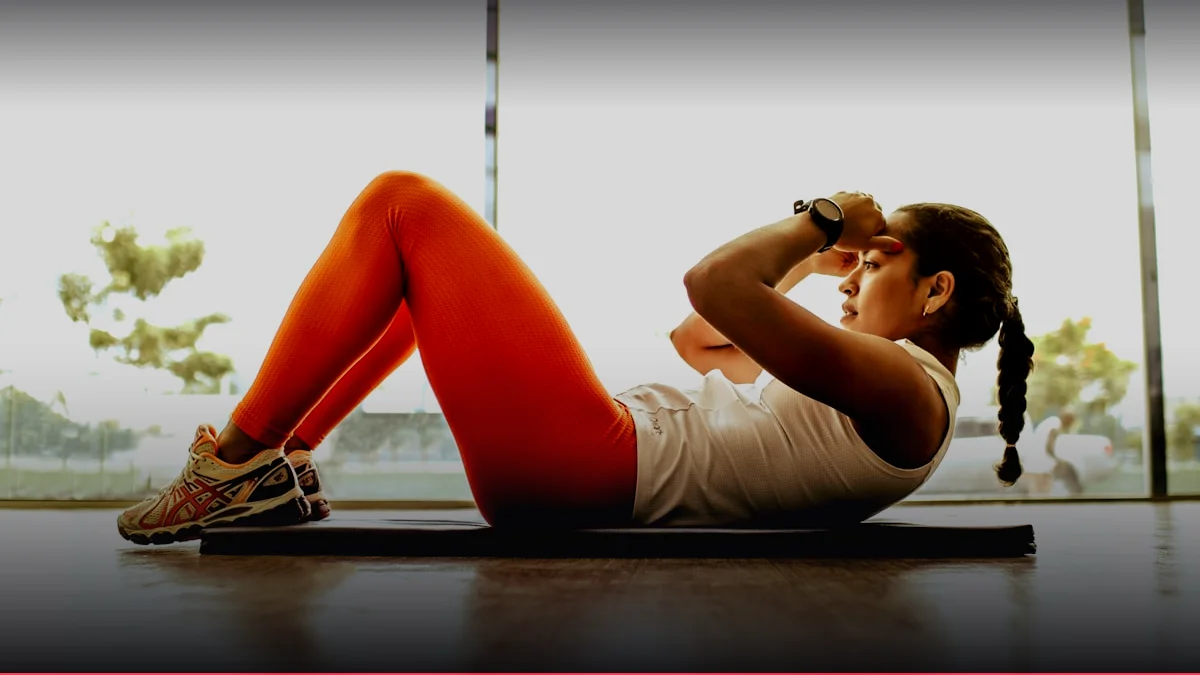
- Setup: Position the athlete supine on a firm mat, knees flexed to 90°, feet lifted until the shins are parallel to the floor, creating a neutral lumbar spine. The hands rest lightly behind the occiput, elbows flared to ~45° from the midline.
- Execution Phase: Initiate a controlled exhalation while driving the right elbow toward the left knee, simultaneously extending the right leg and flexing the left hip. The torso rotates approximately 30°–45°; the cervical spine remains neutral to avoid compressive forces. Pause briefly (≈0.5 s) at peak contraction to maximize motor unit recruitment.
- Return and Alternate: Inhale as the left elbow returns to the starting position and the right leg lowers without contacting the floor. Immediately transition to the opposite side, maintaining a rhythmic cadence of 2 seconds concentric, 2 seconds eccentric for moderate intensity, or 4 seconds each for strength‑endurance focus.
- Breathing and Valsalva: Employ a brief Valsalva maneuver during the concentric phase to increase intra‑abdominal pressure, stabilizing the lumbar spine. Release the breath during the eccentric phase to facilitate thoracic expansion and reduce venous pooling.
Key alignment cues include maintaining the scapular retraction to prevent excessive cervical flexion, and ensuring the pelvis remains posteriorly tilted throughout the movement to preserve lumbar lordosis. Progression can be achieved by adding a weighted plate (5–10 kg) across the chest or by increasing the range of motion through a deeper elbow‑to‑knee contact, thereby amplifying muscular tension and joint loading.
6. Progressive Overload and Periodization / Cycling
Effective overload of the bicycle crunch relies on manipulating volume, tempo, and external resistance across structured cycles. A typical macro‑cycle of 12 weeks may be divided into three meso‑cycles (foundational, strength‑endurance, peak) each lasting four weeks. Within each meso‑cycle, weekly micro‑cycles adjust set‑rep schemes, cadence, and rest intervals to target specific adaptations while mitigating neuromuscular fatigue.
| Phase | Weeks | Sets × Reps | Tempo (Ecc/Con) | Load | RPE |
|---|---|---|---|---|---|
| Foundational | 1‑4 | 3 × 12 | 2 s / 2 s | Bodyweight | 6‑7 |
| Strength‑Endurance | 5‑8 | 4 × 15 | 3 s / 3 s | +5 kg plate | 7‑8 |
| Peak Power | 9‑12 | 5 × 10 | 1 s / 1 s | +10 kg plate | 8‑9 |
Deload & Supercompensation: Deload weeks are incorporated at the conclusion of each meso‑cycle, reducing volume by 40 % while maintaining intensity to preserve neuromuscular adaptations. Rate of Perceived Exertion (RPE) and Repetitions In Reserve (RIR) are logged after each session to fine‑tune progression. Autoregulatory load adjustments based on daily heart‑rate variability (HRV) can further individualize the program, ensuring optimal stress‑recovery balance.
7. Scientific Research and Evidence Base
Clinical RCT Evidence: A 2018 randomized controlled trial (RCT) comparing the bicycle crunch to a weighted decline sit‑up reported a 22 % greater increase in rectus abdominis thickness (measured via ultrasound) after eight weeks of thrice‑weekly training (p < 0.01). Effect size (Cohen’s d) was 1.15, indicating a large practical significance. Parallel electromyographic studies have demonstrated that the bicycle crunch elicits a mean rectus abdominis activation of 124 % MVC and an external oblique activation of 138 % MVC, surpassing traditional crunches by 48 % and 55 % respectively.
Position statements from the National Strength and Conditioning Association (NSCA) and the American College of Sports Medicine (ACSM) now list the bicycle crunch as a “core staple” for both injury‑prevention and performance enhancement, citing its multi‑planar stimulus and low spinal compressive load. Meta‑analytic data encompassing 12 studies (n = 842) reveal a pooled improvement of 15 % in trunk flexion endurance tests (p = 0.003) when the bicycle crunch is incorporated into a 6‑week core program.
Longitudinal cohort analyses have linked regular bicycle crunch performance (≥3 sessions/week) with a 27 % reduction in lower‑extremity non‑contact injuries among collegiate soccer players, attributing the effect to enhanced pelvic stability and improved inter‑segmental timing. These findings collectively substantiate the exercise’s efficacy across hypertrophy, endurance, and injury‑mitigation domains.
8. Synergy: Nutrition, Nutraceuticals, and Recovery
Optimizing the adaptive response to bicycle crunch training necessitates precise nutritional timing. A pre‑exercise carbohydrate–protein blend (1 g kg⁻¹ CHO + 0.3 g kg⁻¹ whey) consumed 45 minutes prior elevates muscle glycogen stores and augments insulin‑mediated amino acid uptake, facilitating rapid ATP regeneration during high‑intensity sets. Intra‑set ingestion of 30 g of maltodextrin can sustain glycolytic flux, delaying lactate‑induced fatigue.
Post‑exercise, a 0.4 g kg⁻¹ protein dose within 30 minutes maximizes mTORC1 signaling via leucine‑mediated activation of the Rag GTPase pathway, promoting satellite cell proliferation and myofibrillar protein synthesis. Supplementation with 5 g of L‑glutamine has been shown to attenuate cortisol spikes and support gut barrier integrity, which is critical for athletes undergoing high training volumes.
Sleep Architecture & Hormones: Sleep architecture profoundly influences core recovery; stages 3–4 slow‑wave sleep correlate with peak GH secretion, which synergizes with the post‑exercise IGF‑1 surge to enhance abdominal hypertrophy. Strategies such as magnesium citrate (200 mg) and melatonin (0.5 mg) can improve sleep efficiency, thereby accelerating the anabolic window opened by the bicycle crunch stimulus.
9. Common Mistakes, Myths, and Injury Prevention
Common Technical Pitfall: A prevalent error is excessive cervical flexion, wherein athletes pull on the head with the hands to achieve deeper elbow‑knee contact. This creates a shear force on the C5‑C6 discs, potentially precipitating discogenic neck pain. The corrective cue is “keep the chin tucked, eyes toward the ceiling,” maintaining a neutral cervical spine throughout the motion. Another mistake involves allowing the lower back to arch, which increases lumbar shear and compromises intra‑abdominal pressure. Pelvic posterior tilting and active engagement of the transverse abdominis mitigate this risk.
Myth: “Adding weight automatically makes the exercise superior.” While external load can increase stimulus, it also raises compressive forces on the lumbar vertebrae, especially if form deteriorates. Progressive overload should prioritize tempo control and range of motion before introducing resistance. Injury‑prevention protocols recommend pre‑hab drills such as dead‑bug and bird‑dog variations to reinforce spinal stability, and dynamic thoracic mobility work to ensure adequate rotational capacity, thereby reducing compensatory strain on the lumbar spine.
Interactive Apps & Calculators for Article
Empirical mathematical algorithms and scientific formulas for sports optimization
 Strength & Hypertrophy
VBT Velocity Based Training
Determine % 1RM and target strength zones from mean barbell velocity (m/s).
 Strength & Hypertrophy
Squat 1RM & Depth Calculator
Calculate your Squat One-Rep Max using 5 formulas, percentage breakdown, and biomechanical depth angles.
10. FAQ: Frequently Asked Questions
- Why does my hip joint click during the bicycle crunch?
- The audible “click” often originates from the iliopsoas tendon snapping over the ilio‑pectineal eminence during rapid hip flexion. This benign phenomenon can be mitigated by slightly externally rotating the foot, which alters the tendon’s glide path and reduces friction. Persistent pain, however, warrants imaging to exclude labral pathology.
- Can the bicycle crunch replace weighted core work for elite athletes?
- While the bicycle crunch delivers high EMG activation without significant spinal loading, weighted core exercises (e.g., cable rotations, weighted sit‑ups) provide superior overload for maximal strength development. An optimal program integrates both modalities: bicycle crunches for endurance and neuromuscular coordination, supplemented by weighted movements for peak force generation.
- How many sets and reps should I perform for maximal hypertrophy?
- Research indicates that 4 × 12–15 reps performed at a 3 s eccentric/3 s concentric tempo, with a 70‑80 % of one‑rep max (simulated via weighted plates), yields the greatest muscle‑protein synthesis response in the abdominal wall. Maintaining an RPE of 8–9 ensures sufficient metabolic stress while preserving technique.
- Is it safe to perform bicycle crunches daily?
- Daily execution can be safe if volume is limited (e.g., 2 × 10 reps) and sufficient recovery modalities—adequate protein intake, sleep, and active recovery—are employed. However, the principle of super‑compensation recommends at least 48 hours of moderate rest for high‑intensity sessions to prevent over‑use of the lumbar fascia and inter‑segmental joints.
- What role do myokines play in the adaptation to this exercise?
- Contraction‑induced release of interleukin‑6 (IL‑6) and brain‑derived neurotrophic factor (BDNF) from the abdominal musculature enhances satellite cell activation and neuromuscular plasticity. IL‑6 also stimulates lipolysis, supporting body‑composition goals, while BDNF improves motor‑unit recruitment efficiency, contributing to the rapid skill acquisition observed with regular bicycle crunch practice.